
Free Cat Coloring Pages for Kids
Cats are one of the most popular animals in the world — and one of the best to draw and colour.
Explore free printable cat coloring pages featuring playful kittens, curled-up sleepers and recognisable breeds such as the Siamese, Persian, Maine Coon, Bengal and Sphynx.
Pick a page below to colour, print or download — then read the short cat facts underneath to find out how cats see in the dark, why they purr and how they came to live with people.
30 printable sheets across 6 collections
Explore Cats
Browse by the kind of cat page you want — simple shapes for little hands, detailed breed portraits, or busy scenes with plenty to colour.
Kittens and easy pages
Big shapes, thick outlines and lots of open space, made for younger children.
Cat breeds
Recognisable breeds drawn with their real features — coat length, ear shape and body build.
Scenes and activities
Cats stretching, playing, watching birds — plus a maze and a step-by-step drawing sheet.
Collections in Cats
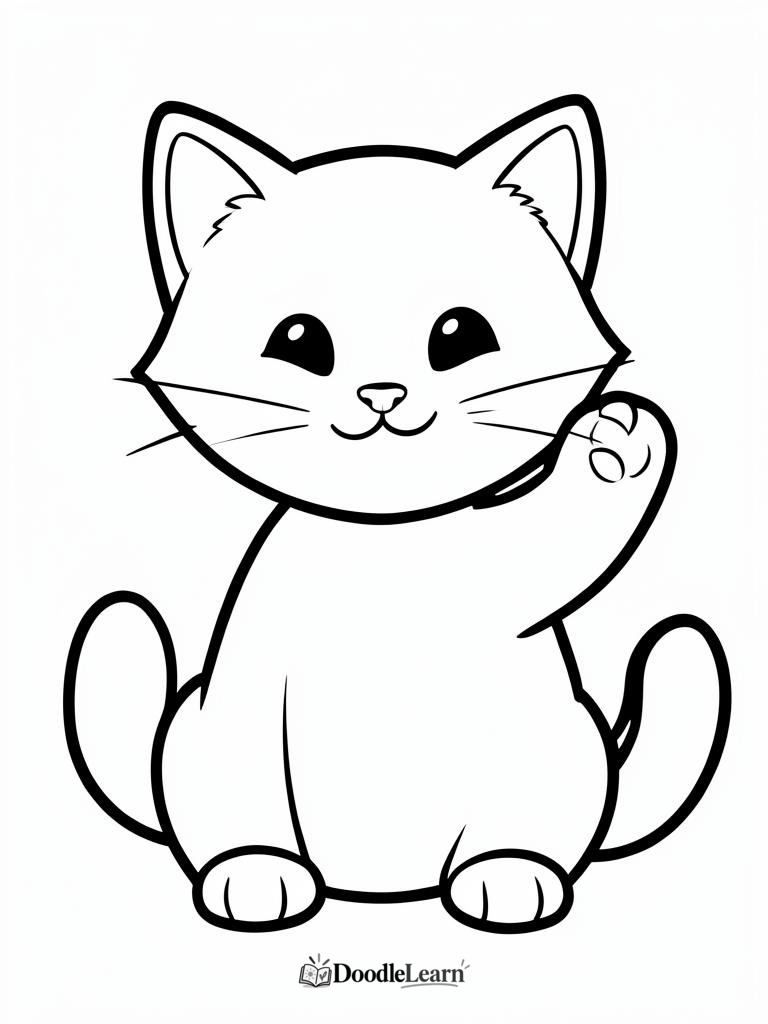
Cats
Easy Cat Coloring Pages
10 printable sheets · Ages 3–11 · Easy to medium detail
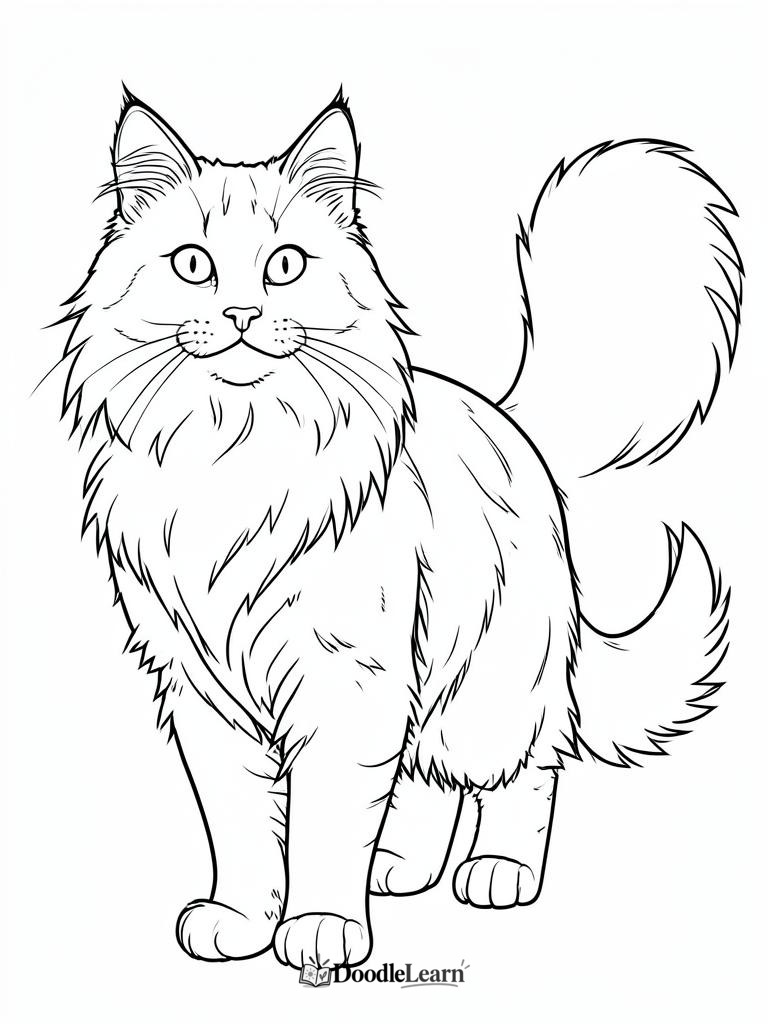
Cats
Cat Breed Coloring Pages
13 printable sheets · 5-12
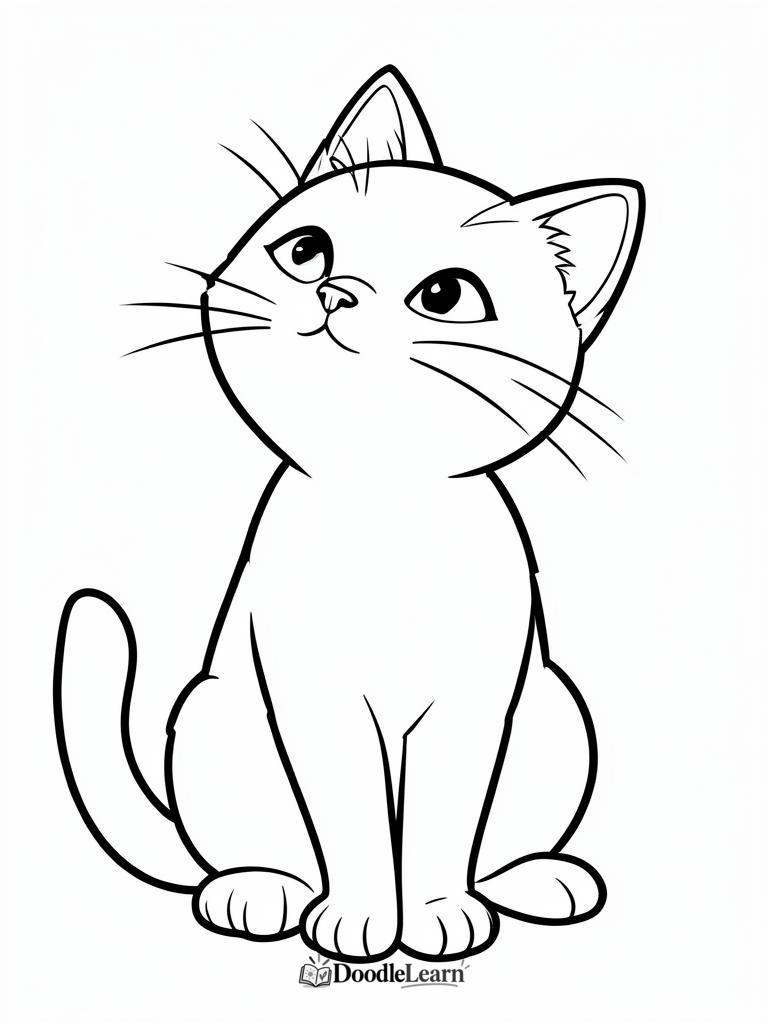
Cats
Kitten Coloring Pages
6 printable sheets · 3-9
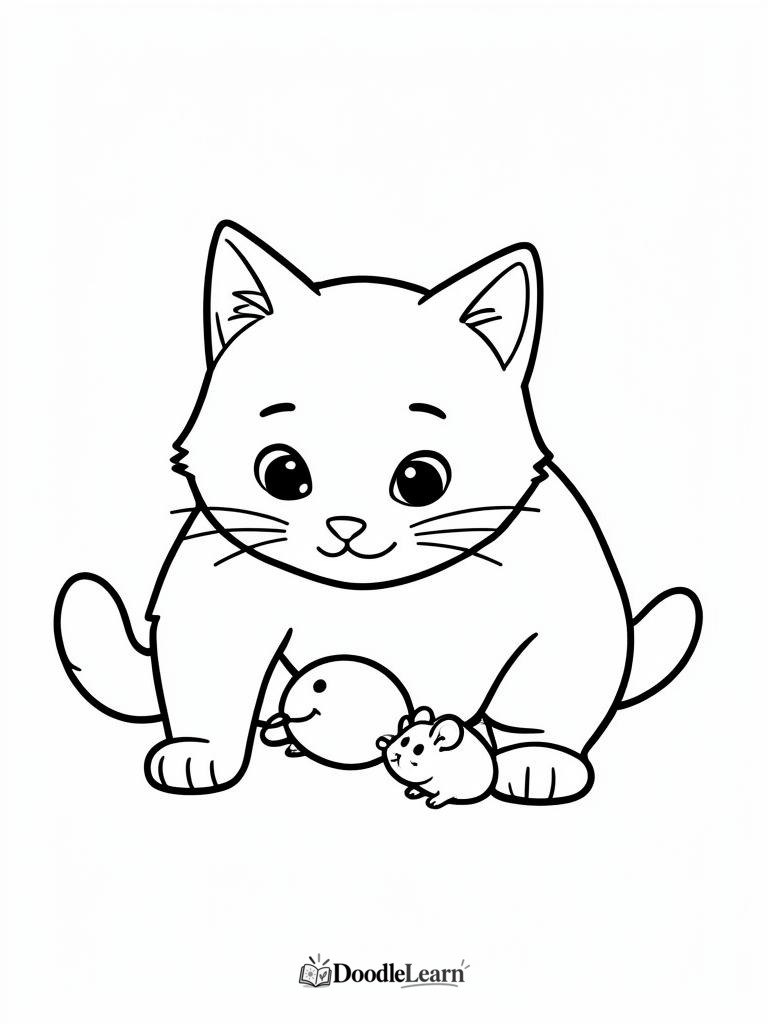
Cats
Cats at Play Coloring Pages
5 printable sheets · 3-10
Cats
Cats at Home & Outdoors Coloring Pages
4 printable sheets · 4-10
Cats
Cat Activity Sheets
2 printable sheets · 4-9
Learn About Cats
What is a cat?
The pet cat, Felis catus, is a small meat-eating mammal that people have kept for thousands of years. It is closely related to wild cats such as the African wildcat, and it keeps many of the same habits: hunting alone, resting for long stretches and marking a home territory.
Why do cats purr?
Purring is made by muscles in the voice box opening and closing very fast as the cat breathes. Cats purr when they are content, but also when they are frightened, unwell or being handled, so purring seems to be a self-soothing sound as much as a happy one.
How well can cats see in the dark?
Cats cannot see in complete darkness, but they manage in light far too dim for us. A reflective layer behind the retina bounces light back through the eye for a second chance to be detected, which is also why cats' eyes shine in a photograph.
Why do cats have whiskers?
Whiskers are thick, stiff hairs set deep in the skin among many nerve endings. They pick up small movements of air and contact with objects, helping a cat judge gaps and move confidently in the dark. Whiskers should never be trimmed.
Cats Through History
Cats and people have lived side by side for a very long time. These dates are approximate, because they come from archaeology rather than written records.
Period 1
First farms
about 10,000 years ago
Wildcats started visiting early farming villages in the Near East, where stored grain attracted mice.
Period 2
Ancient Egypt
about 4,000 years ago
Cats appear often in Egyptian art and were strongly associated with the goddess Bastet.
Period 3
Trade and sailing
about 2,000 years ago onwards
Cats travelled on ships and along trade routes, spreading across Europe and Asia.
Period 4
Cat breeds
the last 150 years
Most named breeds are recent. Cat shows and breed registers began in the late 1800s.
What Do Cats Eat?
Obligate carnivores
Meat eaters, and only meat eaters
Cats must eat animal protein. They cannot make some nutrients themselves — taurine is the best known — so a cat cannot live on a plant-only diet the way some animals can.
Prepared cat food · Meat and fish protein
Built for hunting
Teeth and claws
Cat teeth are made for gripping and slicing, not grinding. Their claws pull back into the paw when not in use, which keeps them sharp.
Small mammals · Birds · Insects
Water and safety
What cats should not have
Cats need fresh water every day. Several everyday foods are unsafe for them, including onions, garlic, chocolate and grapes, and cow's milk upsets many adult cats.
Fresh water · Never chocolate · Never onion or garlic
How Do Cats Communicate?
Cats talk with their whole body. An upright tail with a slight curve at the tip is a friendly greeting, a low swishing tail means irritation, and flattened ears are a clear request for space.
Meowing is mostly aimed at people. Adult cats rarely meow at each other, but they learn that meowing gets a human's attention, and many develop sounds their own family recognises.
Slow blinking is a calm signal. If a cat looks at you and blinks slowly, blinking slowly back is a quiet way of saying you are no threat.
More Cat Activities
Beyond colouring, these DoodleLearn printables work well alongside a cat or pets topic. Only pages that already exist are linked — the rest are on the way.
In progress: Cat word search, Cat breed matching sheet, Cat body parts labelling sheet, Cat counting worksheet.
Frequently asked questions
- Why do cats purr?
- Purring comes from muscles in the voice box vibrating as the cat breathes. Cats purr when they are content, but also when they are anxious or unwell, so it seems to be a calming sound as well as a happy one.
- Can cats really see in the dark?
- Not in total darkness. A reflective layer behind the retina lets cats see in light about six times dimmer than we need, which is enough for dusk, dawn and a moonlit room.
- How long do cats sleep?
- Most adult cats sleep around twelve to sixteen hours a day, usually in short naps rather than one long stretch.
- Why do cats knead with their paws?
- Kittens knead their mother while feeding, and many cats keep the habit into adult life. It is usually a sign of comfort.
- Do cats always land on their feet?
- Cats have a righting reflex that turns them upright as they fall, but it does not always work and falls can still injure them badly. Open windows and balconies need screens.
- How many cat breeds are there?
- It depends who is counting. Different cat registries recognise roughly forty to seventy breeds, and most pet cats do not belong to any breed at all.
- What should cats never eat?
- Chocolate, onions, garlic, grapes and raisins are all unsafe for cats. Many adult cats also cannot digest cow's milk properly.
- Are these cat coloring pages free?
- Yes. Every cat coloring page on DoodleLearn is free to print at home, in a classroom or in a homeschool.
Teaching About Cats?
DoodleLearn cat pages are free to print for classroom and homeschool use. Each sheet pairs artwork with short, accurate text, so colouring time doubles as reading and science time.
- · Pets and animal care units
- · Mammals, senses and adaptation lessons
- · Fine motor and pencil control practice
- · Early finisher and quiet-time activities
- · Classroom display work