
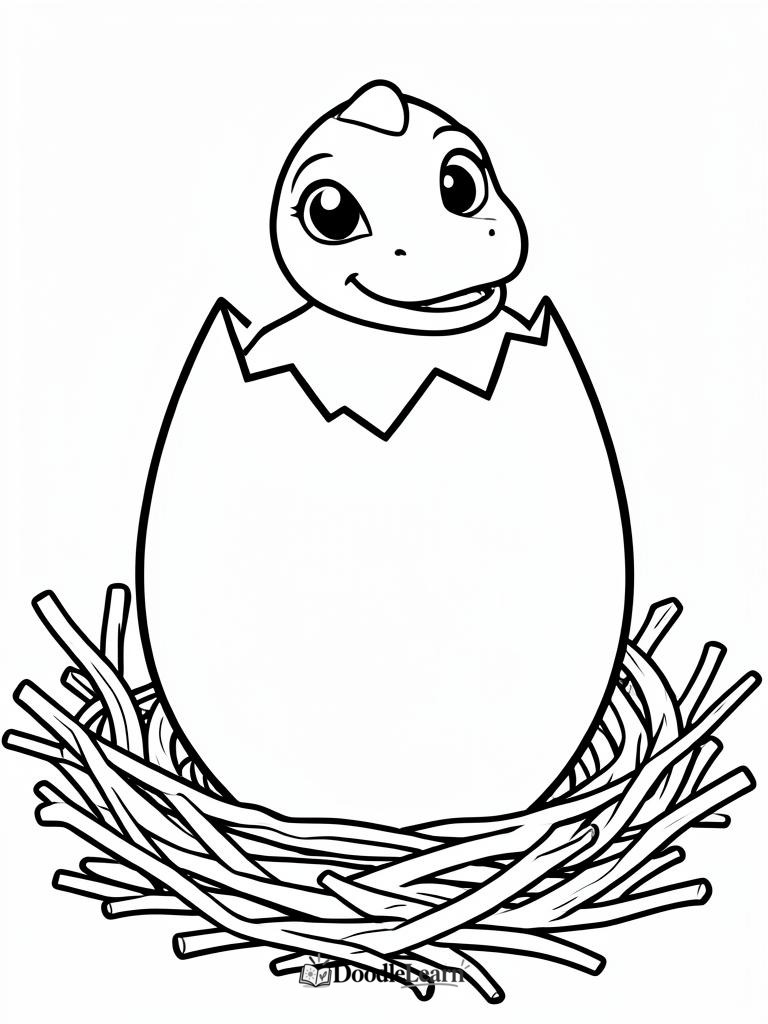
Egg Hatching
MediumAges 5-8
A large egg cracking open with a baby dinosaur peeking out of the top, sitting in a twig nest.
View, print or download →
A round twig nest holding five patterned eggs, surrounded by ferns — lots of fine detail.
Print it at home or in the classroom, colour it in, then read the Dinosaur eggs facts underneath to find out more about the animal you have just drawn.
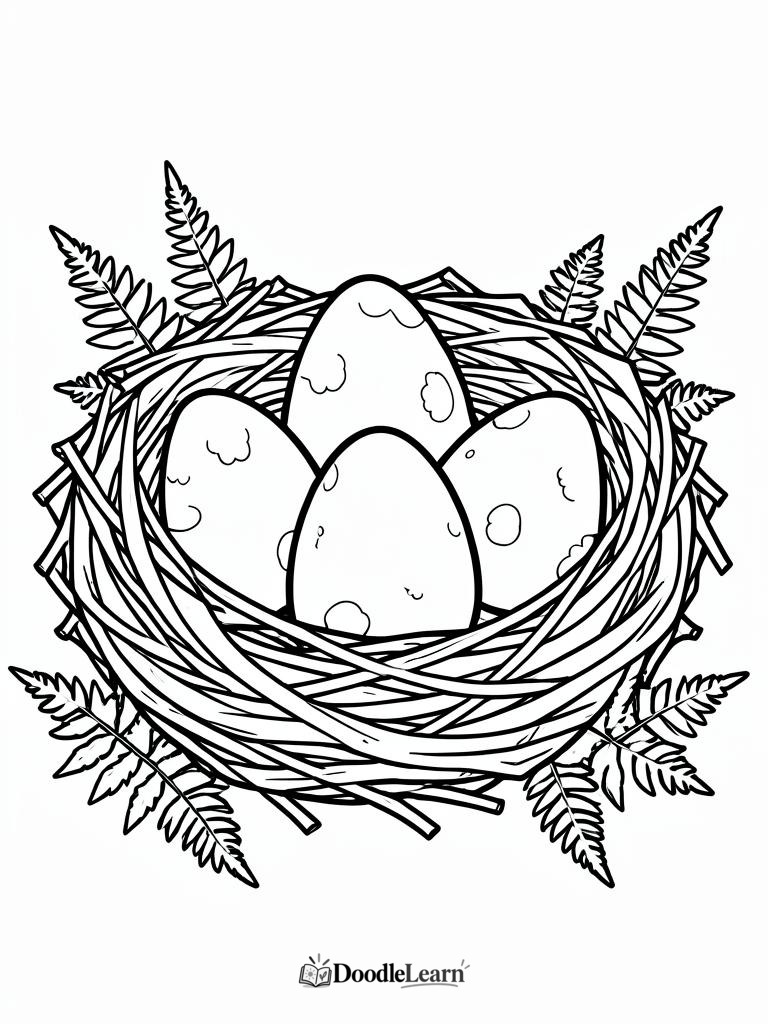
Some fossil nests preserve eggs arranged in neat rings or rows, which tells us the parent placed them carefully rather than dropping them. Nesting sites with many nests close together have been found, suggesting some dinosaurs nested in groups.
Fossil dinosaur eggs have been found on every continent. They come in different shapes and sizes, from roughly tennis-ball size up to about the length of a forearm, and their shells carry tiny pores that let air reach the growing animal inside.
More pages picked from the same topic, difficulty and age range.
A large egg cracking open with a baby dinosaur peeking out of the top, sitting in a twig nest.
View, print or download →
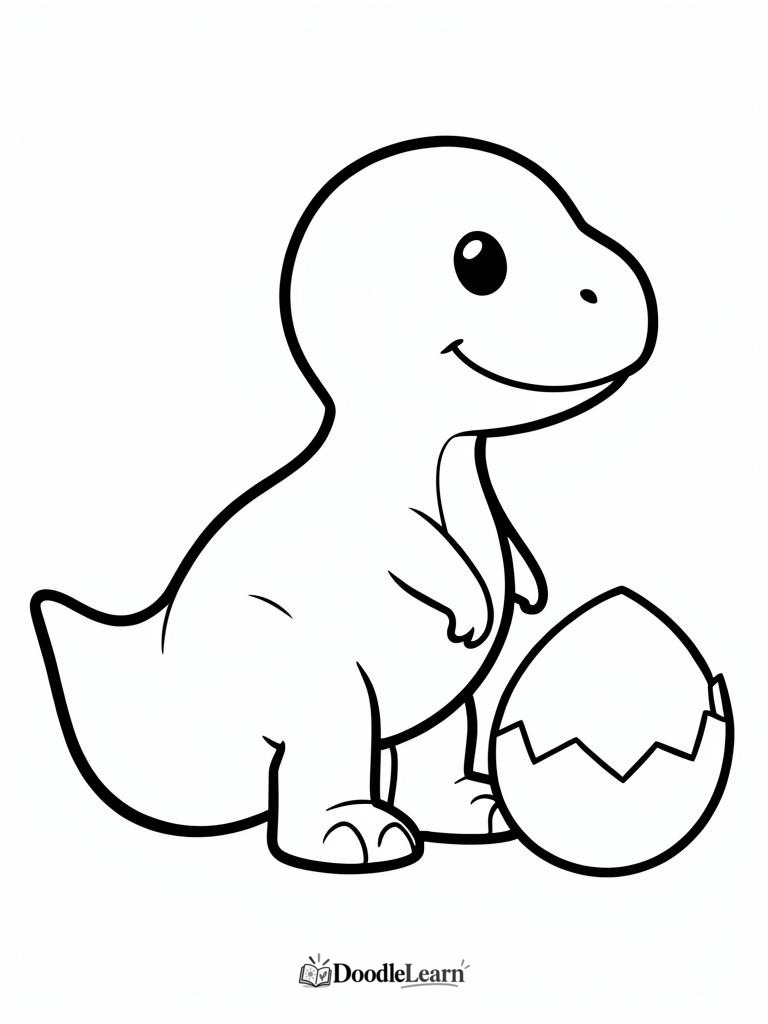
A newly hatched baby dinosaur standing beside its broken eggshell, with very thick outlines.
View, print or download →
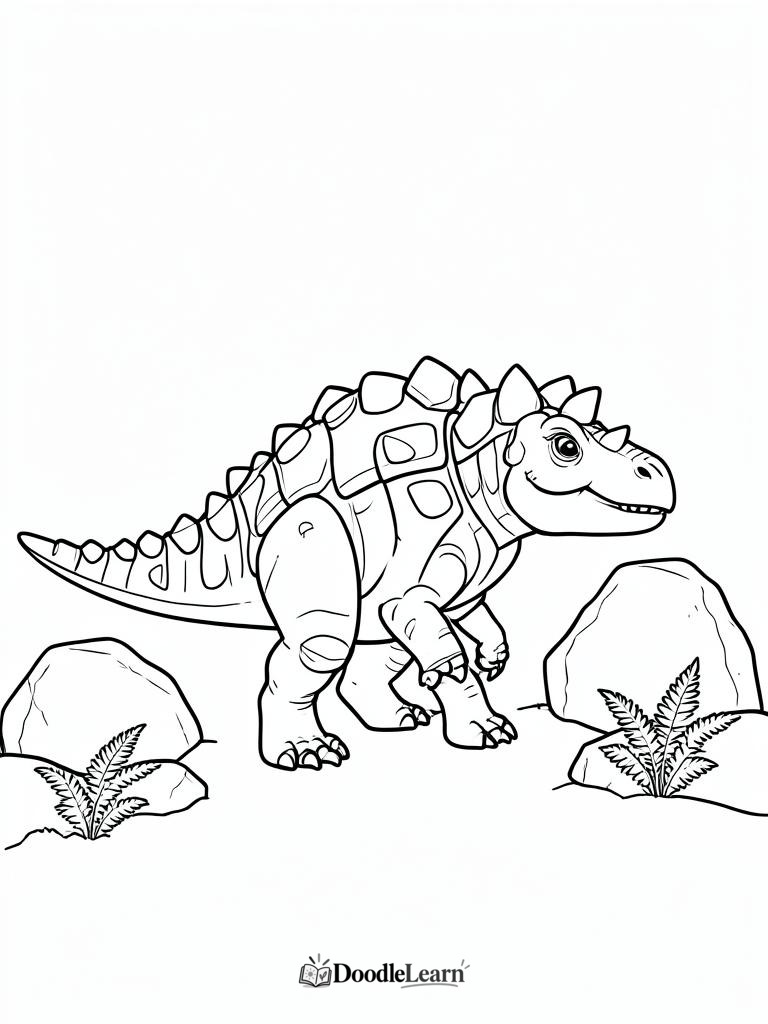
An armoured Ankylosaurus walking past boulders and ferns, with plenty of texture to fill in.
View, print or download →
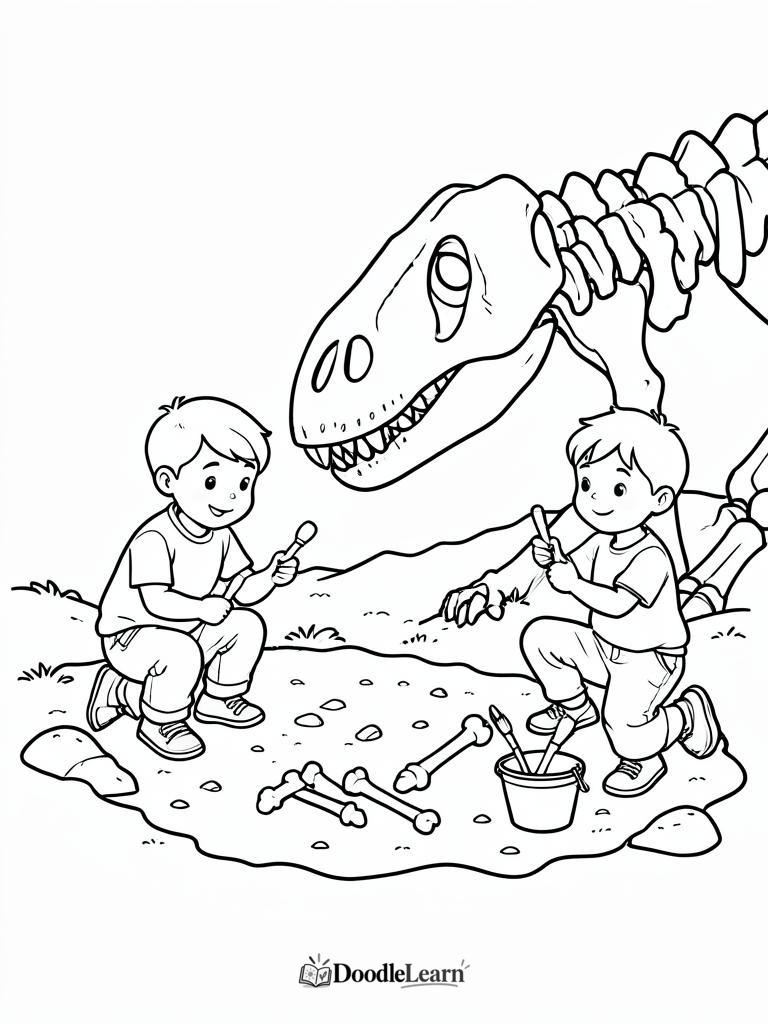
Two children uncovering a large dinosaur skull and bones with brushes at a dig site.
View, print or download →
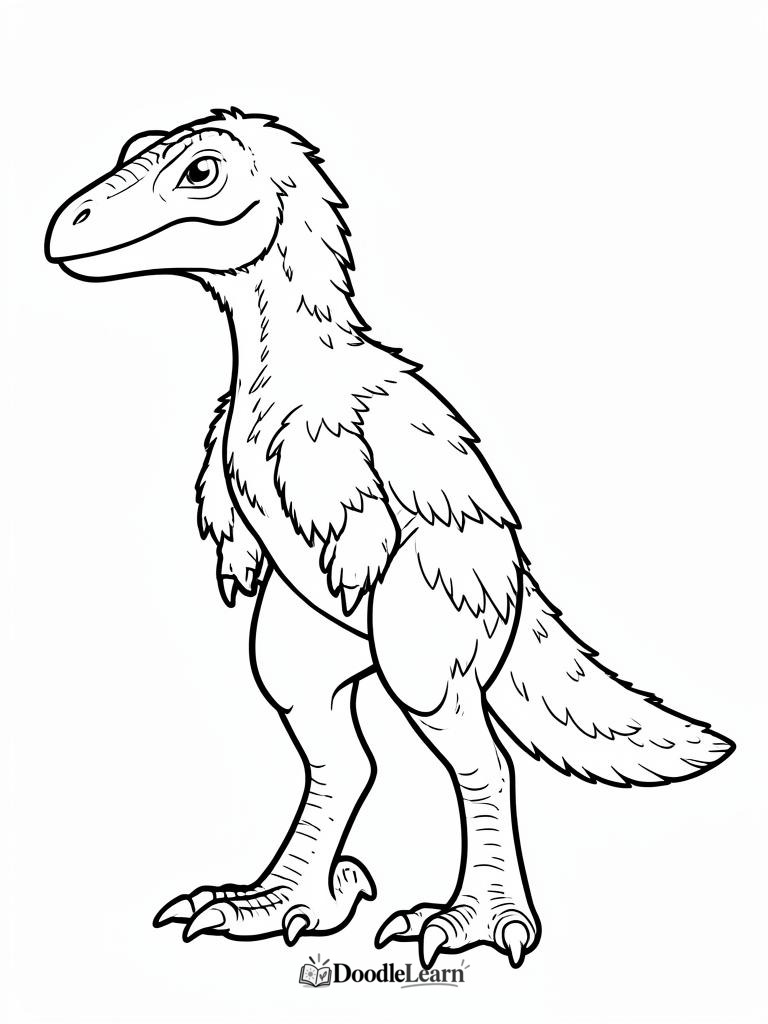
A Velociraptor drawn with feathers on its arms, body and tail, matching what fossil evidence shows.
View, print or download →
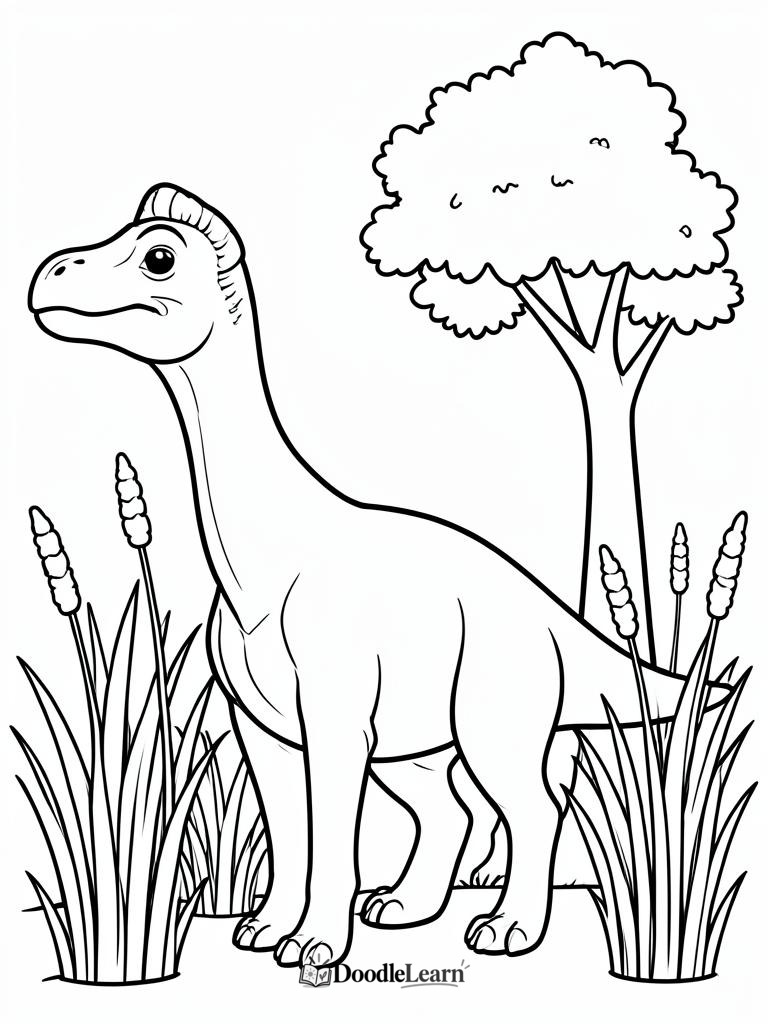
Parasaurolophus standing among tall reeds beside a tree, with lots of small shapes to colour.
View, print or download →
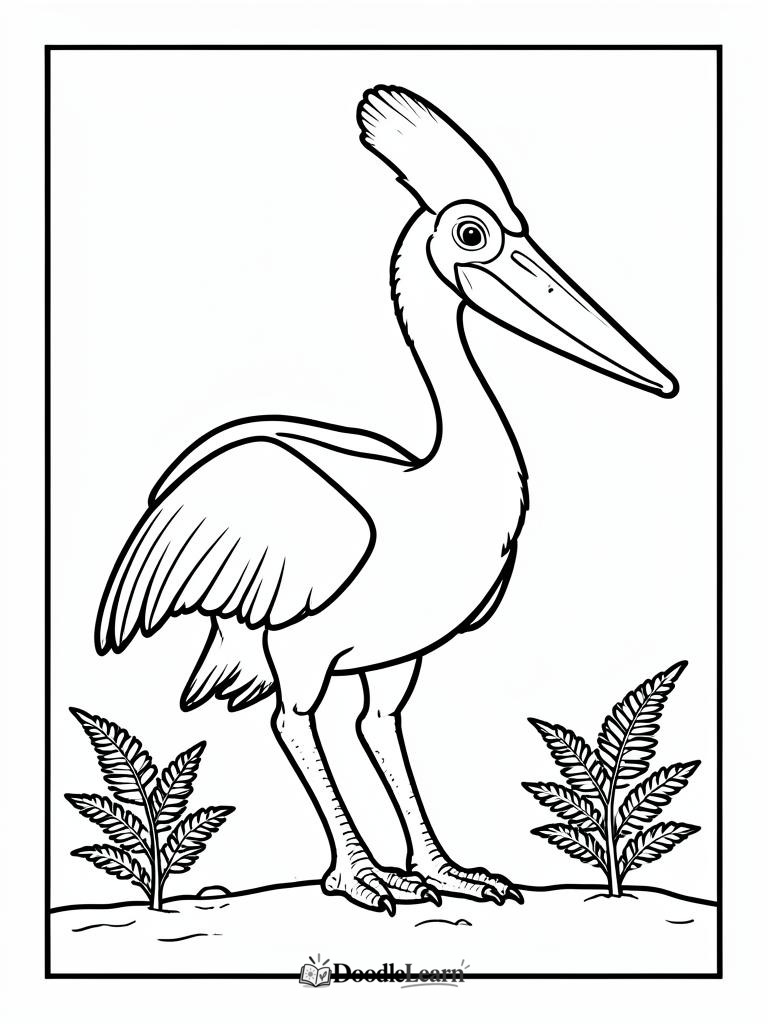
A Pteranodon standing with its wings folded beside two ferns — a rare view of a pterosaur off the wing.
View, print or download →
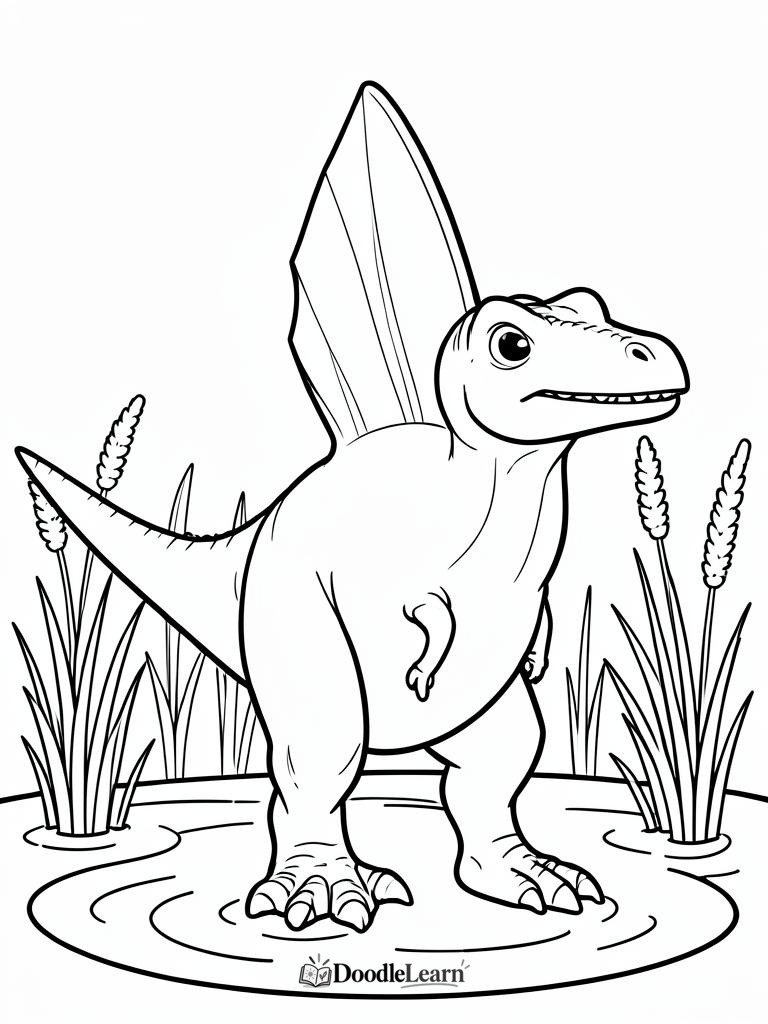
Spinosaurus standing in shallow water among reeds, with ripple lines to colour.
View, print or download →