
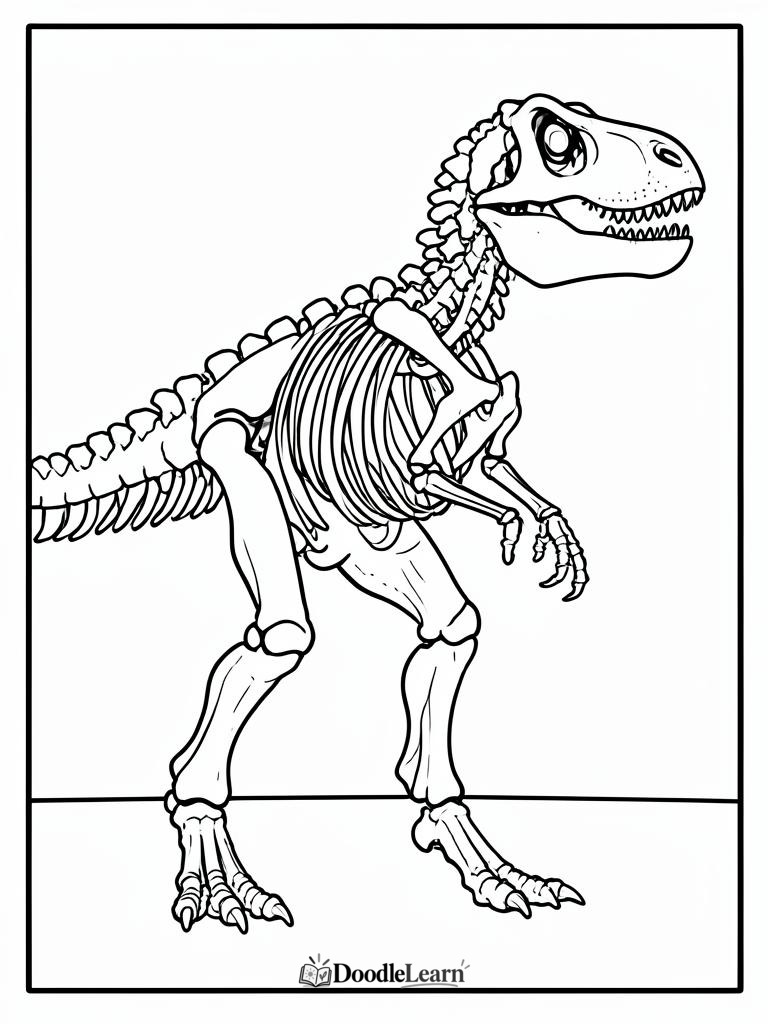
T-Rex Skeleton
DetailedAges 8-12
A complete Tyrannosaurus rex skeleton in a museum pose, with ribs, spine and skull picked out clearly.
View, print or download →
Two children uncovering a large dinosaur skull and bones with brushes at a dig site.
Print it at home or in the classroom, colour it in, then read the Dinosaur fossils facts underneath to find out more about the animal you have just drawn.
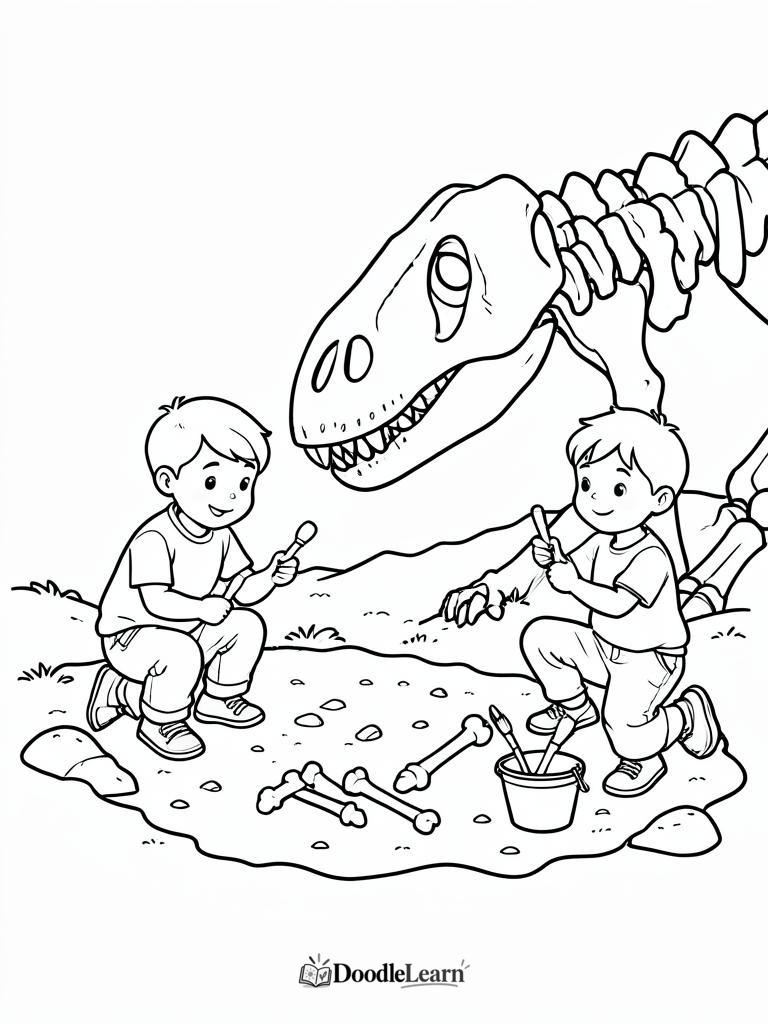
Palaeontologists are scientists who study fossils. They search rocks of the right age, uncover fossils with hand tools and brushes, record exactly where each piece was found, then clean and study them in a laboratory.
When an animal is buried quickly by sand or mud, its soft parts rot away but its bones and teeth can survive. Over a very long time, minerals seep into those bones and harden. What is left is a fossil — rock in the shape of the original bone.
More pages picked from the same topic, difficulty and age range.
A complete Tyrannosaurus rex skeleton in a museum pose, with ribs, spine and skull picked out clearly.
View, print or download →
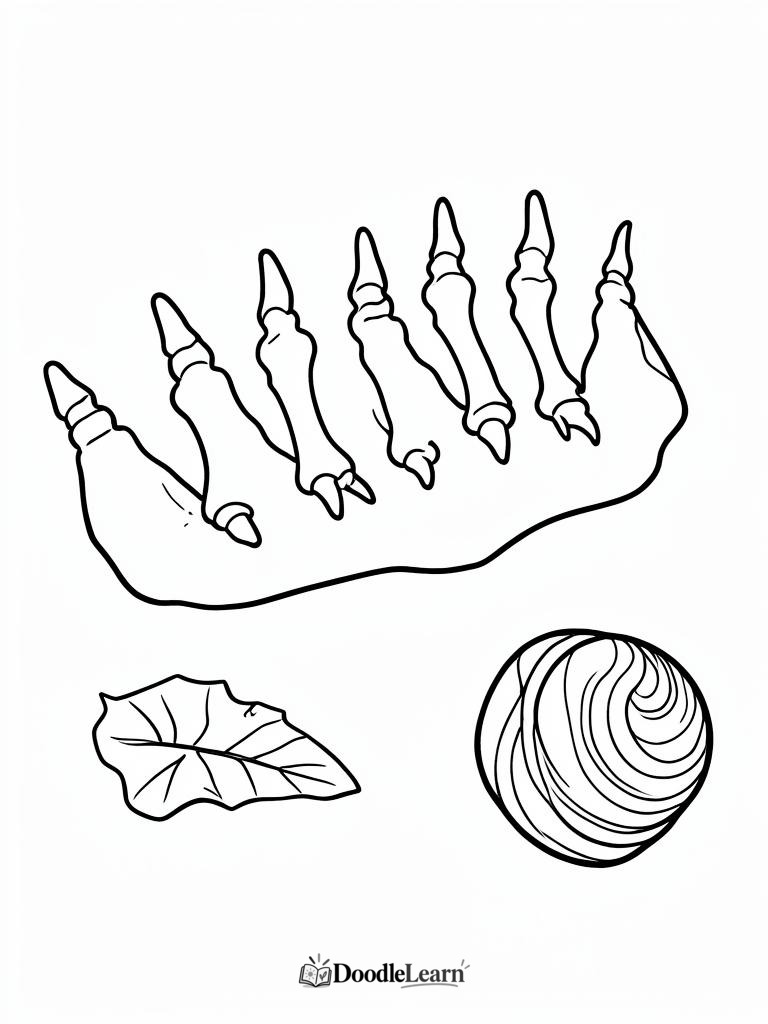
Three-toed dinosaur footprints pressed into rock alongside a fossil leaf and a curled shell.
View, print or download →
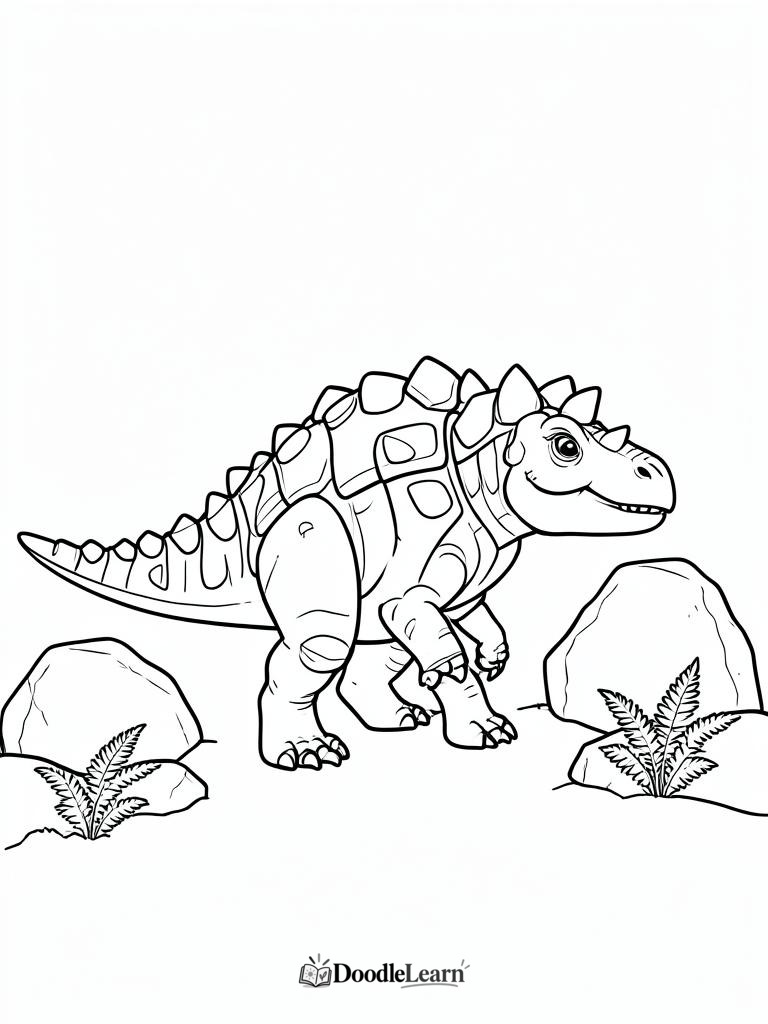
An armoured Ankylosaurus walking past boulders and ferns, with plenty of texture to fill in.
View, print or download →
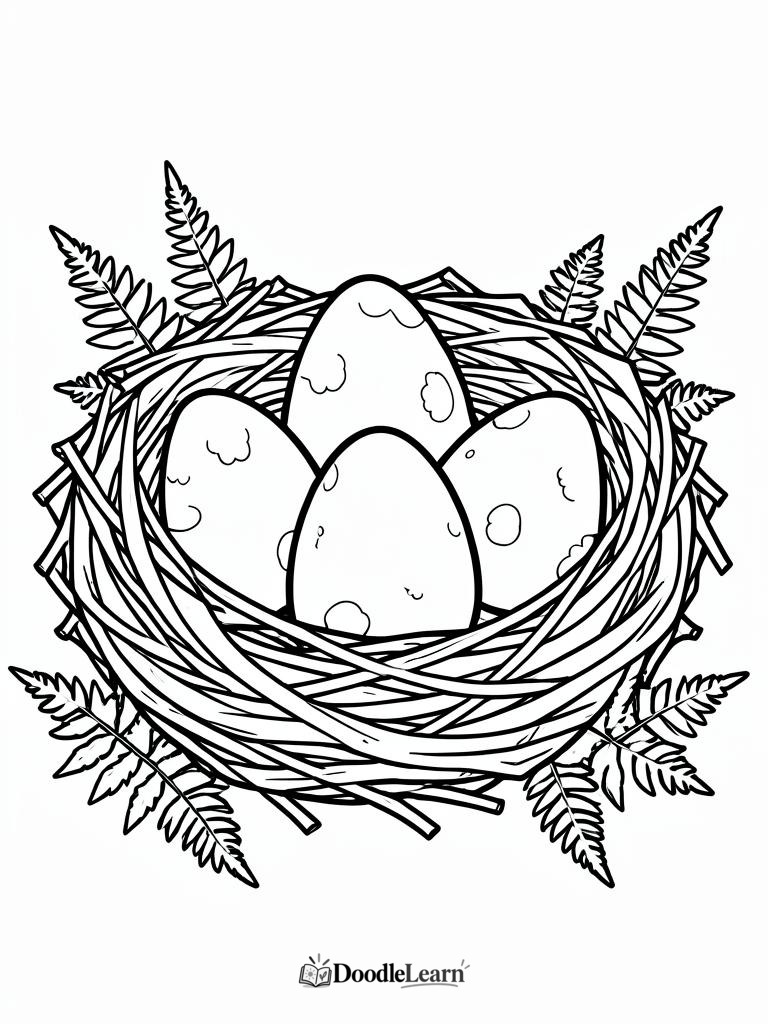
A round twig nest holding five patterned eggs, surrounded by ferns — lots of fine detail.
View, print or download →
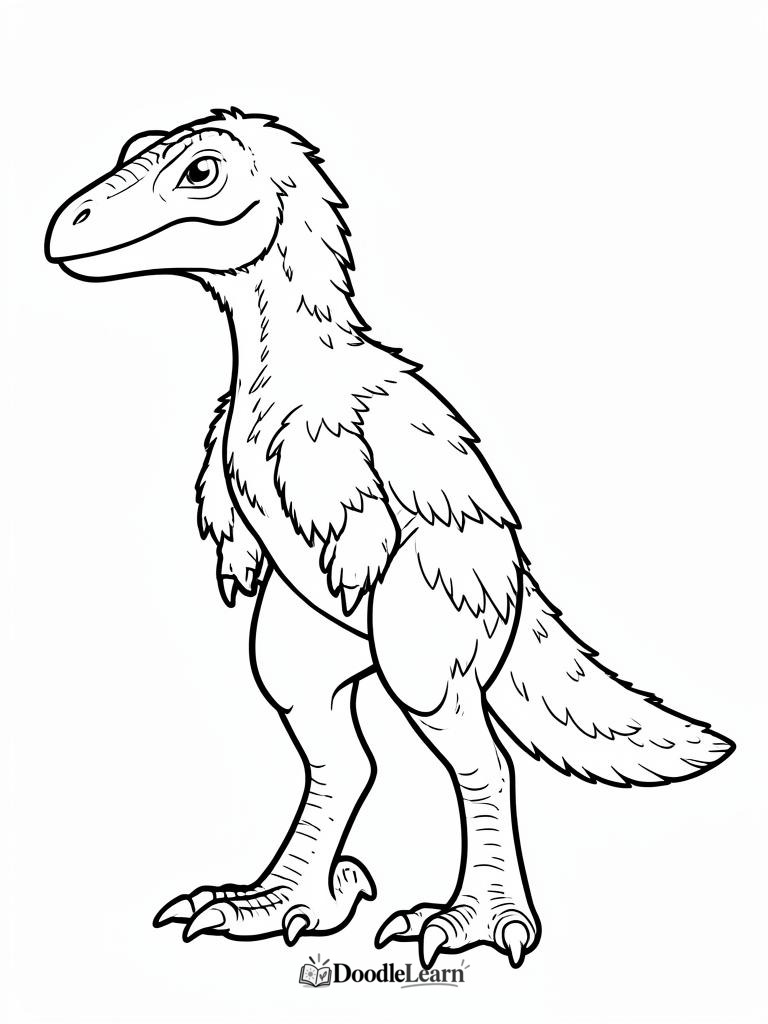
A Velociraptor drawn with feathers on its arms, body and tail, matching what fossil evidence shows.
View, print or download →
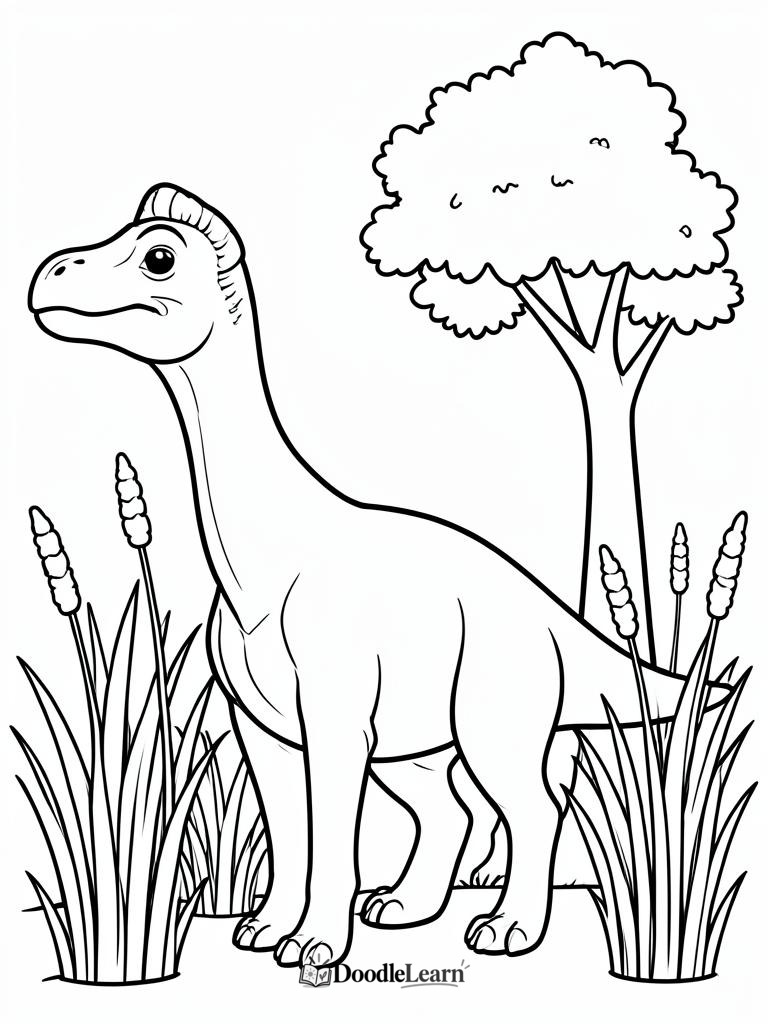
Parasaurolophus standing among tall reeds beside a tree, with lots of small shapes to colour.
View, print or download →
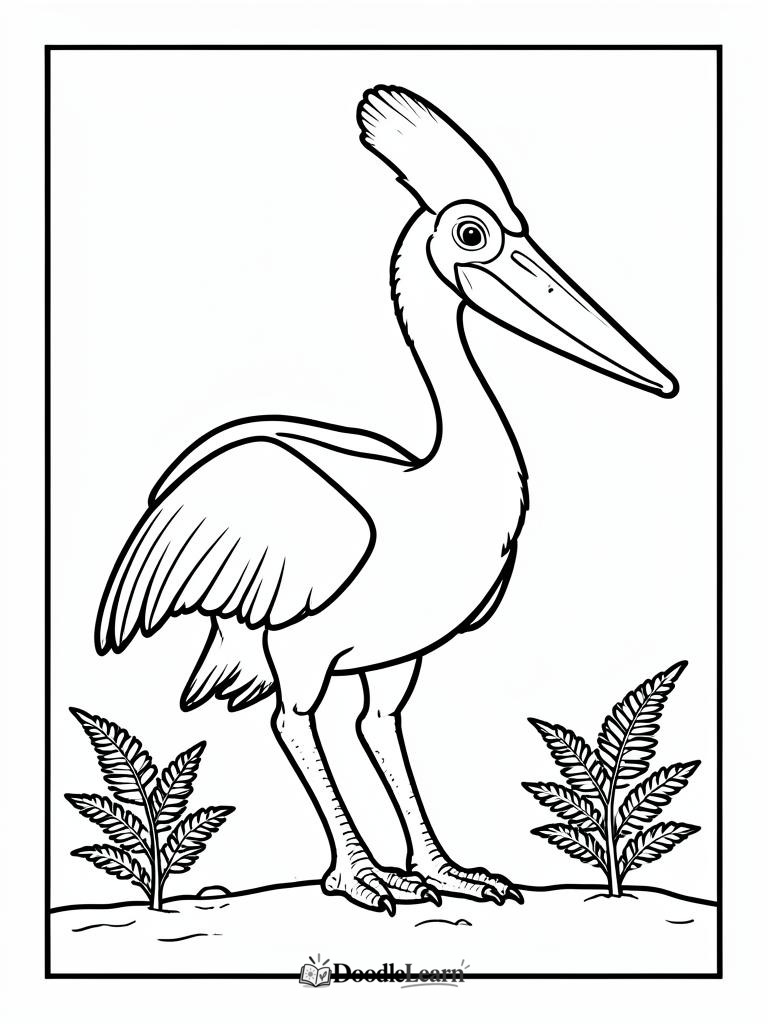
A Pteranodon standing with its wings folded beside two ferns — a rare view of a pterosaur off the wing.
View, print or download →
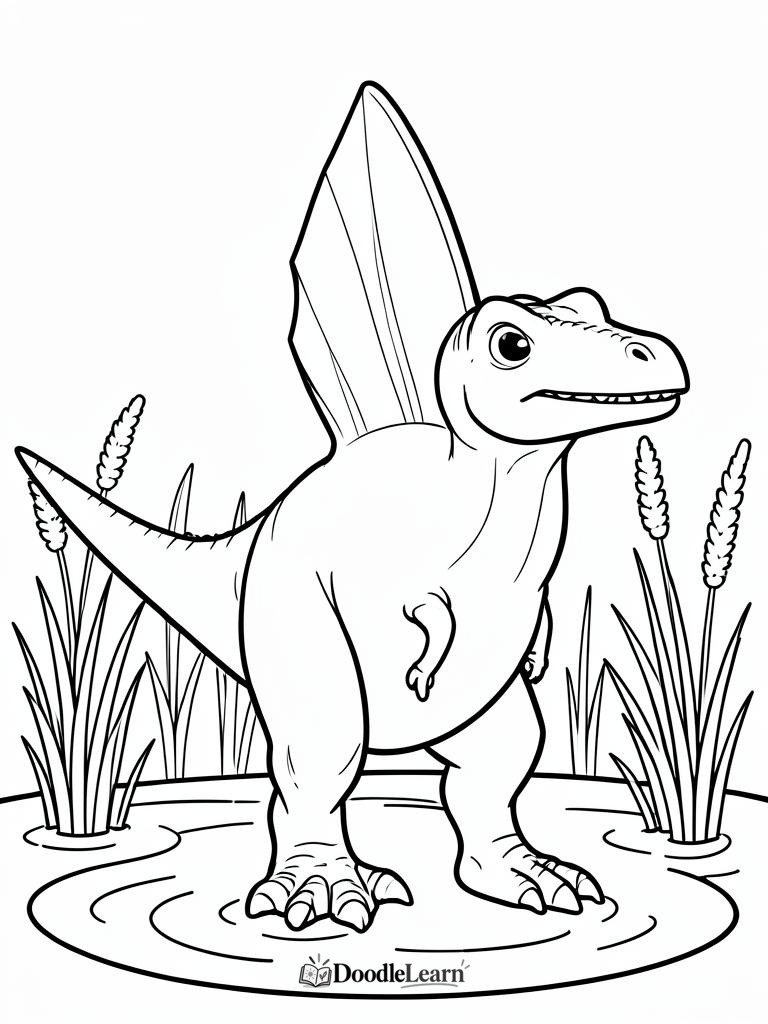
Spinosaurus standing in shallow water among reeds, with ripple lines to colour.
View, print or download →