
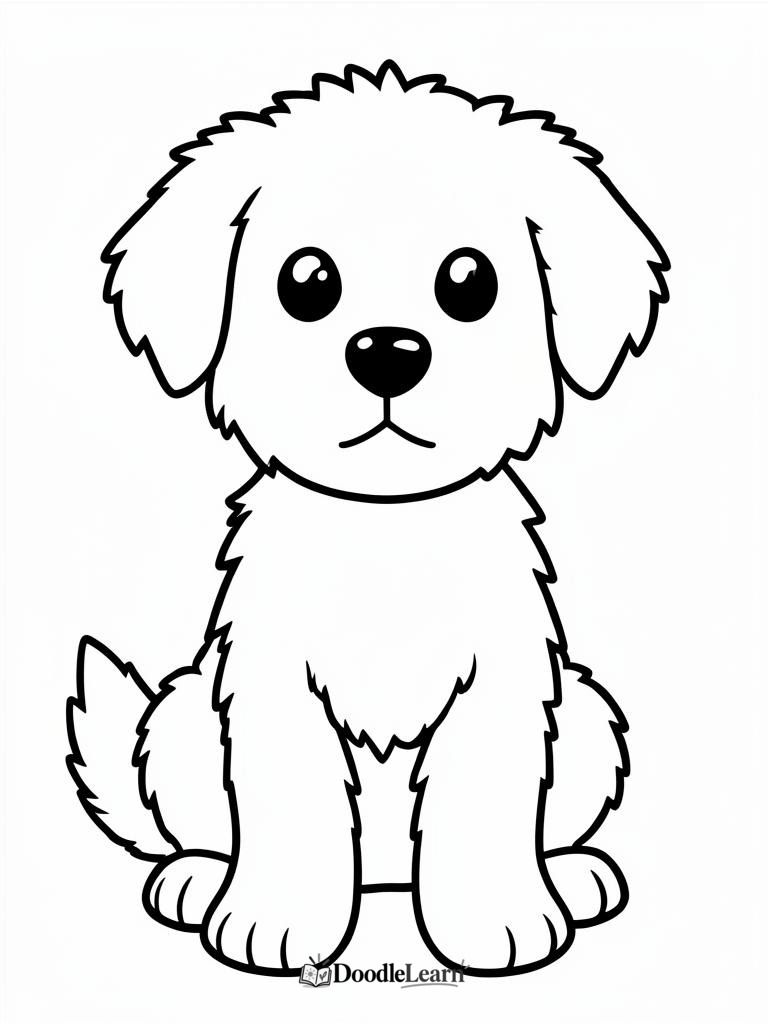
Cute Sitting Dog
EasyAges 3-6
A friendly cartoon dog sitting upright with big simple shapes and thick outlines — a good first dog page for little hands.
View, print or download →
Dogs have lived alongside people longer than any other animal, and they are one of the best subjects to draw and colour.
Explore free printable dog coloring pages featuring bouncing puppies, dogs at play and recognisable breeds such as the Golden Retriever, German Shepherd, Dachshund, Corgi and Husky.
Pick a page below to colour, print or download — then read the short dog facts underneath to find out how dogs smell, hear and talk to each other.
43 printable sheets across 7 collections
Open any page to see the full-size preview, print it or download the PDF.
A friendly cartoon dog sitting upright with big simple shapes and thick outlines — a good first dog page for little hands.
View, print or download →
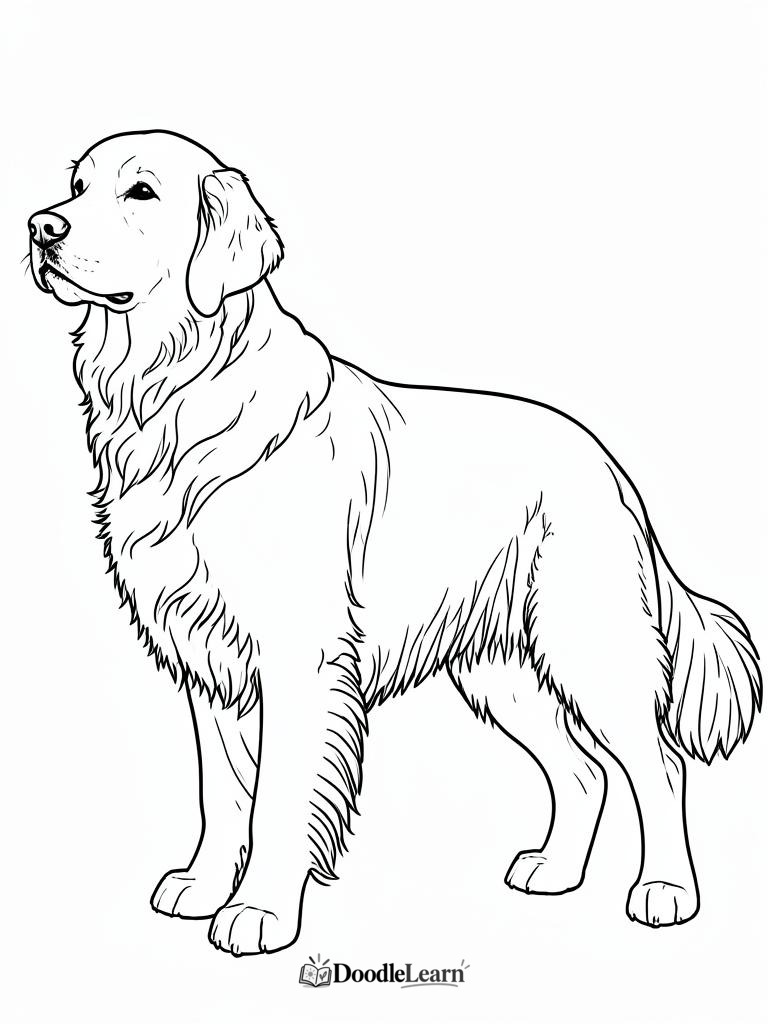
A Golden Retriever with its wavy feathered coat and plumed tail. The breed was developed in Scotland to retrieve birds for hunters, and it is still a popular family and assistance dog.
View, print or download →
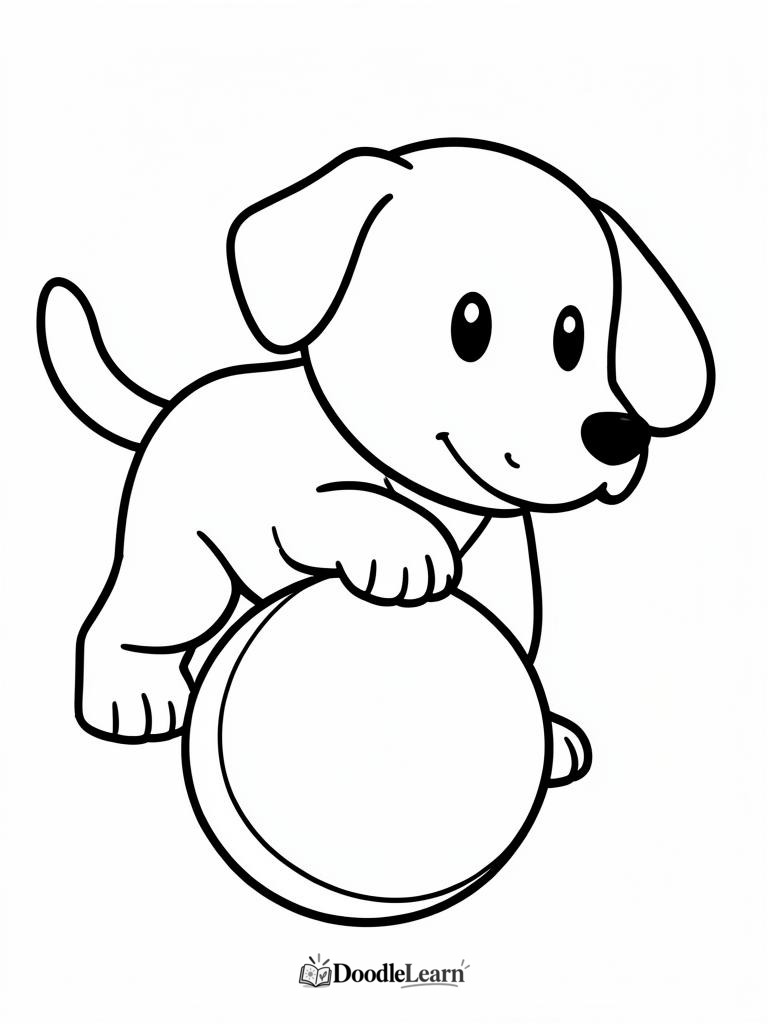
A puppy pouncing on a ball. Play is how puppies practise the running, chasing and gripping skills they will use as adults.
View, print or download →
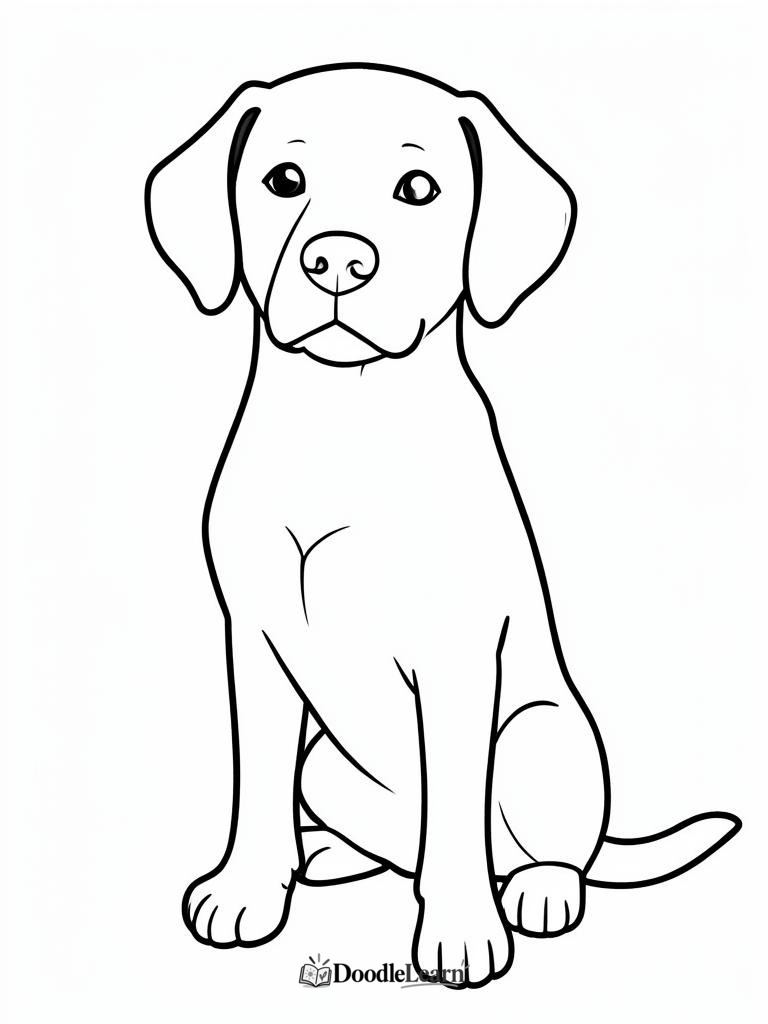
A Labrador Retriever sitting, with its short coat and thick 'otter' tail. Labradors come from Newfoundland in Canada, where they helped fishing crews, and they are one of the most common pet breeds in the world.
View, print or download →
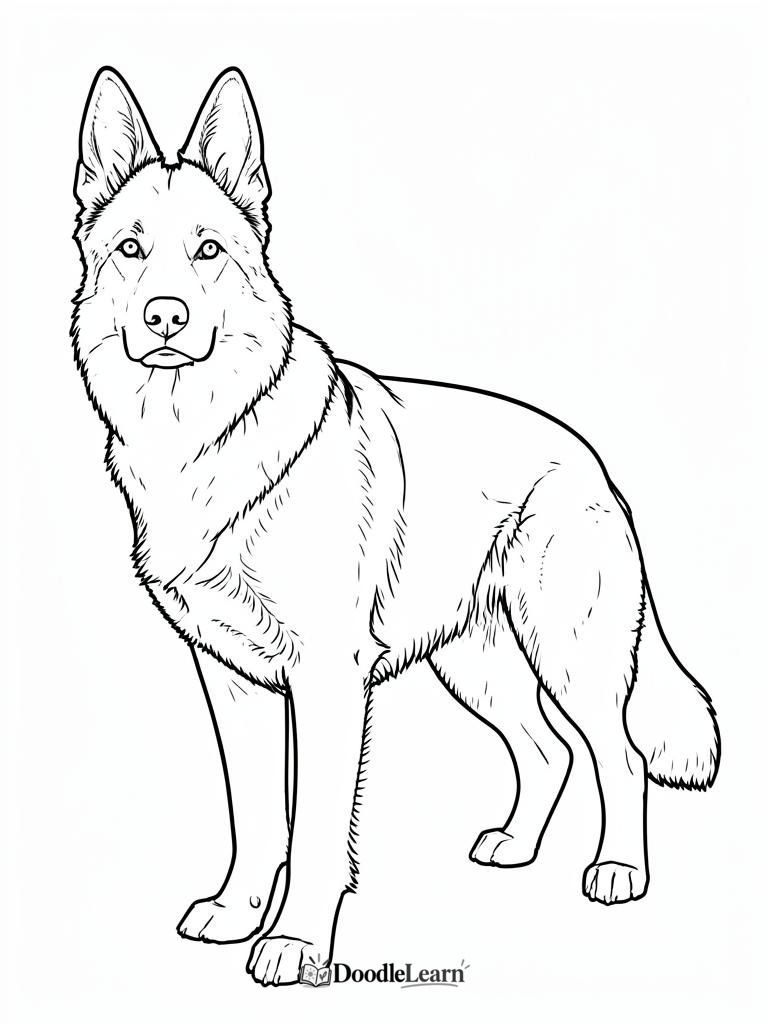
A German Shepherd standing alert, with tall pointed ears and a long muzzle. The breed was created in Germany in the 1890s for herding, and is now often used in police and search work.
View, print or download →
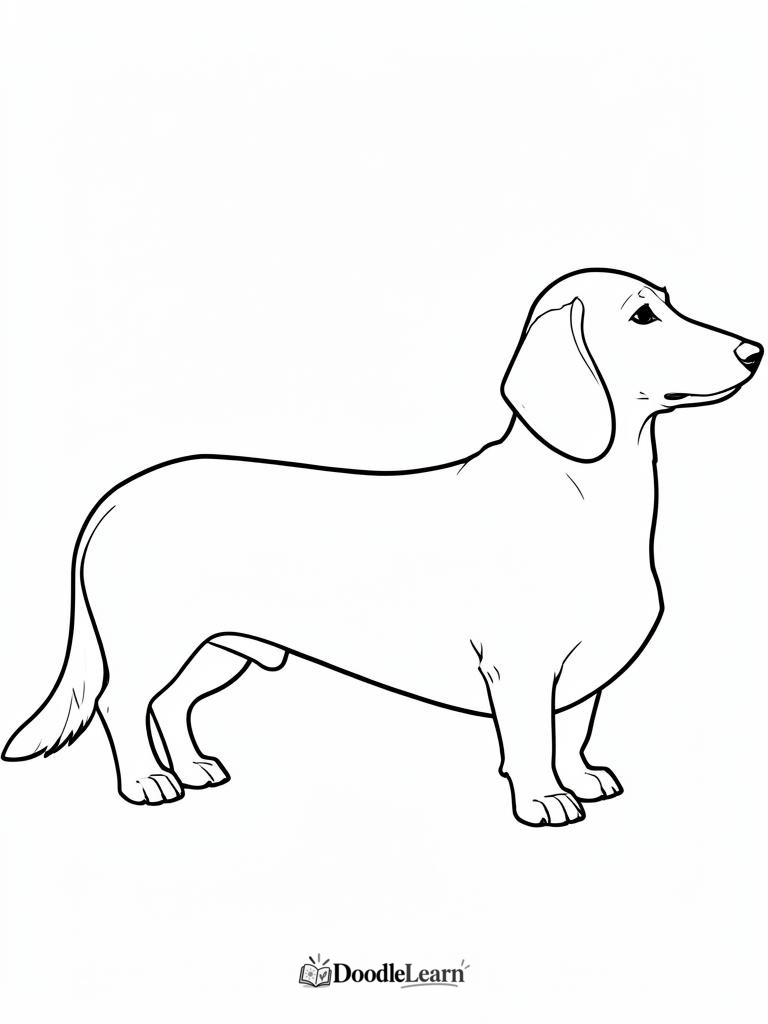
A Dachshund in profile, with its long low body and short legs. It was bred in Germany to follow badgers and other animals into their burrows.
View, print or download →
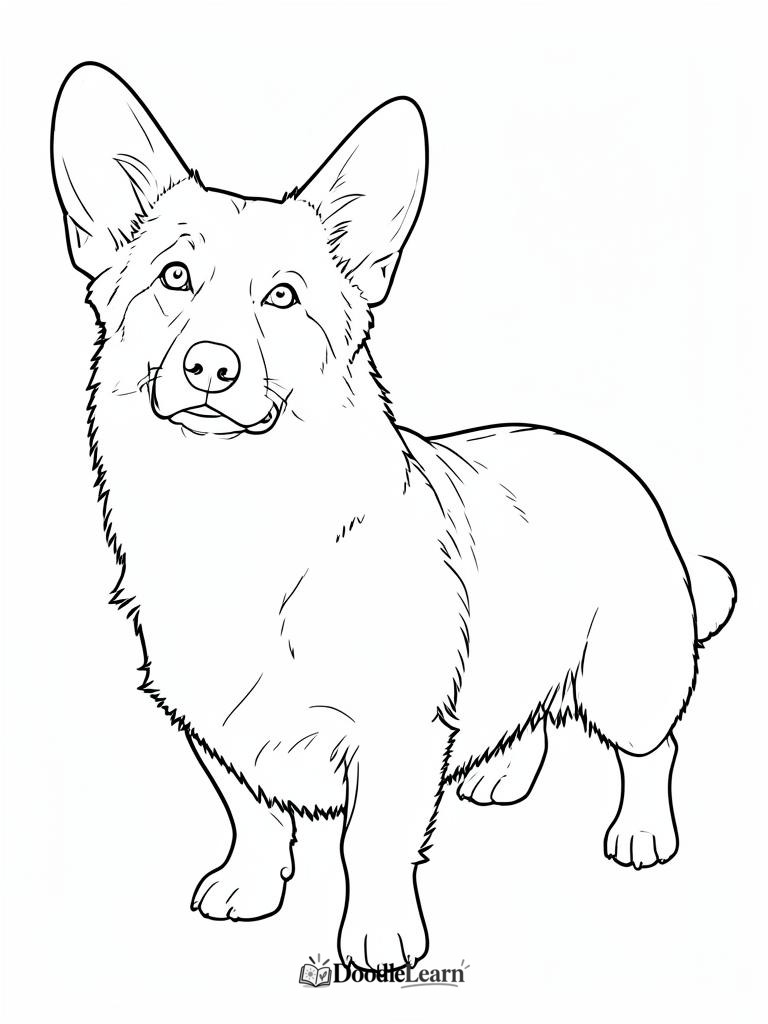
A Welsh Corgi with big upright ears and very short legs. Corgis were bred in Wales to herd cattle, nipping at their heels and staying low enough to avoid a kick.
View, print or download →
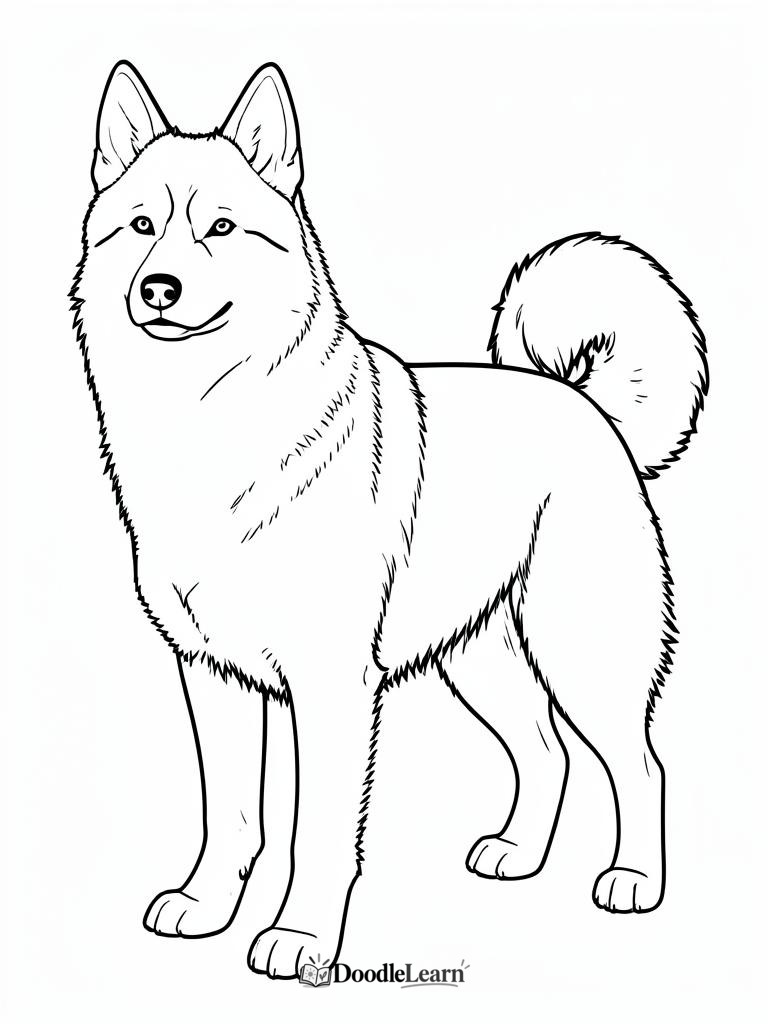
A Siberian Husky with a thick double coat and curled tail. Huskies were bred by the Chukchi people of Siberia to pull sleds long distances in the cold.
View, print or download →
Browse by the kind of dog page you want — simple shapes for little hands, detailed breed portraits, busy play scenes or working dogs with a job to do.
Big shapes, thick outlines and lots of open space, made for younger children.
Recognisable breeds drawn with their real features — coat length, ear shape and body build.
Dogs fetching, swimming and herding — plus a maze and a step-by-step drawing sheet.
Dogs
6 printable sheets · 3-6
Dogs
13 printable sheets · 5-12
Dogs
7 printable sheets · 3-8
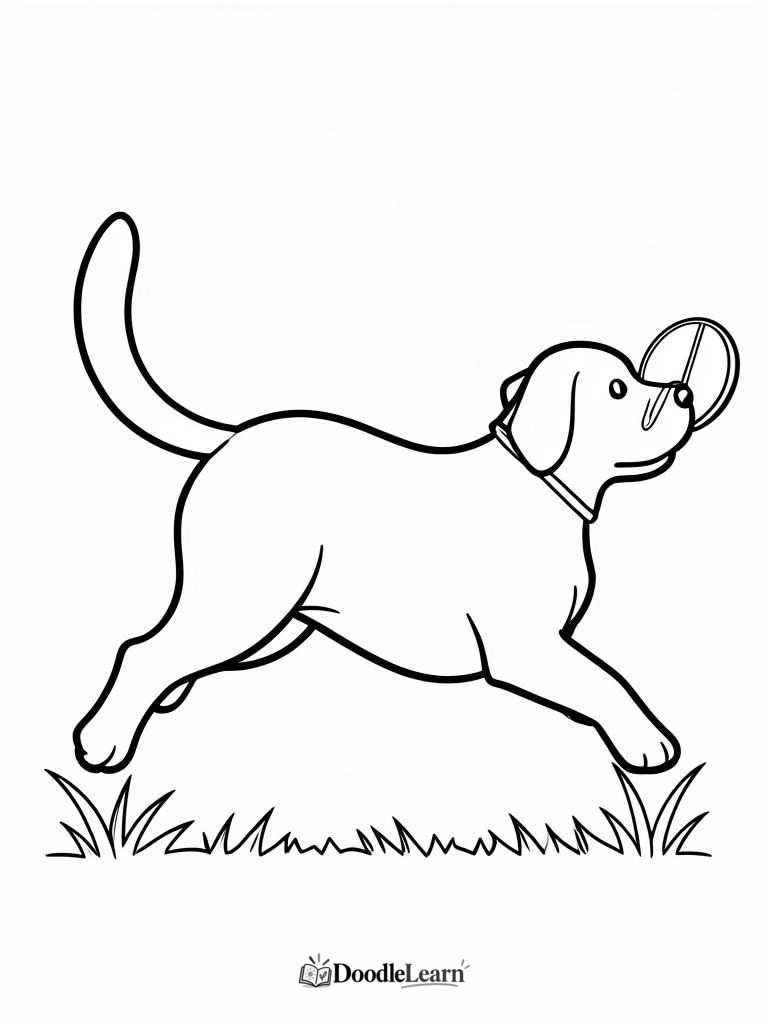
Dogs
5 printable sheets · 4-10
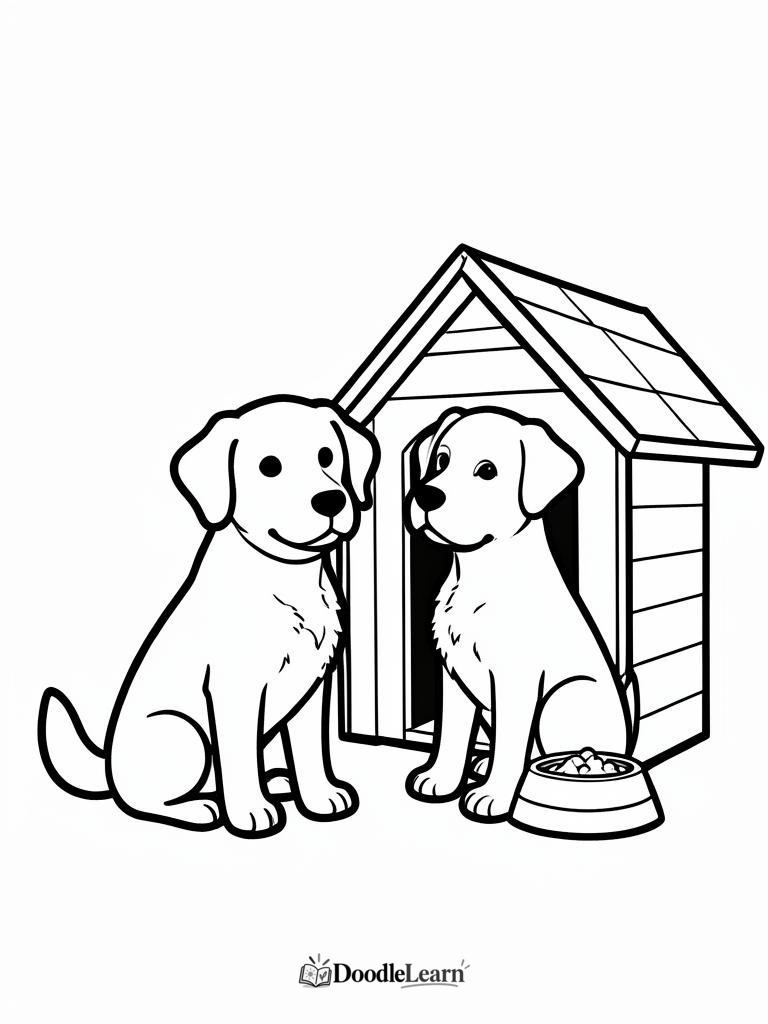
Dogs
6 printable sheets · 4-11
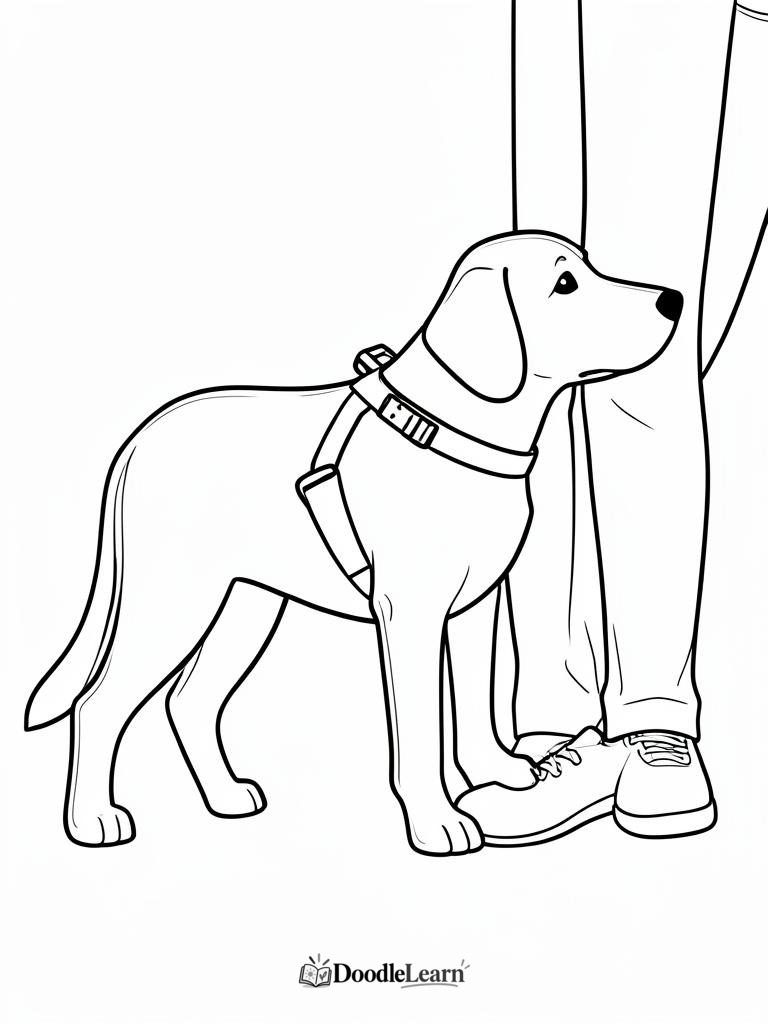
Dogs
3 printable sheets · 5-12
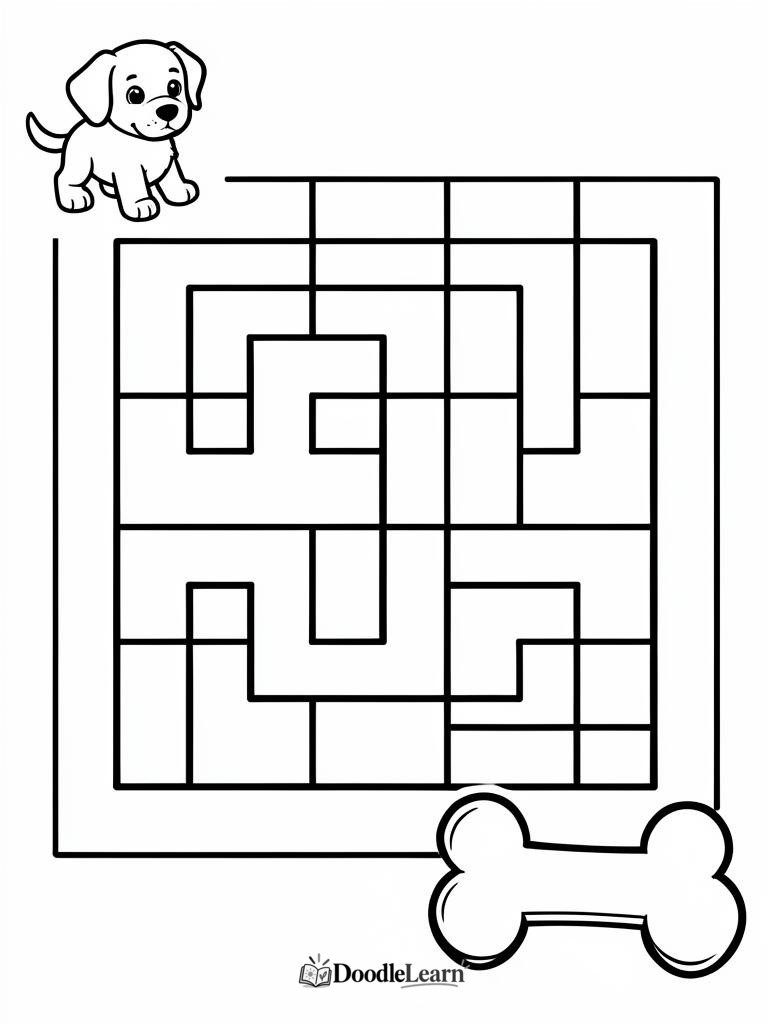
Dogs
3 printable sheets · 4-10
The pet dog, Canis familiaris, is a meat-eating mammal descended from wolves. Dogs are social animals that live in family groups, read each other's body language closely and are unusually good at reading ours as well.
Smell is a dog's strongest sense. A dog's nose holds roughly 300 million scent receptors compared with about six million in ours, and a separate air path carries some of each sniff straight to the smelling area. That is why dogs can follow a trail hours after someone has walked it.
Dogs hear much higher sounds than people and can turn their ears towards a noise. Their eyes are built for dim light and movement, but they see fewer colours than we do — mostly blues and yellows rather than reds and greens.
Dogs were bred to work, so most need daily walks and something to think about. Short, reward-based training sessions teach a dog what to do instead of only telling it off, and they tire a dog out almost as much as running.
Dogs and people have lived together for a very long time. These dates are approximate, because they come from archaeology and DNA studies rather than written records.
Period 1
at least 15,000 years ago
Dogs were domesticated from wolves — the first animal people kept. Exactly where and how often this happened is still debated by scientists.
Period 2
about 10,000 years ago
As people began farming, dogs took on jobs: guarding homes and animals, herding livestock and helping with hunting.
Period 3
the last few thousand years
Sled dogs, herding dogs, scent hounds and guard dogs developed in different places to suit different work and climates.
Period 4
the last 200 years
Most named breeds and breed registers are recent, dating from the 1800s onwards when dog shows began.
Meat eaters that can digest more
Dogs descend from meat eaters, but unlike cats they digest starches well, which is one change that came with living alongside farming people. Most pet dogs eat prepared dog food balanced for their age and size.
Prepared dog food · Meat protein · Some grains and vegetables
How a dog eats
A dog's long canine teeth grip, and the back teeth shear food into pieces rather than grinding it. Dogs swallow larger chunks than we do.
Canines for gripping · Carnassials for slicing
What dogs should never have
Several everyday foods are dangerous for dogs, including chocolate, grapes and raisins, onions, garlic and the sweetener xylitol. Fresh water should always be available.
Never chocolate · Never grapes or raisins · Never onion or garlic
Dogs talk mostly with their bodies. A loose wagging tail and a wiggly body usually mean a relaxed, friendly dog, while a stiff body, hard stare and slow high wag can mean the opposite — a wag on its own is not a promise of friendliness.
A play bow — front legs down, back end up — is an invitation to play, and dogs use it to show that what follows is only a game.
Signs that a dog wants space include turning the head away, licking the lips, yawning when not tired and showing the whites of the eyes. Noticing these early is the safest way for children to meet a dog.
Barks, growls and whines fill in the rest. A growl is useful information, not bad manners: it is a dog asking for distance before it feels it has to do anything more.
Beyond colouring, these DoodleLearn printables work well alongside a dogs or pets topic. Only pages that already exist are linked — the rest are on the way.
In progress: Dog word search, Dog breed matching sheet, Puppy counting worksheet, Dog care checklist.
DoodleLearn dog pages are free to print for classroom and homeschool use. Each sheet pairs artwork with short, accurate text, so colouring time doubles as reading and science time.