
Fossil Dig
DetailedAges 8-12
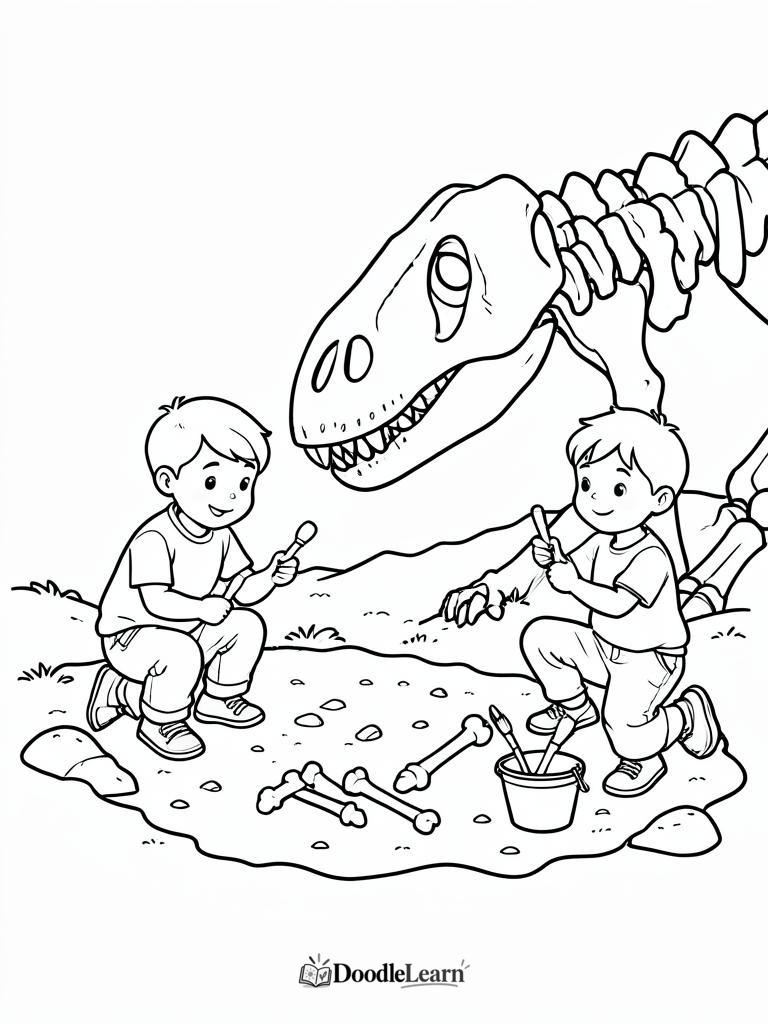
Two children uncovering a large dinosaur skull and bones with brushes at a dig site.
View, print or download →
Three-toed dinosaur footprints pressed into rock alongside a fossil leaf and a curled shell.
Print it at home or in the classroom, colour it in, then read the Dinosaur fossils facts underneath to find out more about the animal you have just drawn.
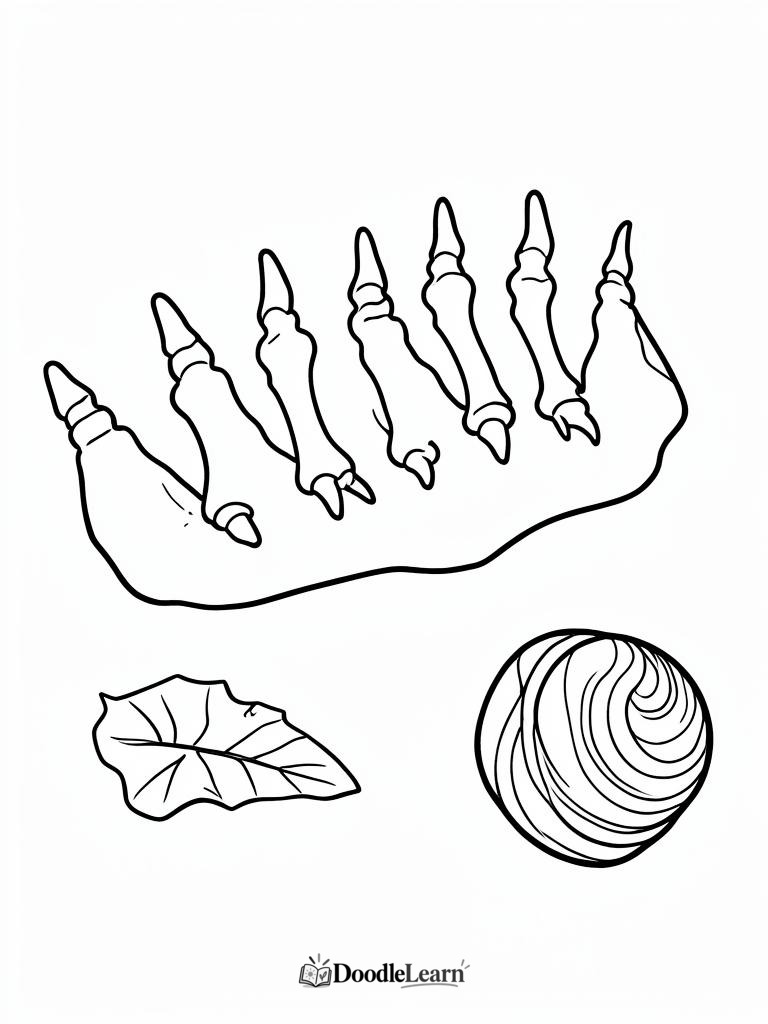
Bones, teeth and eggs are body fossils: parts of the animal itself. Footprints, burrows and skin impressions are trace fossils: marks the animal left behind. Trace fossils are useful because they record what the animal was doing.
When an animal is buried quickly by sand or mud, its soft parts rot away but its bones and teeth can survive. Over a very long time, minerals seep into those bones and harden. What is left is a fossil — rock in the shape of the original bone.
More pages picked from the same topic, difficulty and age range.
Two children uncovering a large dinosaur skull and bones with brushes at a dig site.
View, print or download →
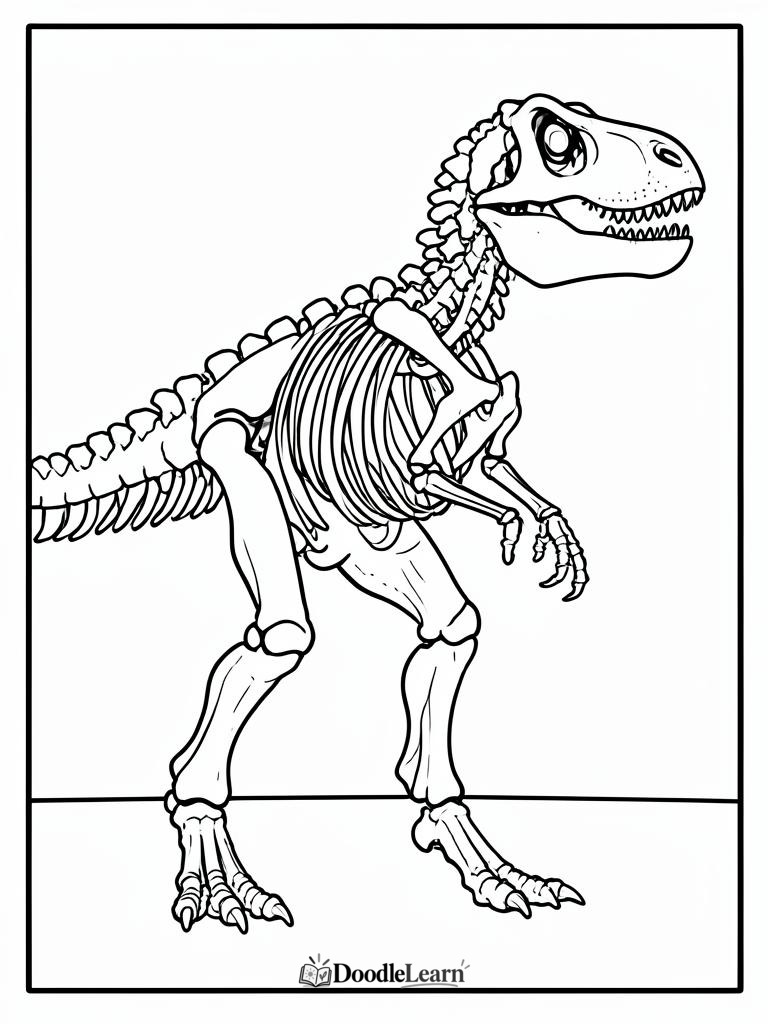
A complete Tyrannosaurus rex skeleton in a museum pose, with ribs, spine and skull picked out clearly.
View, print or download →
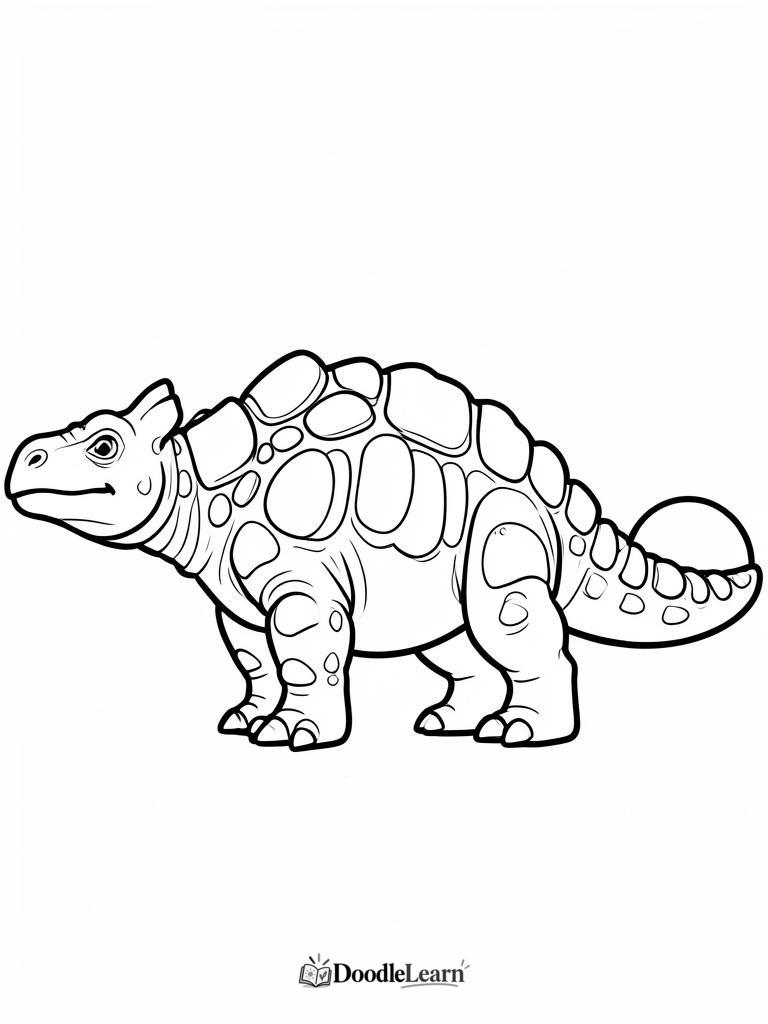
A side view of Ankylosaurus with rounded armour plates along its back and a club at the end of its tail.
View, print or download →
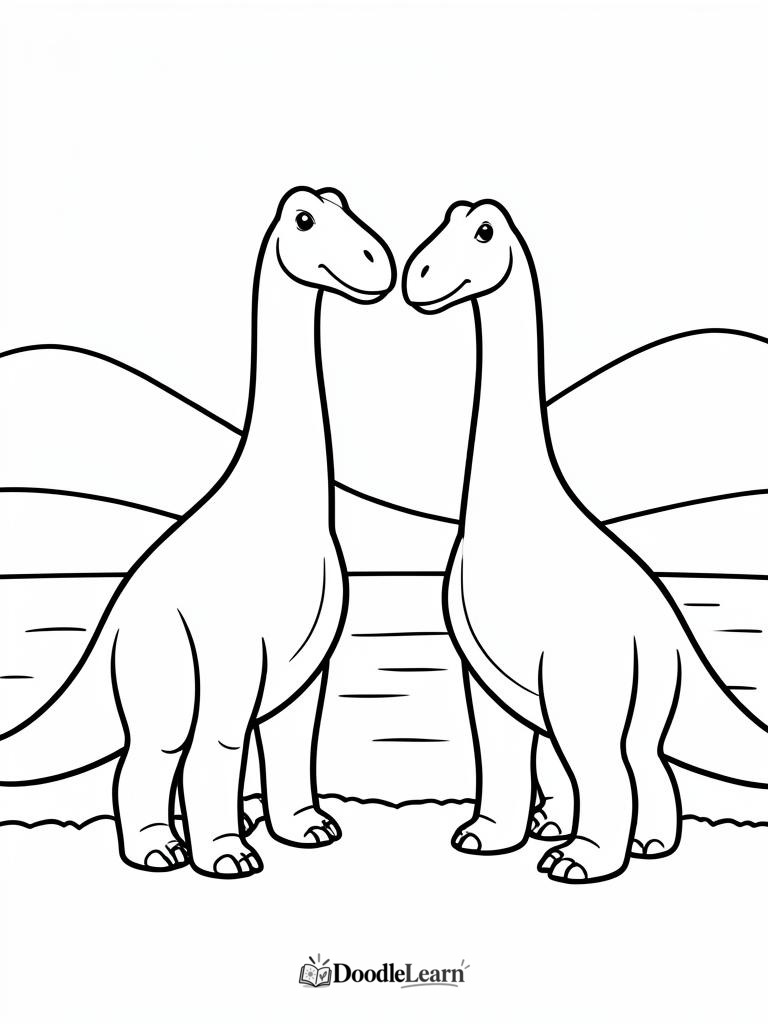
Two long-necked Brachiosaurus standing together beside calm water with hills behind them.
View, print or download →
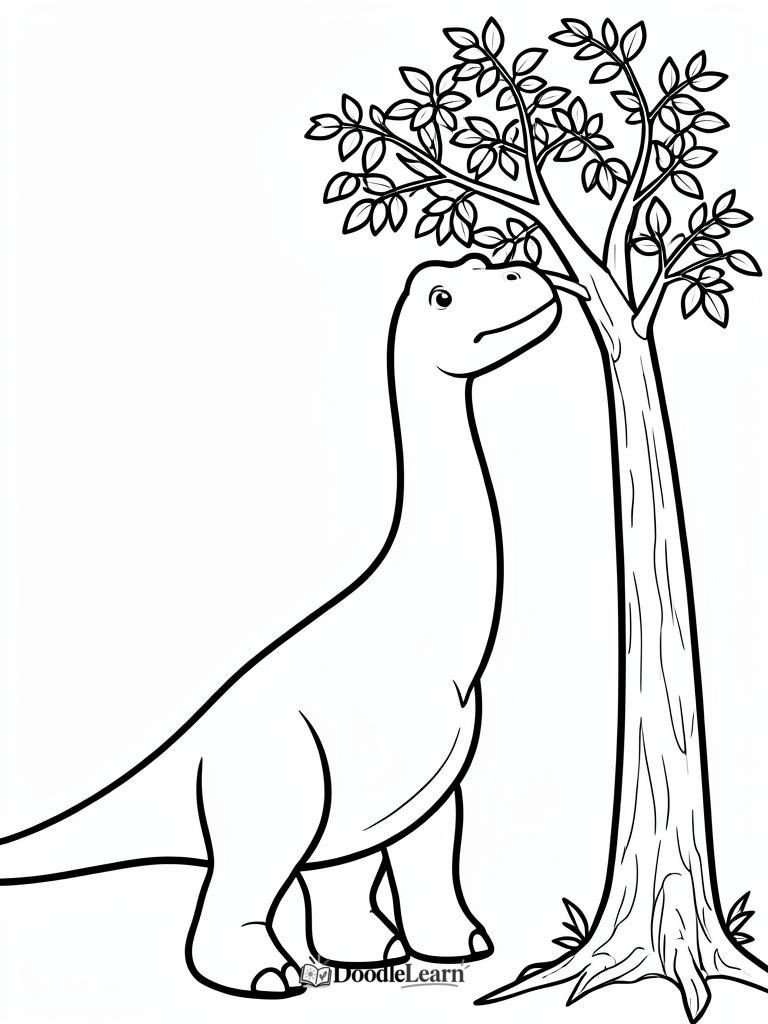
A Brachiosaurus stretching its neck up into a leafy tree — a clear picture of how it fed.
View, print or download →
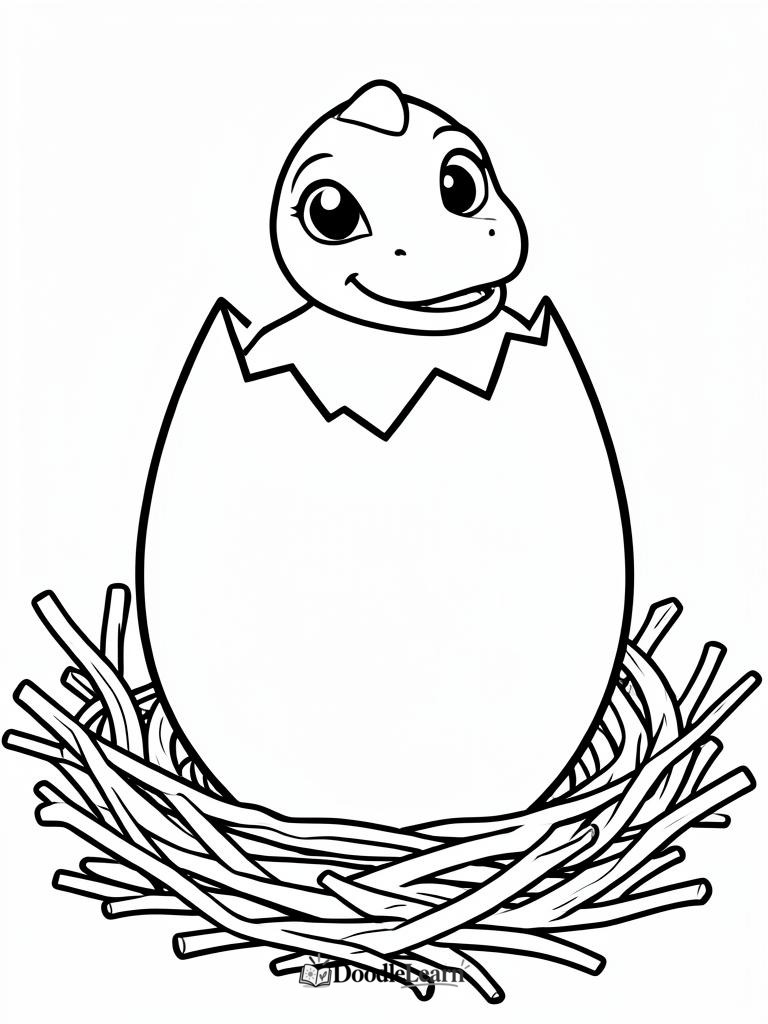
A large egg cracking open with a baby dinosaur peeking out of the top, sitting in a twig nest.
View, print or download →
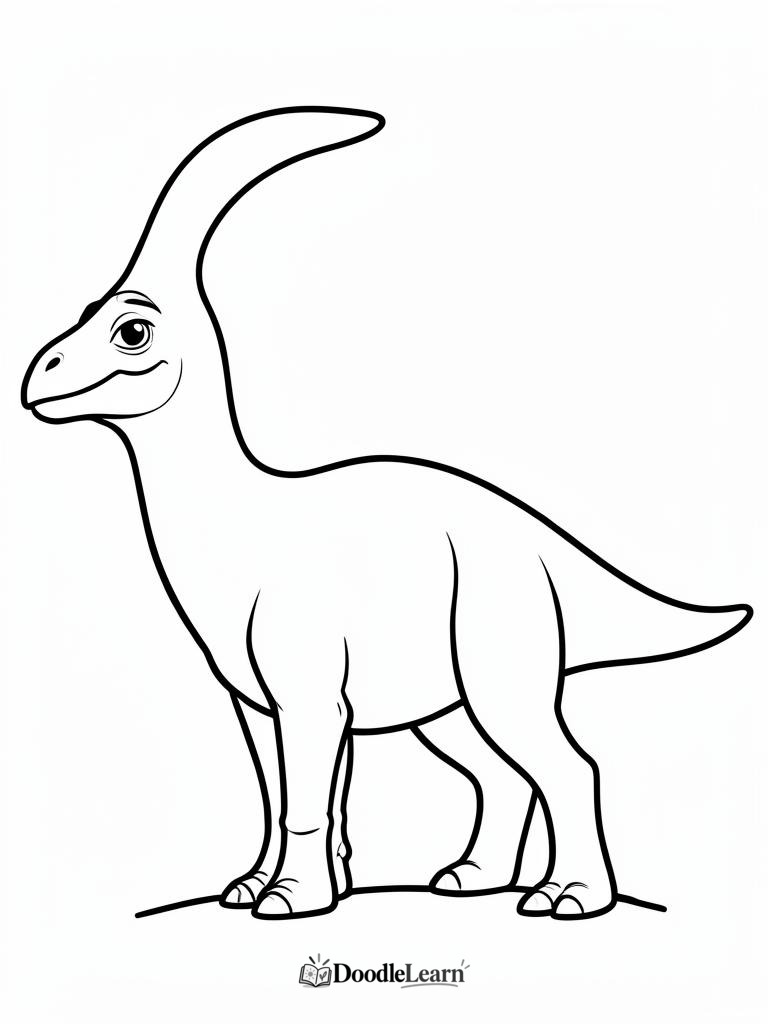
A side view of Parasaurolophus with its long curved head crest clearly drawn.
View, print or download →
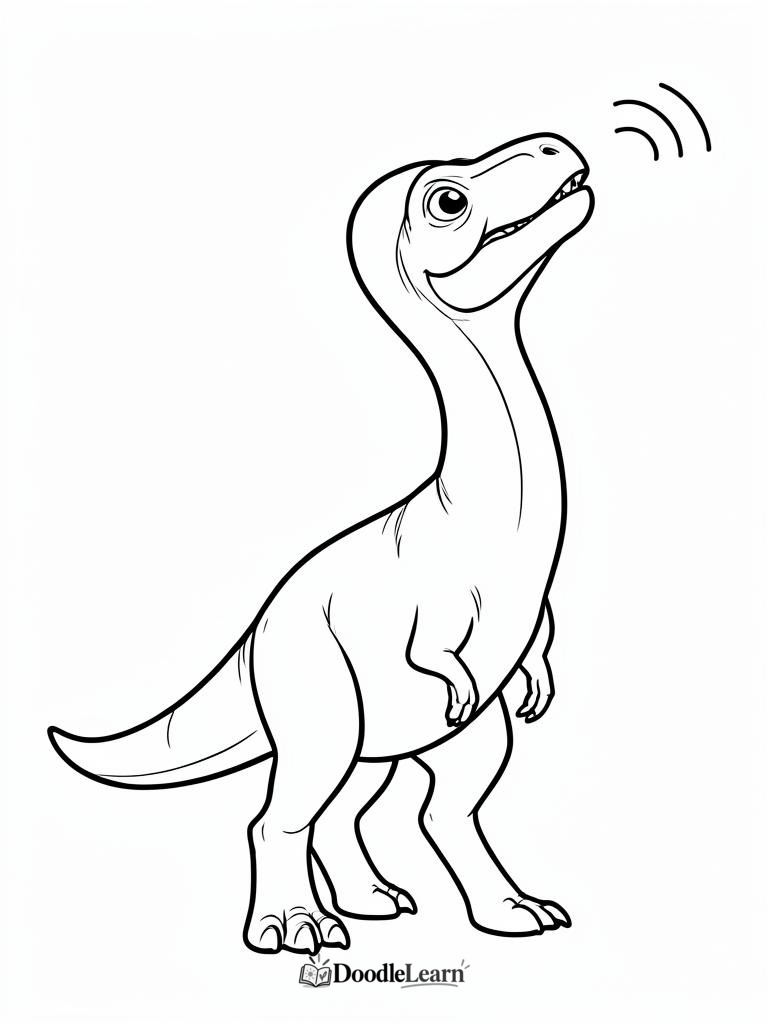
Parasaurolophus with its head lifted and simple sound lines in the air.
View, print or download →