
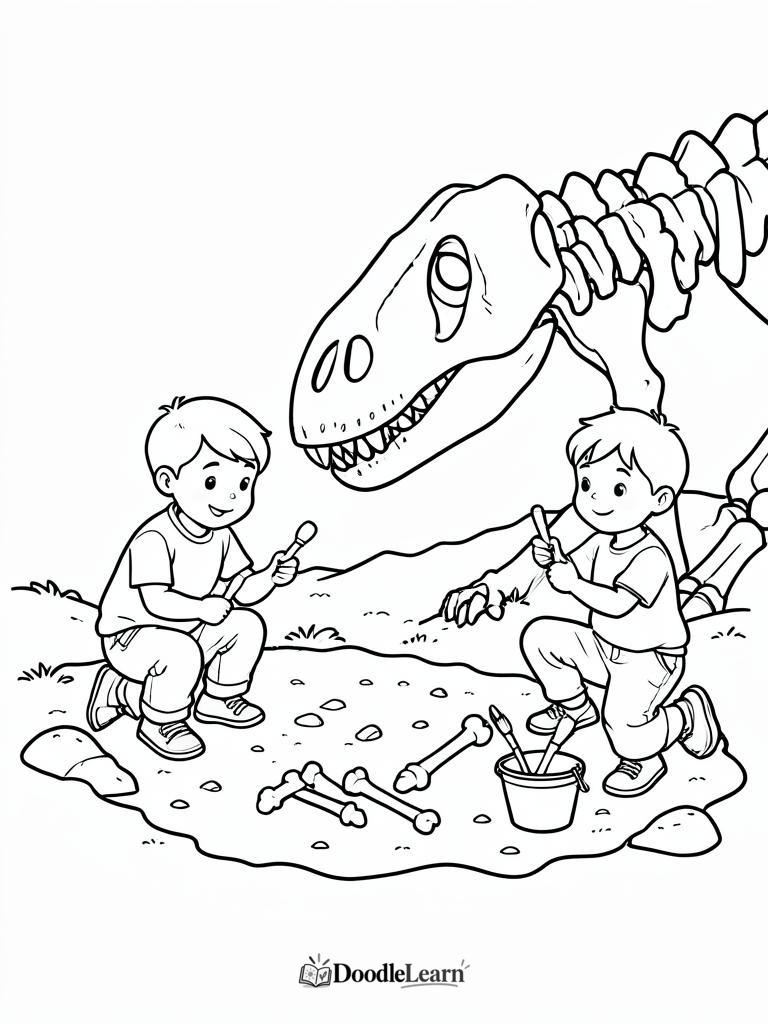
Fossil Dig
DetailedAges 8-12
Two children uncovering a large dinosaur skull and bones with brushes at a dig site.
View, print or download →
3 printable sheets · 5-12
Fossils are the only reason we know dinosaurs existed at all, so they deserve their own pages.
Colour a full Tyrannosaurus skeleton, join a fossil dig, and look closely at footprints and shell fossils pressed into rock.
Download the whole collection
One PDF containing all 3 sheets, ready for US Letter or A4.
Open all 3 — PDFTwo children uncovering a large dinosaur skull and bones with brushes at a dig site.
View, print or download →
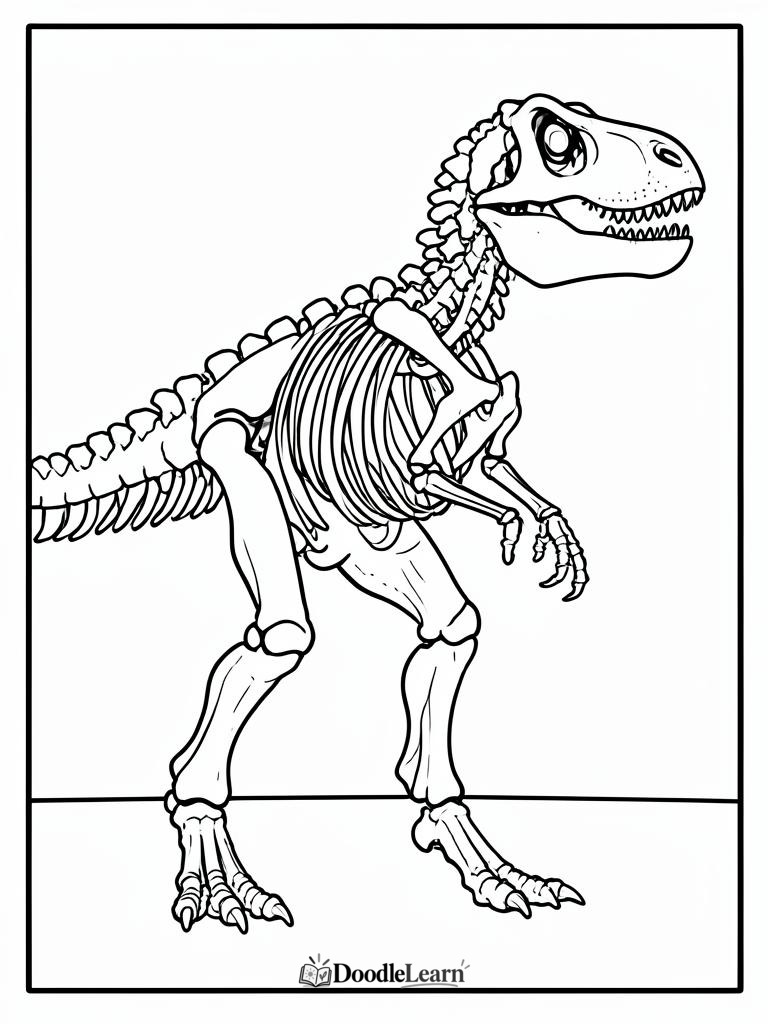
A complete Tyrannosaurus rex skeleton in a museum pose, with ribs, spine and skull picked out clearly.
View, print or download →
When an animal is buried quickly by sand or mud, its soft parts rot away but its bones and teeth can survive. Over a very long time, minerals seep into those bones and harden. What is left is a fossil — rock in the shape of the original bone.
Bones, teeth and eggs are body fossils: parts of the animal itself. Footprints, burrows and skin impressions are trace fossils: marks the animal left behind. Trace fossils are useful because they record what the animal was doing.
Palaeontologists are scientists who study fossils. They search rocks of the right age, uncover fossils with hand tools and brushes, record exactly where each piece was found, then clean and study them in a laboratory.
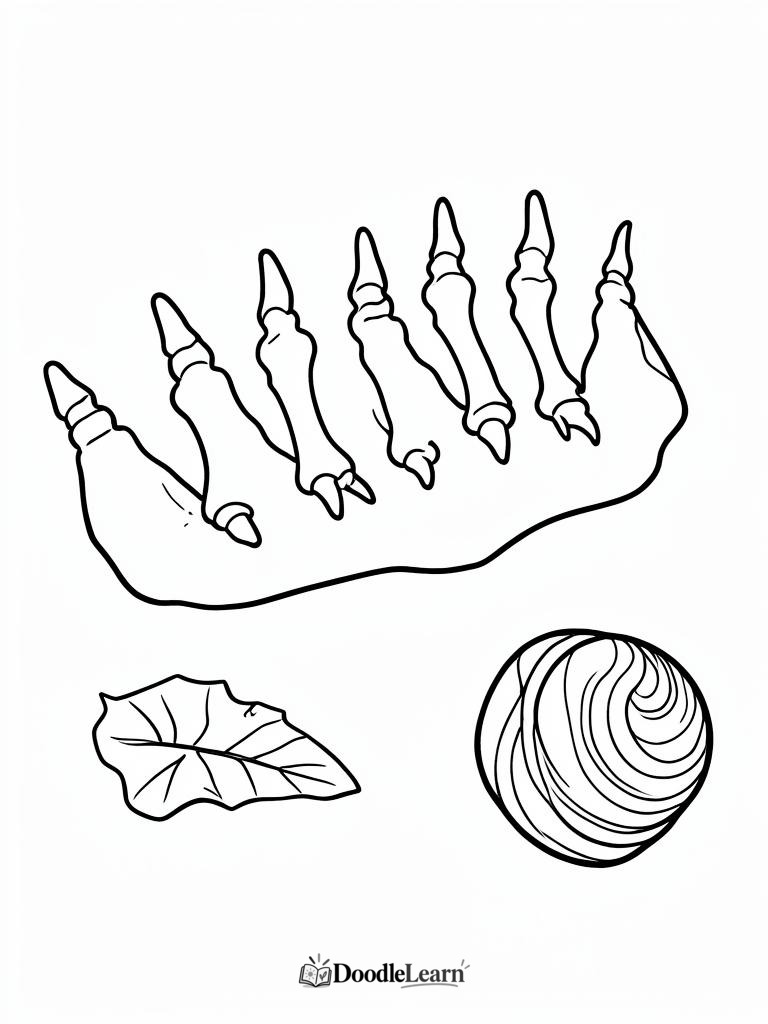
Three-toed dinosaur footprints pressed into rock alongside a fossil leaf and a curled shell.
View, print or download →
T-Rex Coloring Pages
3 sheets · 3-12
Triceratops Coloring Pages
3 sheets · 3-12
Velociraptor Coloring Pages
3 sheets · 5-12
Brachiosaurus Coloring Pages
3 sheets · 3-12
Stegosaurus Coloring Pages
3 sheets · 3-12
Spinosaurus Coloring Pages
3 sheets · 3-12
Ankylosaurus Coloring Pages
3 sheets · 3-12
Parasaurolophus Coloring Pages
3 sheets · 5-12