
By DoodleLearn · Evidence-informed guide
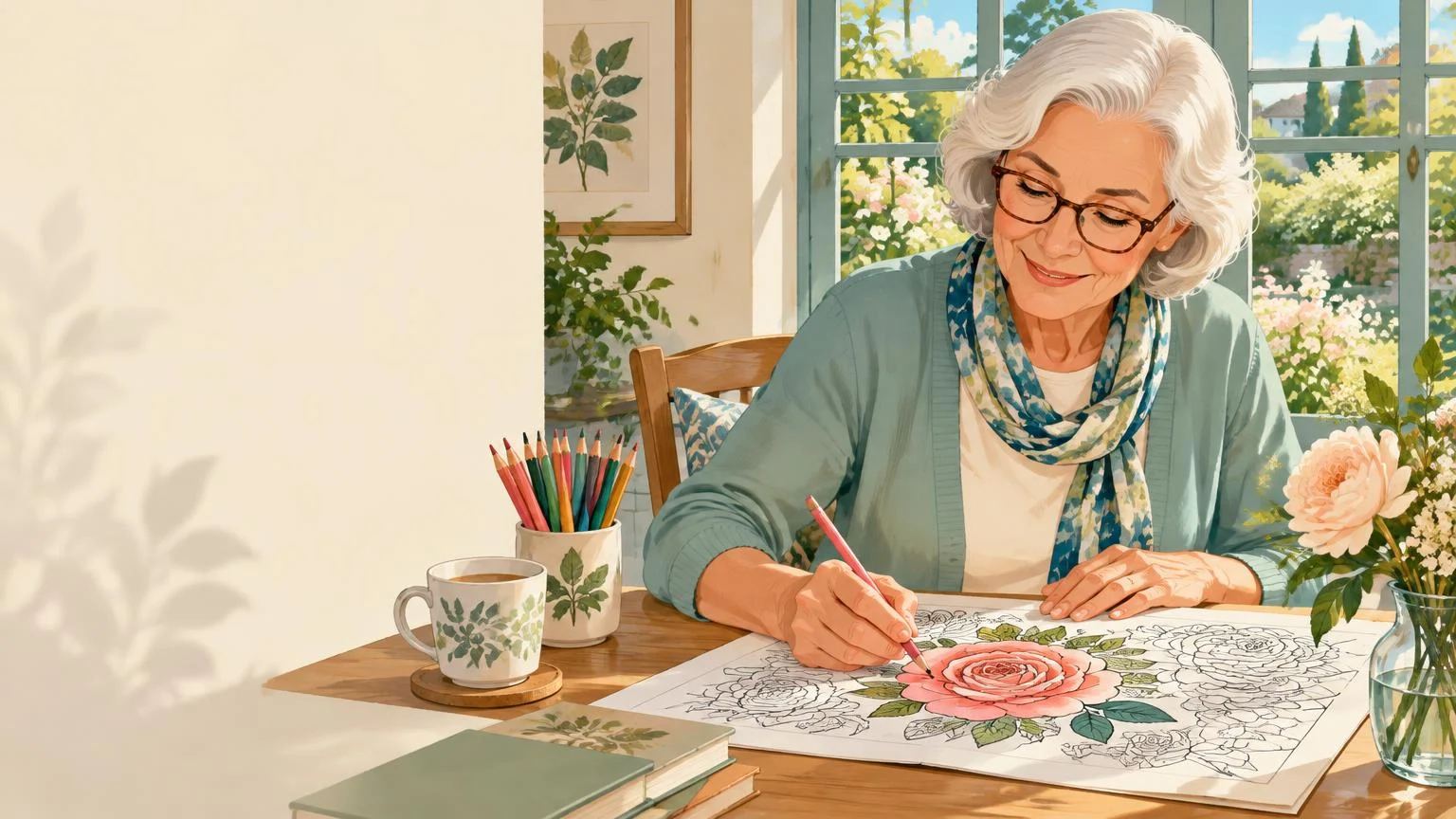
A garden-themed coloring page can be a small pleasure, a creative choice, or a welcome way to spend time with someone else. It does not need to be completed, displayed, or colored in any particular way. Choose a design that appeals to you, settle somewhere comfortable, and let the page be yours.
This guide offers ideas for coloring at home or in a group, with practical ways to make the activity comfortable and inclusive. Coloring is an optional creative activity, not a treatment, test, or measure of ability. Older adults have varied interests, experiences, and needs. The best approach is the one that feels right to the person holding the pencil.
Coloring offers opportunities for practice and enjoyment. The research does not make every benefit certain, and coloring is not a substitute for instruction, therapy, or medical care.
Download a Relaxing Coloring PageAn enjoyable activity at any age
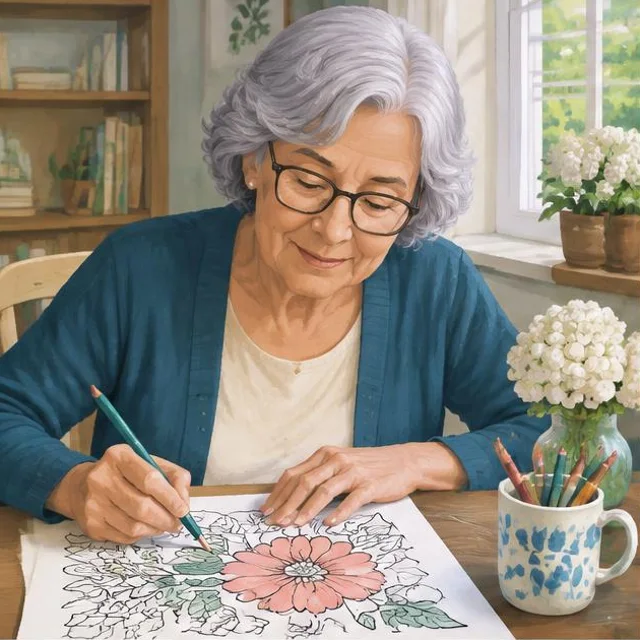
Coloring is for anyone who enjoys it. It can bring back memories of art projects, gardens, or favorite colors, but it can also be entirely new. Some people love detailed illustrations; others prefer a blank page, a puzzle, music, gardening, or something else. Age does not determine taste, ability, or the kind of support someone wants.
A simple invitation is better than an assumption: 'Would you like to try a garden picture?' Offer a couple of options, then respect a no or a change of mind. Some people want five minutes, others longer. Neither choice needs an explanation. The value is in the person's experience, not completing a page or making something look a certain way.
Relaxation and mindful creative time
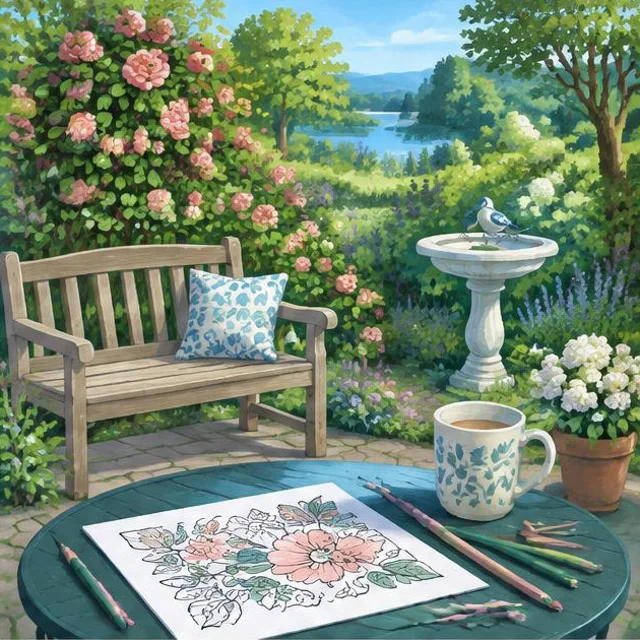
Coloring may feel calming because it offers a simple focus: choosing a shade, following a line, or making a mark. Others find it dull, frustrating, or tiring. A comfortable chair, good light, and freedom from pressure can make the activity pleasant, but coloring cannot guarantee relaxation or replace care for anxiety or other health concerns.
Koo and colleagues' 2020 randomized study assigned adults aged 55–75 to a brief mandala-coloring, plaid-coloring, drawing, or reading activity. Only the mandala group showed significantly lower anxiety than the reading control at the endpoint. That narrow short-term result does not establish lasting benefit, treatment effectiveness, or the same effect for garden coloring pages.
Liu and colleagues' July 2026 review pooled mandala-based activities including drawing, painting, and coloring. It reported symptom-score differences, but substantial variation between studies limits interpretation. McQuade and O'Sullivan's review covers many creative arts, not coloring alone. These sources are not interchangeable evidence for a particular printable or promises of individual health benefits. Enjoy a pause if it feels good; stop if it does not.
Creativity and personal expression
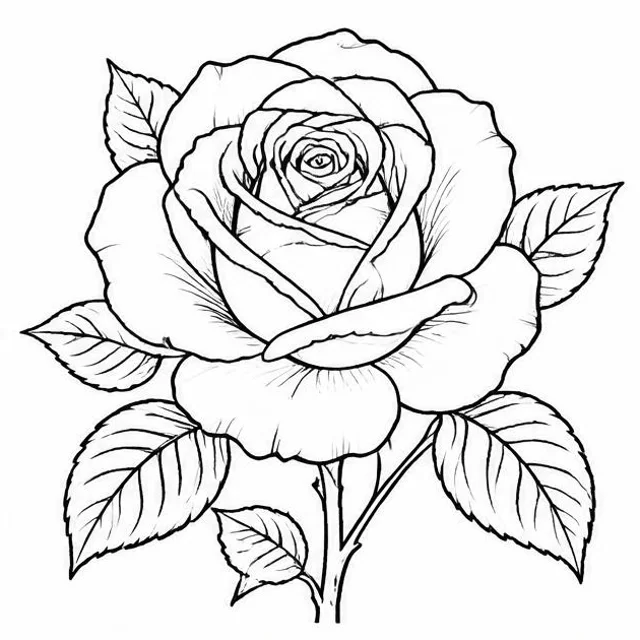
An outline is a starting point, not a set of rules. Roses can be blue, leaves gold, and a birdhouse striped. Choose colors from memory, match the season outside, invent a pattern, or leave areas white. There is no need to stay inside every line or explain your decisions. A page can be a gift or simply something pleasant to work on.
One person might plan a coordinated palette; another might choose each color as it comes. If someone asks for help, offer it as requested: hold the paper steady, locate a color, or describe a shape. Do not take over creative decisions. If coloring prompts an idea for drawing, collage, or another craft, follow that interest rather than insisting on the original activity.
Enjoyable mental engagement
Coloring involves choices about shade, location, pattern, and whether to continue. Some people enjoy repeating a color; others imagine where a flower might grow or remember a garden visitor. Those moments can make an activity engaging without turning it into a test. A conversation can be welcome, but it is not required.
Do not present coloring as preventing dementia, reversing cognitive decline, or measuring memory. A person's marks cannot establish how well they think. If the activity becomes confusing or unwelcome, reduce options, offer another page, or move on. Ask whether assistance is wanted instead of interpreting a pause as difficulty. Let enjoyment and personal preference guide the experience.
Gentle hand activity and personal comfort
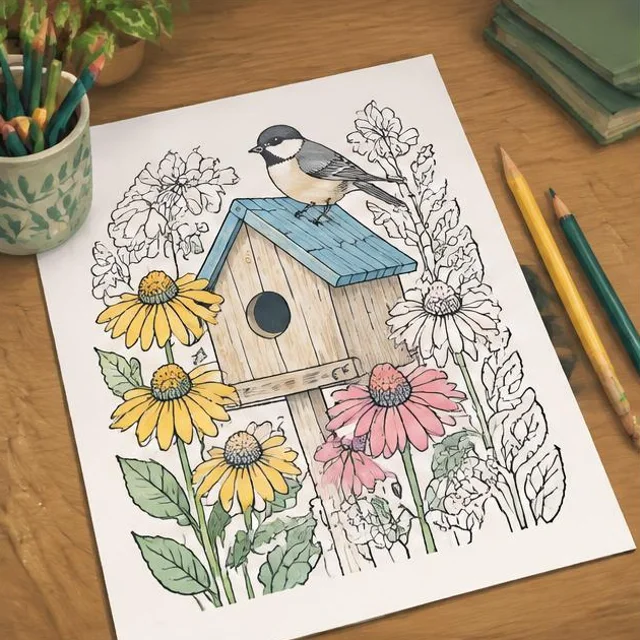
Holding a pencil, marker, or crayon feels comfortable for some people and awkward for others. A stable surface, clipboard, or nonslip mat may keep paper from sliding. Wider barrels or soft grips may suit some hands, while other people prefer familiar thin pencils. These are practical choices, not treatments or requirements.
Adjust position, rest, or stop whenever needed. If coloring causes pain, stop rather than pushing through it. Seek healthcare advice for persistent discomfort or concerns about hand function. This guide does not prescribe coloring to improve mobility or replace individualized advice. Comfortable participation might mean coloring selected areas, asking someone to hold the page, or choosing a different activity entirely.
Activities for retirement communities
Make coloring one option among many, not an activity assigned to residents. Advertise it plainly, allow people to join late or leave early, and avoid describing it as childish or automatically therapeutic. Offer different subjects and detail levels. Someone who prefers to watch or use their own supplies should feel just as welcome.
Ask before giving hands-on help. Place materials within reach, leave room for mobility aids, and check that pathways are clear. Adjust lighting and reduce glare where possible. Strong scents, noise, or crowded tables can be uncomfortable, so offer low-odor supplies and a quieter place. Provide verbal descriptions or an alternative activity when visual printables are unsuitable; the current PDFs are not tagged for screen-reader access.
A facilitator can prepare an easy starting point without setting a required output. Keep refreshments away from tools, identify a convenient place to wash hands, and make breaks easy. Invite participants to suggest the next subject. Feedback about comfort and enjoyment is more useful than counting completed pictures or comparing one person's work with another's.
Choosing comfortable coloring tools
A small selection is enough: colored pencils, washable markers, crayons, and paper. Ask what someone likes rather than assuming. Pencils allow shading and fine work; markers give bold color with fewer repeated strokes. Markers can bleed through thin paper, so a spare sheet underneath helps protect the table. Follow supply labels and the printer's paper guidance.
Keep tools visible and easy to handle. A tray can stop pencils rolling away; a color chart or spoken description may help someone choose a shade. Adjustable light can reduce glare, and a stable chair supports a comfortable position. Try a tool on spare paper before committing to a picture. If it feels awkward, change tools, take a break, or stop.
Large-print and easy-to-color designs
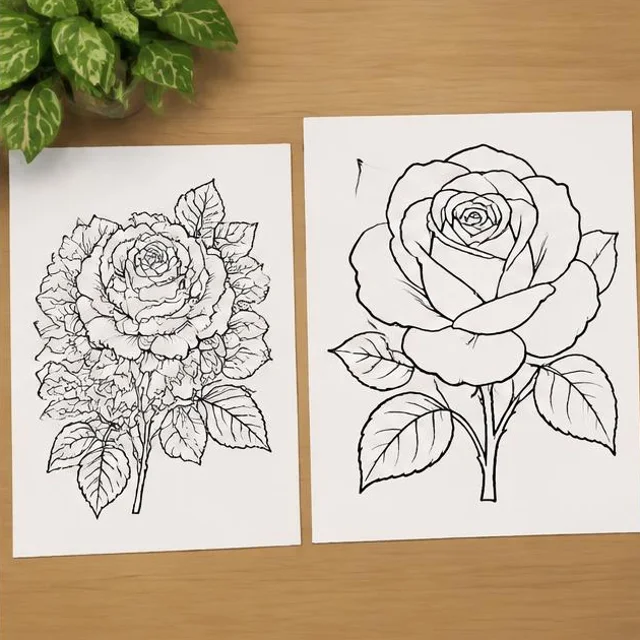
Bold outlines, open spaces, and fewer small details may appeal to some people. Others enjoy intricate work. There is no single senior coloring style, and not every older adult needs simplified artwork. Choose based on personal taste and vision, and offer variety. Ask what feels inviting instead of choosing a page solely because of age.
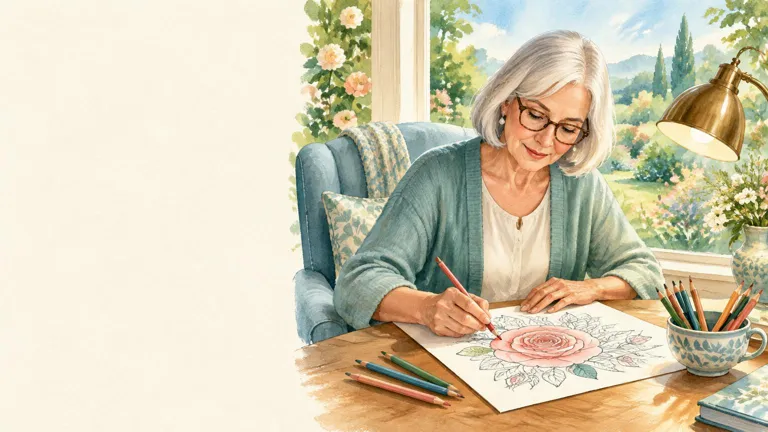
Here, large-print coloring means generous artwork and clear outlines, not a special font or a certified accessible format. The illustration compares a detailed floral design with a simpler rose; it is not a before-and-after of the same downloaded page. Enlarging a print may help, but suitability depends on the person and the design. Print one copy, check that nothing is cropped, and ask for feedback before making a whole group set.
Ten coloring ideas seniors may enjoy
These subjects are all represented in DoodleLearn's existing Gardens, Flowers & Nature collection. They are invitations, not assignments: color one detail, combine ideas, use imaginary shades, or choose another activity.
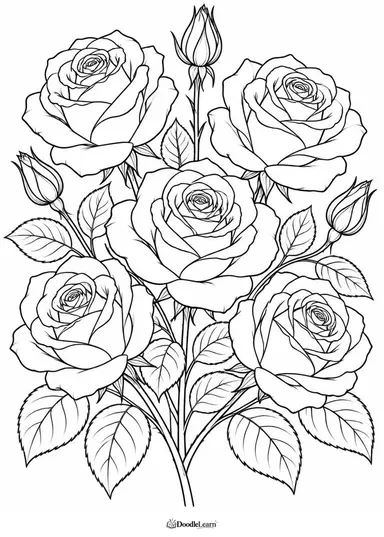
- A rose garden: remember a favorite bloom or invent a new rose color.
- Country sunflowers: use warm petals or unexpected patterns around the large centers.
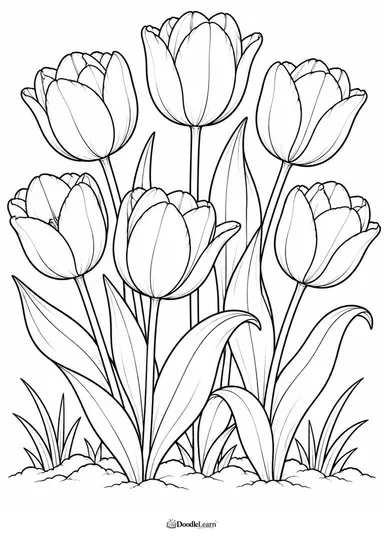
- Spring tulips: choose a mixed garden or a single color for the flowers.
- Butterflies among flowers: repeat a wing pattern or give each butterfly its own palette.
- A hummingbird: try bright jewel-like shades beside the trumpet flowers.
- A birdhouse garden: decorate the roof, post, flowers, and small visiting bird.
- A vegetable garden: color the carrots, tomatoes, and lettuce shown in the beds.
- A bouquet: combine colors from memory or invent an arrangement in the vase.
- A peaceful bench: imagine a place to sit beside the rose bush and birdbath.
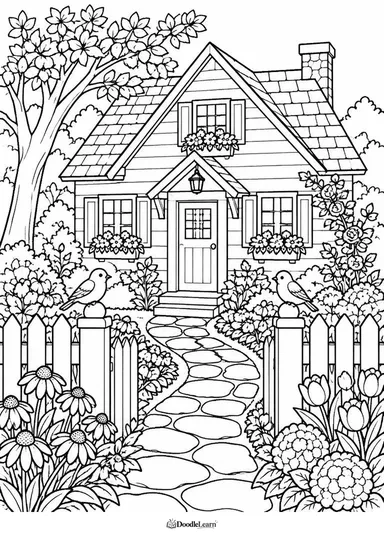
- A cottage garden: add colors to the home, path, fence, and flowers.
Free printable coloring pages for seniors
The real previews below connect to garden pages, not the editorial illustrations above. Open a picture to view its US Letter PDF, or open the collection to select A4 and browse all ten pages. Downloads are free with no account required. Start with one picture, test its line clarity, and use Fit to page if your printer would otherwise crop the edges.
Gardens, Flowers & Nature includes birds, butterflies, seasonal flowers, a cottage, and garden scenes. Nostalgic Memories adds ten vintage-inspired scenes from the 1950s–1970s, available through the senior hub. A dedicated geometric-pattern collection is not available. Review the terms before reposting or distributing files beyond your own group. If a visual PDF does not meet someone's access needs, offer another format or activity rather than presenting it as universally accessible.
Frequently asked questions
What supplies should I offer first?
Start with a few pencils, markers, or crayons and one page. Ask about preferences. A wider tool or a page held in place may help some people, but there is no required equipment list.
Should I choose an easy page for an older adult?
Ask what kind of picture they enjoy. Some people prefer broad outlines and open spaces; others like intricate detail. Age alone does not tell you which design is right.
How long should a session last?
There is no required length. Let the person set the pace, take breaks, and stop whenever they wish. Stop if coloring causes pain and seek healthcare advice for persistent concerns.
Can I display or share a finished page?
Ask first and respect the answer. Sharing, photographing, and displaying artwork should be the creator's choice. Completing a page is never a condition of taking part.
Research and further reading
Further reading from research and professional guidance. Study findings apply to their participants and tasks; professional guidance is not the same as a controlled experiment.
- Koo and colleagues — Coloring Activities in Taiwanese Older Adults (2020)
Randomized short-term study in adults aged 55–75. The mandala group's endpoint anxiety differed from the reading control; this is not evidence of lasting treatment benefit.
- McQuade & O'Sullivan — Arts and Creativity in Later Life (2024)
Systematic review of varied arts and creative activities. Findings across different art forms cannot be attributed specifically to coloring.
- Liu and colleagues — Mandala-Based Art Interventions (July 2026)
Review and meta-analysis of mandala-based coloring, drawing, and painting in middle-aged and older adults. High variation between studies warrants caution; not a clinical recommendation for garden printables.

Coloring as a social activity
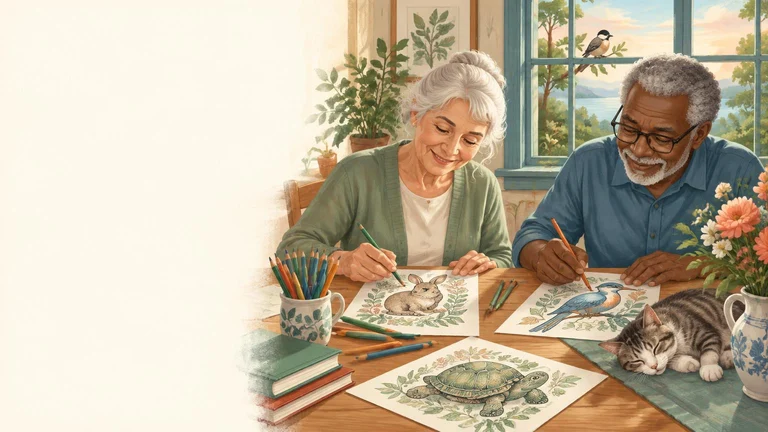
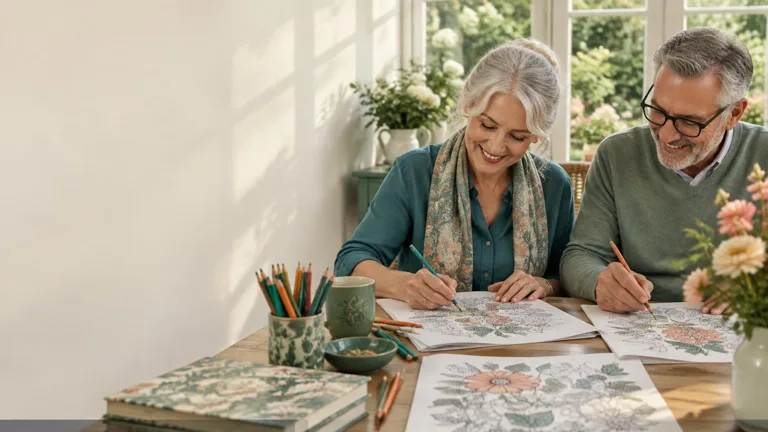
A shared table can offer company without requiring constant conversation. People might chat, listen to music, or work quietly beside one another. Offer several designs and enough supplies that no one must wait for a favorite tool. A host can start with an invitation and let participants decide their pace and level of interaction.
Sharing work should always be voluntary. Ask before displaying or photographing a page, and avoid putting someone on the spot to explain it. A person may feel proud to share, prefer privacy, or leave before finishing. All are welcome ways to participate. Conversation can follow interests such as gardens or birds, without turning the session into a memory quiz.