By DoodleLearn · Evidence-informed guide
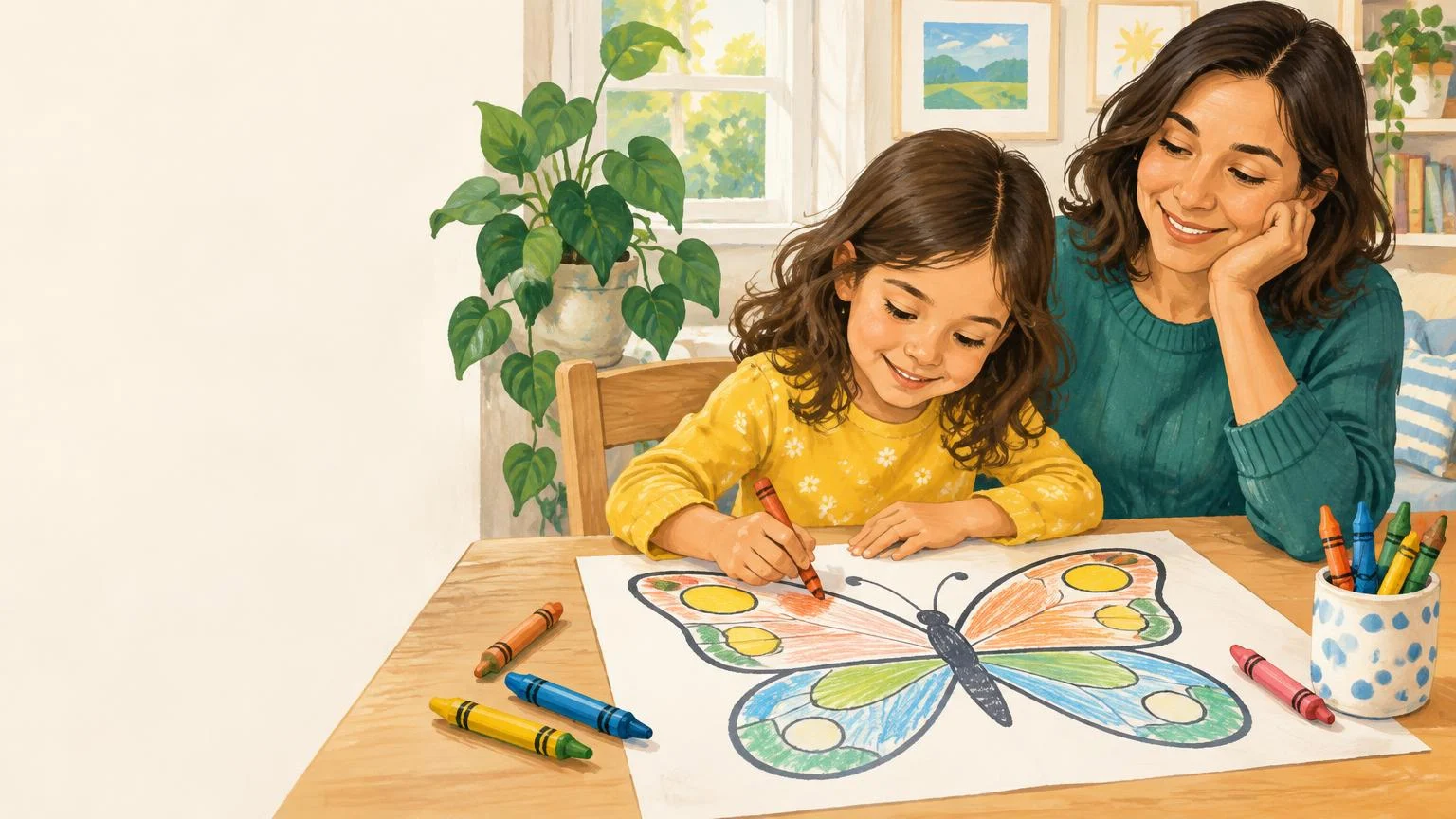
A butterfly can have orange wings, rainbow spots, or a blue stripe that wanders outside the outline. Coloring gives children a simple place to make choices, try materials, and tell you what they notice. It can be an easy shared activity when your family wants something screen-free, but it does not need to become a lesson every time.
You do not need an elaborate supply cart. A few crayons, paper, and permission to experiment are enough. This guide connects coloring with everyday play without promising faster development, better handwriting, or calmer behavior. Research on coloring performance and visual-motor integration describes associations, not proof that regular coloring causes lasting improvement. Follow your child's interest, adapt the materials, and let an unfinished page count as a worthwhile experience.
Coloring offers opportunities for practice and enjoyment. The research does not make every benefit certain, and coloring is not a substitute for instruction, therapy, or medical care.
Download a Free Coloring PageWhy coloring is more than just fun
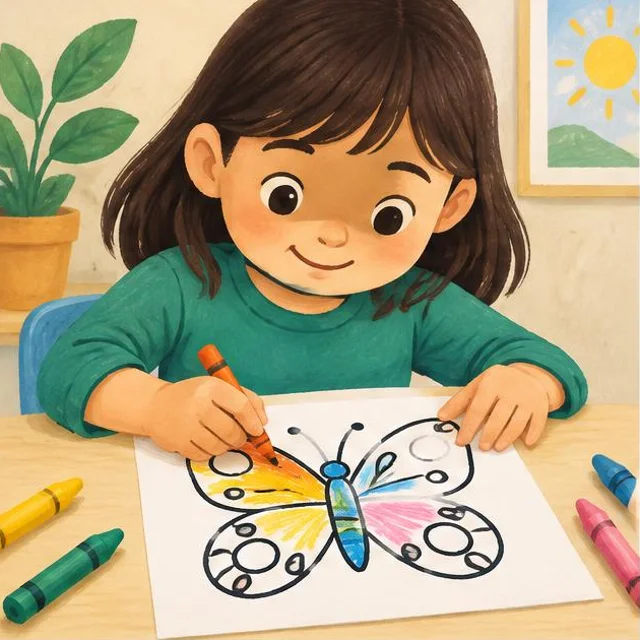
Coloring combines looking, making marks, choosing, and sometimes storytelling. A child might explore how two colors overlap or ask where the animal on the page lives. Those are useful openings for conversation, not evidence that a particular worksheet delivers a developmental benefit. The value comes partly from what the child does with the picture and how the adults respond.
Choose a surface your child can reach comfortably, with room for paper and a small selection of tools. Use washable, age-appropriate supplies according to their labels. Supervise children who mouth objects or break crayons into small pieces. Offer an invitation rather than an assignment: 'Would you like this butterfly or some blank paper?' If the answer is no, put the materials away without treating it as a missed learning opportunity.
Fine motor practice and pencil control
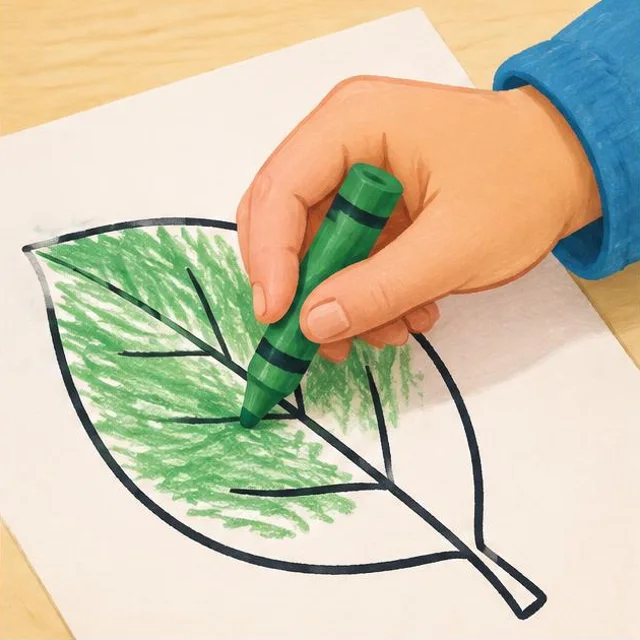
Holding a crayon and moving it across paper involves small hand and finger movements. Coloring offers one way to practice those movements, alongside building, playing with dough, and turning book pages. It is not a shortcut to handwriting readiness. A cross-sectional occupational therapy study found associations between children's activity products and visual-motor integration; it did not test whether coloring practice improved those skills.
Offer tools with different shapes and thicknesses, then notice what feels comfortable. Short crayons or broader tools may suit some children; thin pencils may suit others. Avoid repeatedly repositioning fingers during play or treating one pictured grip as the only acceptable option. Larger paper can make small spaces less frustrating. If drawing causes pain, unusual fatigue, or repeated distress, stop and discuss concerns with a qualified professional rather than adding more practice.
Hand-eye coordination: looking and moving
When children look at a picture and decide where to make a mark, they coordinate looking with movement. They might aim for a flower petal, connect dots they invented, or sweep a crayon across the whole page. Staying inside the lines is only one possible goal, and it need not be today's goal.
Invite different movements: long strokes for stems, dots for seeds, or broad patches around a blossom. Ask, 'Where would you like this color next?' instead of correcting every mark that crosses an outline. If your child wants precision, offer a larger, simpler shape first and secure slippery paper with tape. Adjust access and difficulty rather than using accuracy as a measure of intelligence or effort.
Creativity and imagination
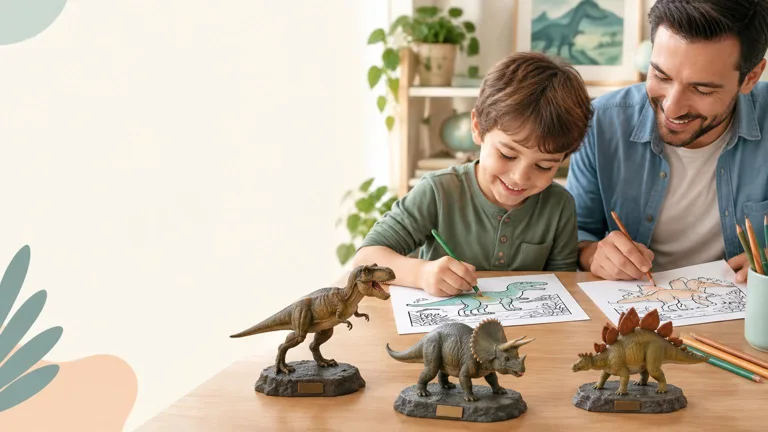
Printed outlines can be starting points rather than instructions. A flower might become an umbrella, and a dinosaur might live on the moon. Ask an open question such as, 'What is happening in your picture?' Then allow silence: children do not have to explain every mark. Unusual colors are welcome when the aim is creative play.
NAEYC's guidance on process-focused art emphasizes choice, exploration, and no single correct finished result. A prepared coloring sheet is not the same as open-ended process art, so keep blank paper and other materials available too. Offer to write a sentence your child dictates, or provide another sheet for the next part of the story. Avoid taking over with suggestions for making the picture more realistic.
Color recognition and early learning
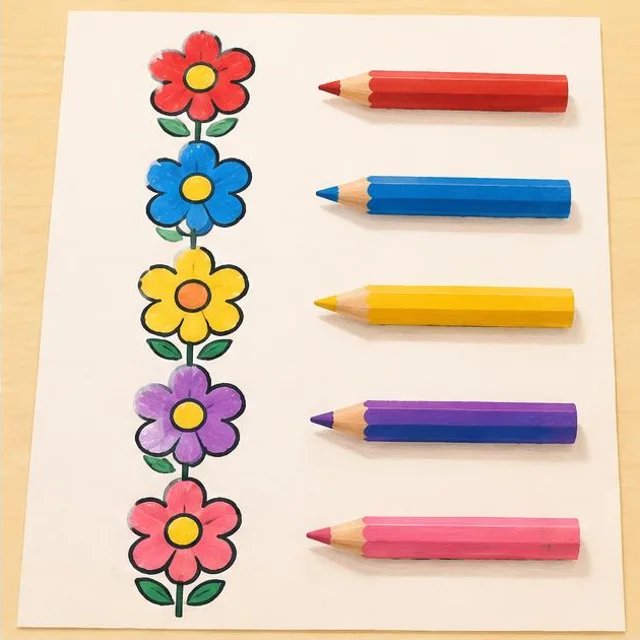
Coloring can provide a setting for talking about colors, shapes, quantities, and familiar objects. Keep the conversation connected to what your child notices. 'You made three yellow flowers' offers language without requiring an answer. Invite a color hunt around the room or compare two shades of green, but do not turn a relaxed activity into a string of quiz questions.
The CDC lists naming a few colors among age-four milestones. That does not mean coloring produces the milestone, or that a single page can assess development. Color recognition also grows through everyday play and conversation. If color differences are difficult to distinguish, use shapes, positions, or patterns rather than requiring color alone to identify an item.
Letters, pictures, and familiar words
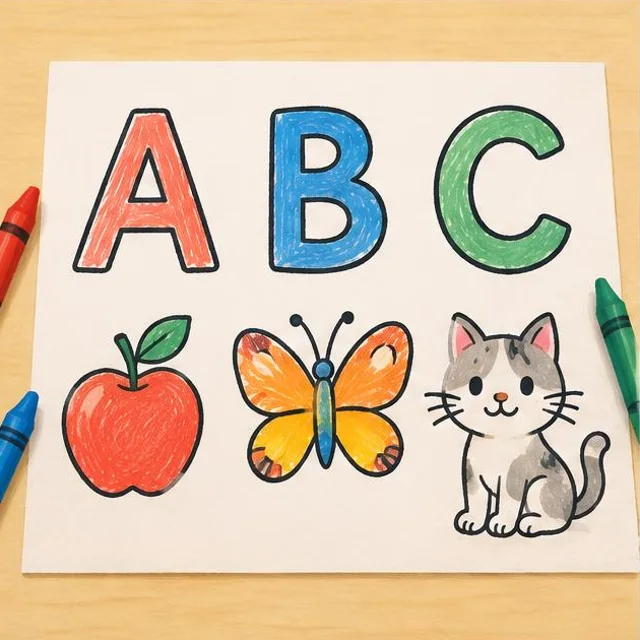
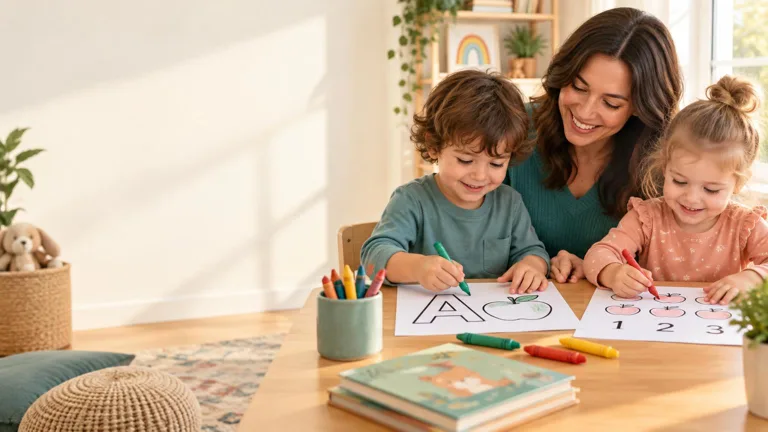
An alphabet picture may interest a child who recognizes the first letter of their name. Say the letter's name, connect it with a familiar word, and let the child decorate it freely. Coloring letters alone does not teach reading, and there is no need to introduce the whole alphabet at once. Reading aloud, conversation, and explicit teaching have their own roles.
Follow curiosity beyond the page. If an apple drawing starts a conversation about snacks, compare a real apple's shape, texture, and color. Everyday objects can make the discussion more meaningful than extending the worksheet. The alphabet illustration here is an activity example, not a downloadable DoodleLearn alphabet collection; the real preschool and kindergarten collections appear below.
Concentration and completing activities
A child who enjoys coloring may stay with a picture, return later, or work carefully on one small area. Those are moments of engagement, not proof that coloring improves attention in every setting. Interest, comfort, noise, and tiredness all affect the experience. The CDC's age-five attention example includes arts and crafts, but it is a developmental reference, not a prescribed session length.
Reduce distractions when practical and offer a manageable number of supplies. Avoid insisting on a set number of minutes or a finished page. Notice pushing tools away, asking to leave, or frustration, and offer movement or another activity. Leaving the page available makes returning a choice rather than an obligation. A partial picture can still contain thoughtful decisions.
Self-expression and emotional awareness
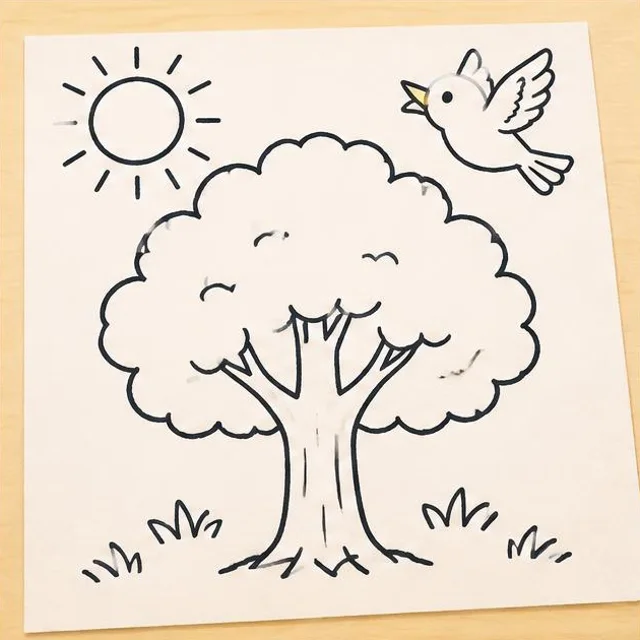
Some children enjoy coloring during a quiet transition; others prefer moving, talking, or having space. Offer it as one option, not a reliable calming technique or treatment for difficult feelings. Sitting together may open an easy conversation about a remembered walk, a windy day, or something that happened at school.
Ask whether your child would like company. If they describe a feeling, listen without requiring the artwork to explain it. Dark colors, heavy marks, and unusual pictures do not reliably reveal what a child is experiencing. Let the child give their own meaning, if they want to. For ongoing emotional concerns, seek appropriate support rather than trying to read clues from color choices.
Confidence and celebrating creativity
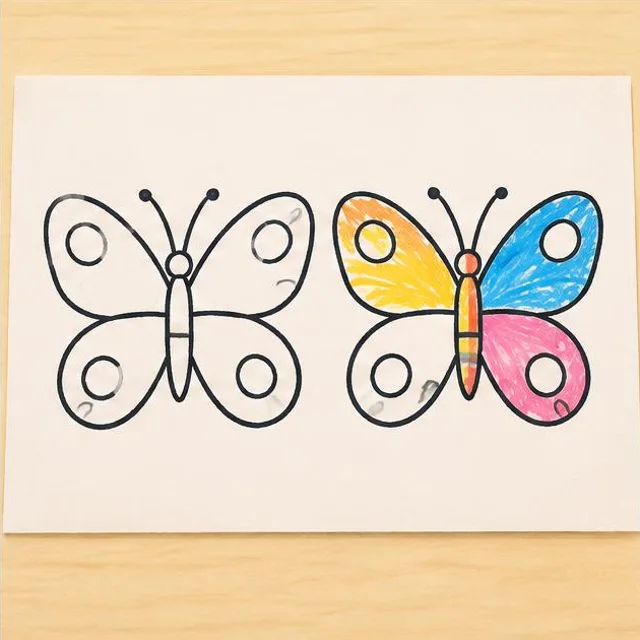
Show interest in specific decisions: 'You used little dots on this wing,' or 'You tried another color when that one broke.' These comments describe what happened without ranking the picture or making neatness the standard for success. Give children room to decide when their work is finished, including when an area stays white.
Ask before displaying, photographing, or adding to a child's work. They may want to keep it private, give it away, or recycle it. The two butterfly drawings above illustrate different color choices; they are not identical tasks or proof of progress. Changes in a picture can reflect tools, energy, interests, and help. Invite the child to say what they enjoyed rather than asking which drawing is better.
Choosing age-appropriate coloring pages
For preschool and kindergarten ages, start with broad spaces and clear subjects, while remembering that age labels are suggestions. Early elementary children may enjoy more detail and short facts; upper elementary children may prefer scenes, patterns, or making pages for someone else. Interest and access needs matter more than the range printed on a card.
Offer a choice between two pictures instead of assuming harder is better. Try enlarged outlines, a nonslip surface, different tools, or another comfortable position. Some older children prefer simple drawings, and some younger children enjoy detail. Ask what would help. DoodleLearn's age filters narrow the browse results, but an adult should still preview a sheet for the individual child.
Easy coloring activities parents can try
Choose one small invitation rather than preparing an entire afternoon of projects. Let your child change the plan, repeat a favorite idea, or stop midway. Keep blank paper nearby for ideas that outgrow the outline.
- Color hunt: find something nearby that resembles a crayon color, then use that color anywhere on the page.
- Shared garden: draw separate flowers on a large sheet, asking permission before adding to someone else's area.
- Weather picture: add rain, sunshine, or imaginary purple snow around a simple outline.
- Story postcard: color a small picture and dictate a message to a friend or relative.
- Nature noticing: after a walk, choose a tree or animal page and talk about one real detail you remember.
Free printable coloring pages for kids
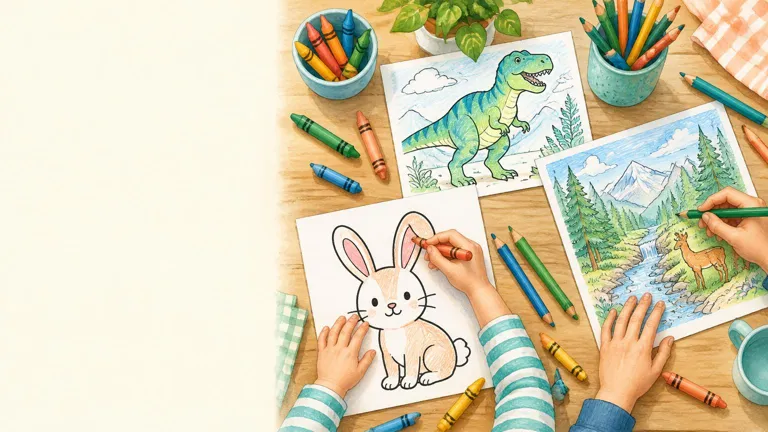
Pick a topic your child already loves: animals, dinosaurs, nature, or seasonal scenes. The collection cards below use actual DoodleLearn previews and current published collections. Open a collection, choose a picture, and open its print-ready PDF. Ordinary coloring sheets contain artwork; learning facts and suggested activities are on the website, not automatically printed on each sheet.
Print one page first to check clarity and size, and choose Fit to page. No account or new software is required to use the downloads. Review the terms before reposting or distributing files outside your home or classroom. There is no dedicated alphabet or numbers collection linked here: those remain possible future collections, not promised downloads.
Frequently asked questions
Does my child need to stay inside the lines?
No. Outlines can offer an optional challenge, but crossing them is not a failure. If your child wants help with precision, offer larger spaces and comfortable tools without making neatness a requirement.
How often should we color?
There is no required schedule. Offer coloring when it suits your family, alongside movement, conversation, outdoor time, books, and other play. Follow interest rather than setting a daily practice quota.
What if my child dislikes coloring?
Do not force it. Try drawing on cardboard, painting with water outdoors, building, or playing with dough. Children can explore ideas and materials in many ways; coloring is not an essential standalone assignment.
Should I correct unrealistic colors?
Usually, let the choice stand. If your child asks about real butterflies or flowers, look at a photograph together. Discuss observations while keeping imaginative colors welcome in the artwork.
Research and further reading
Further reading from research and professional guidance. Study findings apply to their participants and tasks; professional guidance is not the same as a controlled experiment.
- CDC — Milestones by 4 Years
Includes color naming and drawing examples. Milestones are not evidence that coloring causes these skills, and the checklist does not replace developmental screening.
- CDC — Milestones by 5 Years
Includes attention during activities such as arts and crafts; not a required coloring duration or an attention treatment.
- NAEYC — How Process-Focused Art Experiences Support Preschoolers
Professional guidance on choice and open-ended exploration. Process art is broader than prepared coloring pages.
- Huang and colleagues — Coloring, Origami, Copying, and Visual-Motor Integration (2023)
Cross-sectional occupational therapy research examining associations, not a trial showing that coloring improves visual-motor integration.