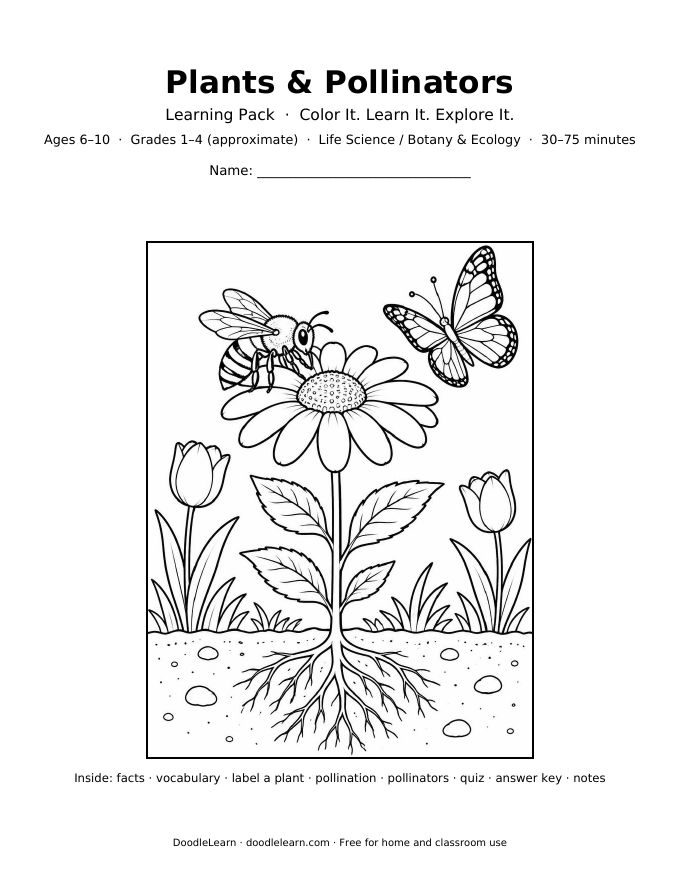
Plants & Pollinators Learning Pack
Flowers and pollinators need each other. This pack teaches the parts of a flowering plant, how pollen reaches the stigma, and which animals help plants make seeds.
- Ages
- 6–10
- Grades
- 1–4 (approx.)
- Subject
- Life Science
- Pages
- 8 printable pages
- Time
- 30–75 minutes
- Price
- Free, no sign-up
What children will learn
- ✓ The parts of a flowering plant
- ✓ What plants need to make their own food
- ✓ How pollination works, step by step
- ✓ Which animals can be pollinators
What's inside the pack
- ✓ Cover page
- ✓ Learning objectives
- ✓ Five plant and pollinator facts with U.S. Forest Service and USDA sources
- ✓ Plant and pollinator vocabulary (9 words)
- ✓ Label-a-flowering-plant worksheet
- ✓ Pollination steps + Who helps pollinate? activities
- ✓ Five-question quiz with bonus question
- ✓ Answer key
- ✓ Teacher and parent notes with a pollinator-watch activity
How to use it
Label the plant first, then follow the bee in the pollination diagram. The teacher notes include a pollinator watch with an indoor option.
Want more pictures on this topic? Browse the matching coloring collection, or find more classroom printables in the Teacher Resource Centre.
Explore science coloring lessons using these learning packs →
Science sources
The facts in this pack were checked against these sources, which are also printed inside the PDF.
Questions parents and teachers ask
Is pollination the same as making seeds?
No. Pollination comes first; after it, a flower may be able to make seeds.
Do all plants need animals?
No. Some plants, like grasses, use the wind to move pollen.
What age is it for?
Ages 6–10, about grades 1–4.
More free learning packs
- Volcano Learning Pack
- Water Cycle Learning Pack
- Human Body Learning Pack
- Sharks & Ocean Life Learning Pack