By DoodleLearn · Evidence-informed guide
An alphabet picture or counting sheet can be the beginning of a conversation rather than a test. A preschooler might notice the first letter of their name, count the apples on a page, or tell a story about a butterfly. The adult’s role is to listen, name things accurately, and offer another small challenge when the child is interested. Coloring provides a shared surface for those conversations; it does not teach reading or mathematics on its own.
This guide focuses on playful activities for roughly ages three to five. Children differ in experience, interests, language, vision, and comfort with drawing tools. These ages are starting suggestions, not milestones to enforce. A child who prefers pointing, moving objects, or talking can take part without filling every shape. Keep the task small enough that the child can make decisions and experience success.
Below are ten alphabet games, ten number games, printable companions, and ways to adapt them. The A/apple and B/butterfly pages, matching sheet, number overview, counting sheet, color-by-number flower, tracing page, and coloring-tool picture are actual downloads in A4 and US Letter. They are a starter set, not a complete A–Z worksheet collection.
Coloring offers opportunities for practice and enjoyment. The research does not make every benefit certain, and coloring is not a substitute for instruction, therapy, or medical care.
Download a Free Coloring PageWhy alphabet and number coloring activities are useful
A broad letter outline offers a visible shape to discuss. A numeral beside a small group offers a chance to connect a written symbol with a quantity. Coloring can keep a child engaged while an adult names the symbol, models a word, or asks a counting question. What matters is the connection the child makes, not whether a finished page looks neat.
Keep recognition, sounds, quantities, and hand control distinct. Naming the letter A is not the same as hearing the first sound in apple; naming the numeral 3 is not the same as giving someone three objects. Ask one question at a time and use real objects when a picture is confusing. Revisit the idea in everyday play instead of repeating a worksheet until it is perfect.
Learning the alphabet through coloring
Start with a meaningful letter: the first letter of the child’s name, a family member’s name, or a favorite object. Show its uppercase and lowercase forms together. Explain that both are the same letter even when their shapes differ. An adult can write the child’s name on blank paper, underline the first letter, and invite the child to decorate it.
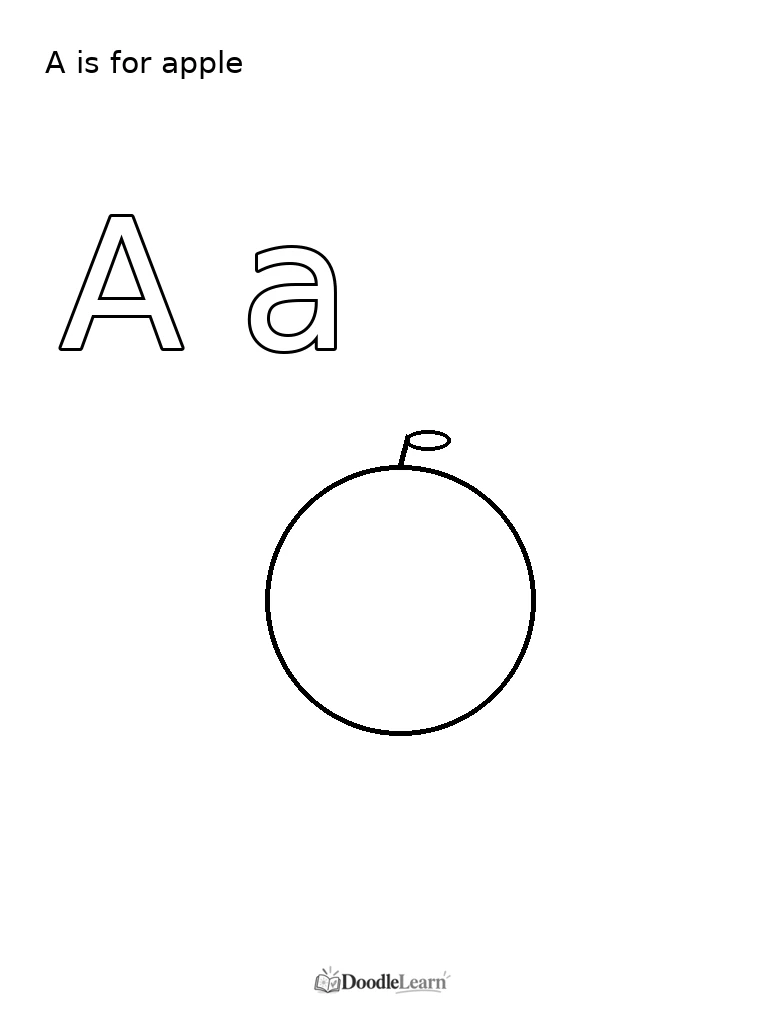
Use A for apple, B for butterfly, and C for cat as familiar English examples. Say the word naturally and listen to its first sound together. Letter names and sounds are not interchangeable, and letters can represent different sounds in different words. A is not always pronounced as it is in apple, and C in city differs from C in cat. For an early activity, choose clear examples and avoid turning exceptions into a long lesson.
Invite picture identification before asking for a letter answer. “What do you notice?” can reveal whether a child sees an apple, a leaf, or something else. Children learning more than one language may know another word for the same object; welcome that word and explain which language the printed example uses. An alphabet coloring page is a prompt, not a rule that replaces the child’s home language.
Number coloring activities for ages 3–5
Begin with a few objects and build toward ten as interest and confidence allow. Touch or move each object once while saying one number word. At the end, repeat the final number to describe the whole group: “We counted five apples, so there are five altogether.” This helps distinguish counting a sequence of words from counting a set.
Match a small collection with a numeral on paper. If a child chooses 3 for five objects, count together without framing it as failure. Change the arrangement and see whether the child notices that the quantity remains the same. Avoid adding many new symbols, a complicated picture, and a color key all at once.
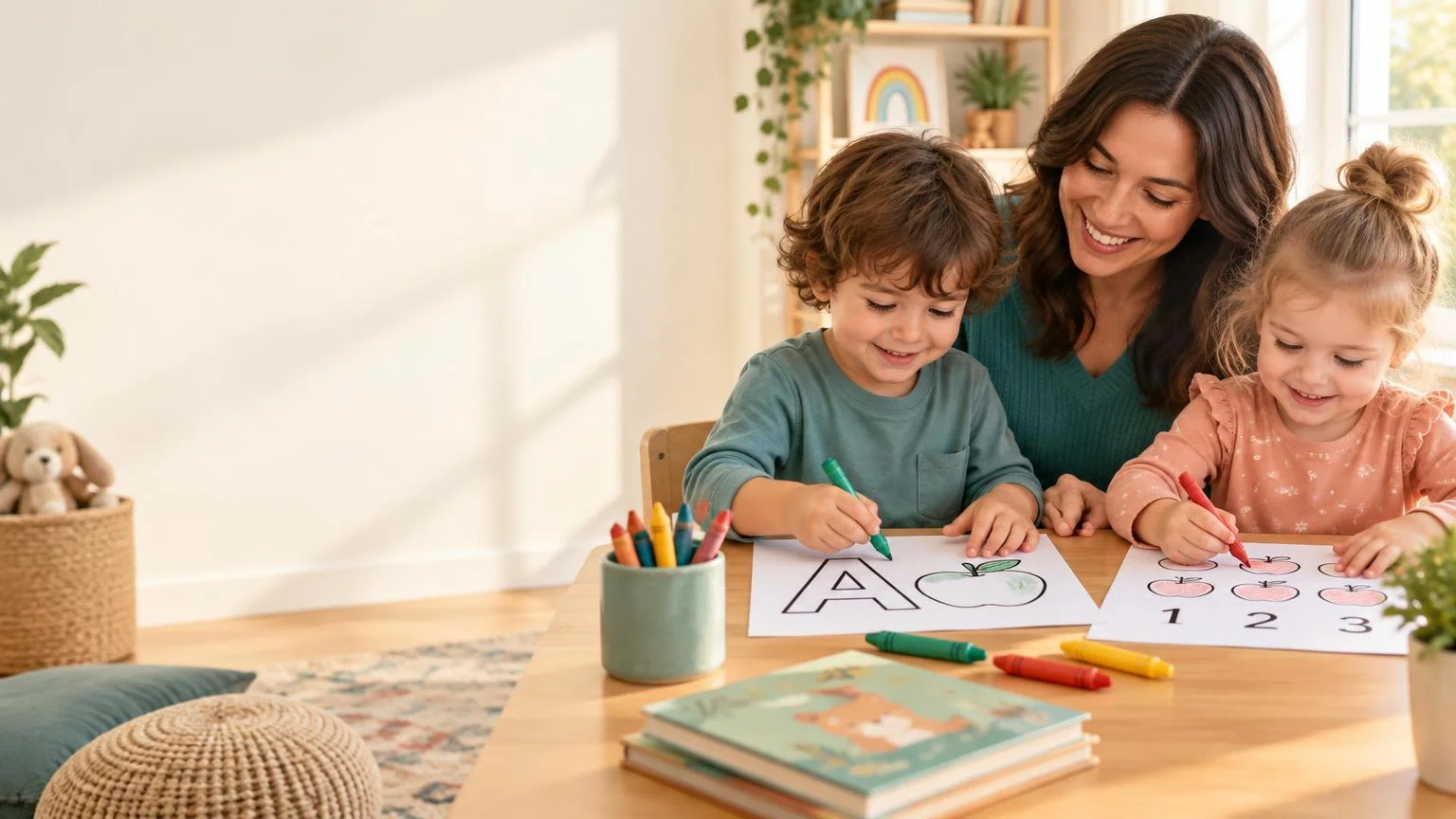
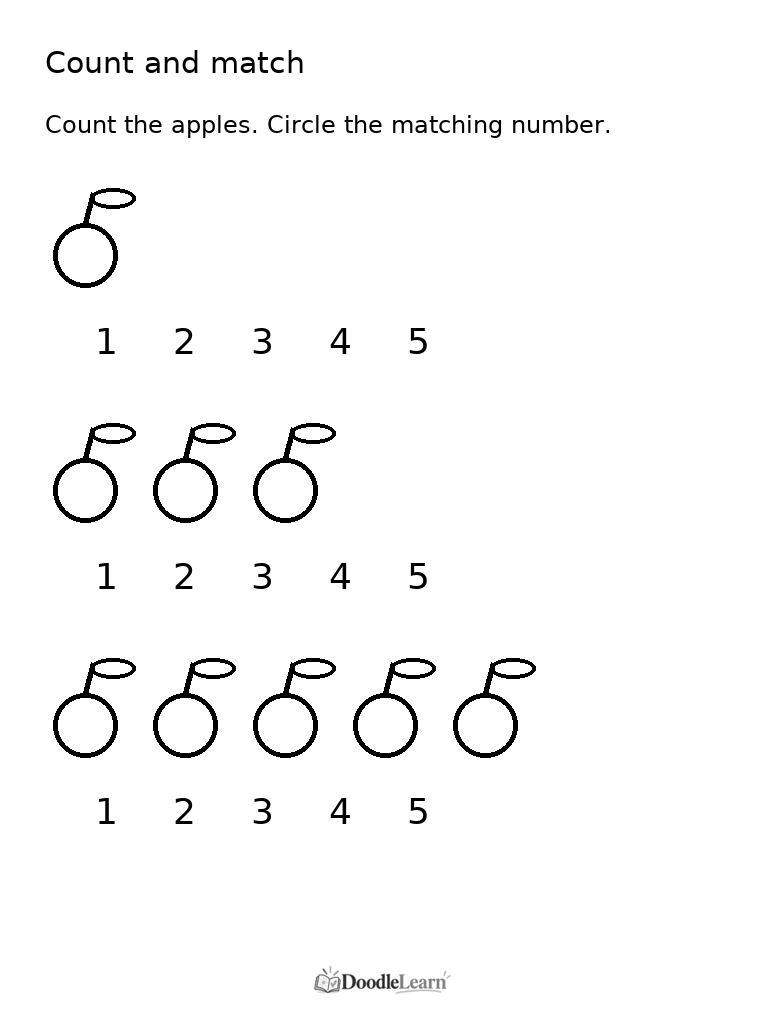
Our counting page shows exactly one, three, and five apples in separate rows. Each row offers numerals one through five; circle the matching numeral after counting. The numbers 1–10 overview is for recognizing and coloring symbols, not for demonstrating ten different quantities. Add buttons, blocks, or drawn dots separately when you want to connect each numeral with a set. Use only objects safe for the child and supervise small pieces.
Coloring and fine motor practice
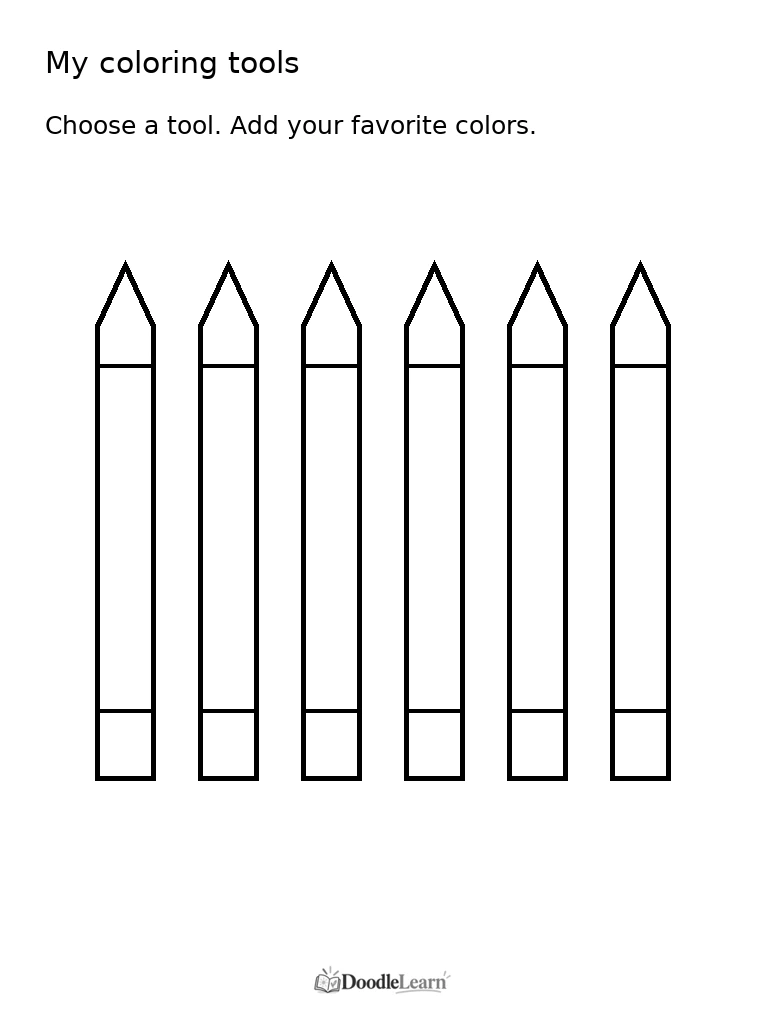
Coloring, drawing, and optional tracing give children opportunities to explore hand movement and pressure. Broad shapes and comfortable tools can reduce frustration. Offer chunky crayons, washable pencils, or another age-appropriate tool, then watch whether the child can use it comfortably. There is no need to force a particular grip during a playful coloring session.
Secure the paper if it slides, leave elbow room, and adjust the task before assuming the child is unwilling. A few marks, large loops, or pointing to a letter may be a useful contribution. Pause when the child becomes uncomfortable or tired. Hand control develops through many experiences; staying inside a printed boundary is not a complete measure of development.
Ten alphabet coloring activities
Choose one game rather than completing the whole list. Materials are the relevant companion sheet, crayons, blank paper, and adult-written letters where noted. Keep the child’s name and interests central; use adult help for cutting and avoid small loose pieces with children who may mouth them.
- Name-letter colors — Ages 3–5. Write the child’s first letter in a broad outline on blank paper. Say the letter name, then invite a color choice. Find that letter in the name again. Ask: “Where else have we seen this shape?” Resource: the A/apple or B/butterfly sheet when it matches; otherwise use adult-written paper.
- Apple detective — Ages 3–5. Color the apple and point to A and a on the A/apple companion. Say apple together, then identify the letter. Ask: “Which part of the picture helped you know it was an apple?” Do not imply that every word beginning with A has the same vowel sound.
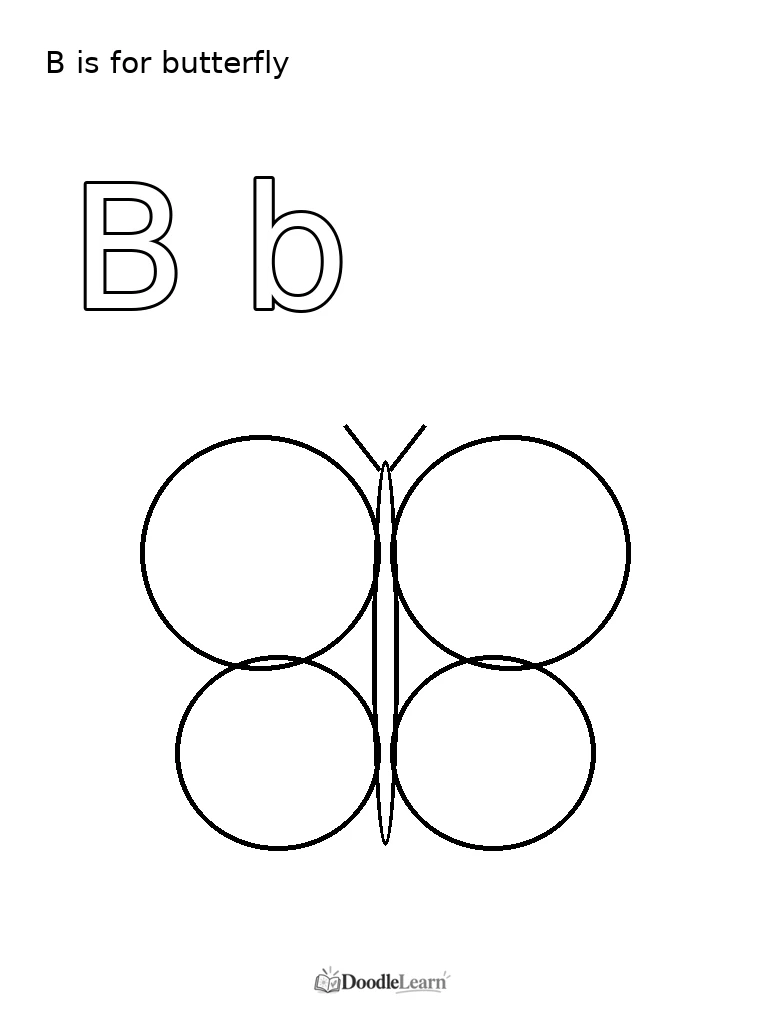
- Butterfly wings — Ages 3–5. Use the B/butterfly companion. Color a wing, say butterfly, and find both B and b. Let children choose symmetrical or different colors. Ask: “Which letter forms look alike, and which look different?” The artistic choice has no correct color answer.
- Uppercase partners — Ages 4–5. Use the matching companion with A B C opposite b c a. First point to a matching pair, then draw a connecting line if comfortable. Ask: “How do you know these are the same letter?” Match shapes without demanding independent reading.
- Letter scavenger hunt — Ages 4–5. Pick one letter from the matching sheet. An adult finds three safe nearby labels or books with that letter; the child points when they notice it. Return and decorate the letter. Ask: “Did it look exactly the same in every place?” Discuss font differences gently.
- Picture-and-letter pairs — Ages 4–5. Place the apple and butterfly sheets side by side. Name each picture, then select A or B. Add an adult-drawn cat and C if useful. Ask: “What sound do you hear at the beginning?” Accept a spoken response instead of a drawn line.
- Sound and story — Ages 3–5. Color a butterfly and tell a short story about where it goes. The adult repeats butterfly and its beginning sound naturally. Ask: “What might the butterfly see?” Resource: B/butterfly companion. Keep storytelling enjoyable rather than correcting every word.
- Build then draw — Ages 4–5. An adult makes a large A with safe blocks or finger-drawn lines on a tabletop. Compare it with the A/apple sheet, then draw or trace a shape on paper. Ask: “Where do the lines meet?” No small pieces are needed; supervise any loose materials.
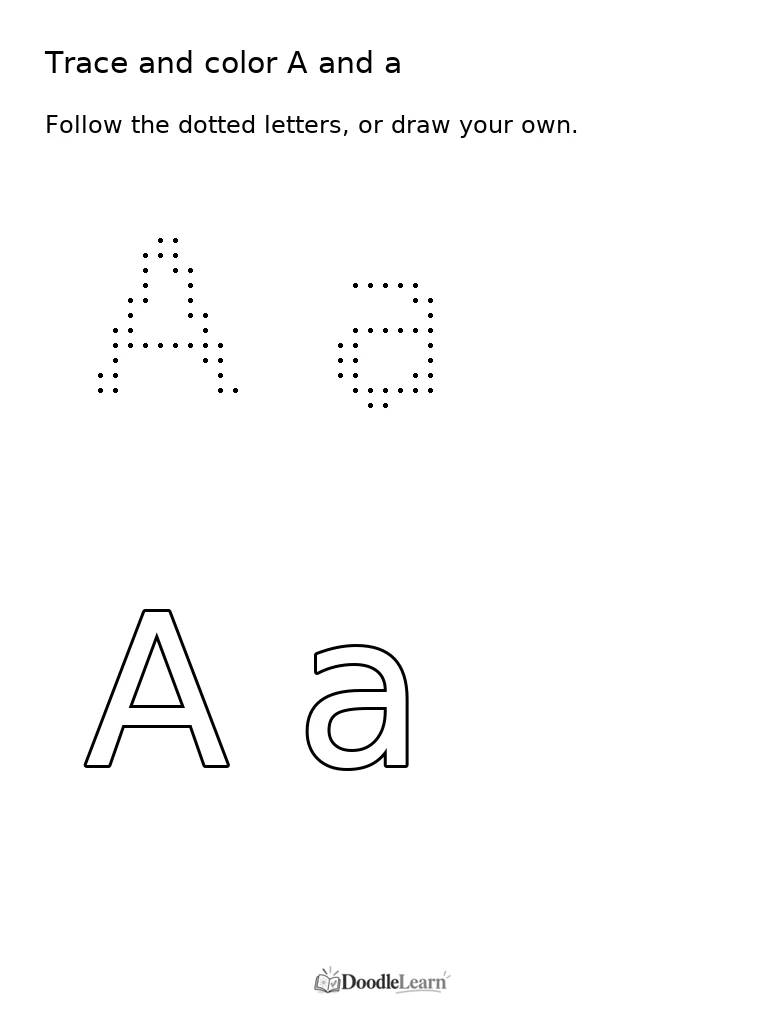
- Trace by choice — Ages 4–5. Offer the dotted A/a companion and demonstrate one slow path. Children can follow dots, color the outline below, or draw freely alongside. Ask: “Which version was comfortable?” Stop before repeated tracing becomes a test of endurance.
- Favorite-letter gallery — Ages 3–5. Display two or three pages the child chose, including an adult-written name letter. Invite the child to name a picture or explain a color. Ask: “Which page would you like to revisit?” Resource: A/apple, B/butterfly, and blank paper; celebrate choices rather than ranking neatness.
Ten number coloring activities
Use a quantity the child can handle, a numeral they can see clearly, and one simple question. Spoken answers, pointing, or moving objects are alternatives to writing. The activities below separate number recognition from quantity matching so adults can notice which connection needs another example.
- One apple, one touch — Ages 3–4. Use the first row of the counting companion. Touch the single apple and say one, then find numeral 1. Color the apple. Ask: “How many are there altogether?” Begin here before introducing larger groups.
- Three in a row — Ages 3–5. Count the three apples in the middle row, touching each only once. Circle 3 and add colors. Ask: “What happens if we start counting from the other end?” The same three objects remain present.
- Five-color choice — Ages 4–5. Count the bottom row of five apples. Use one color or different colors without changing the quantity. Ask: “Are there still five when their colors are different?” Resource: counting companion; keep the set visibly separate from other rows.
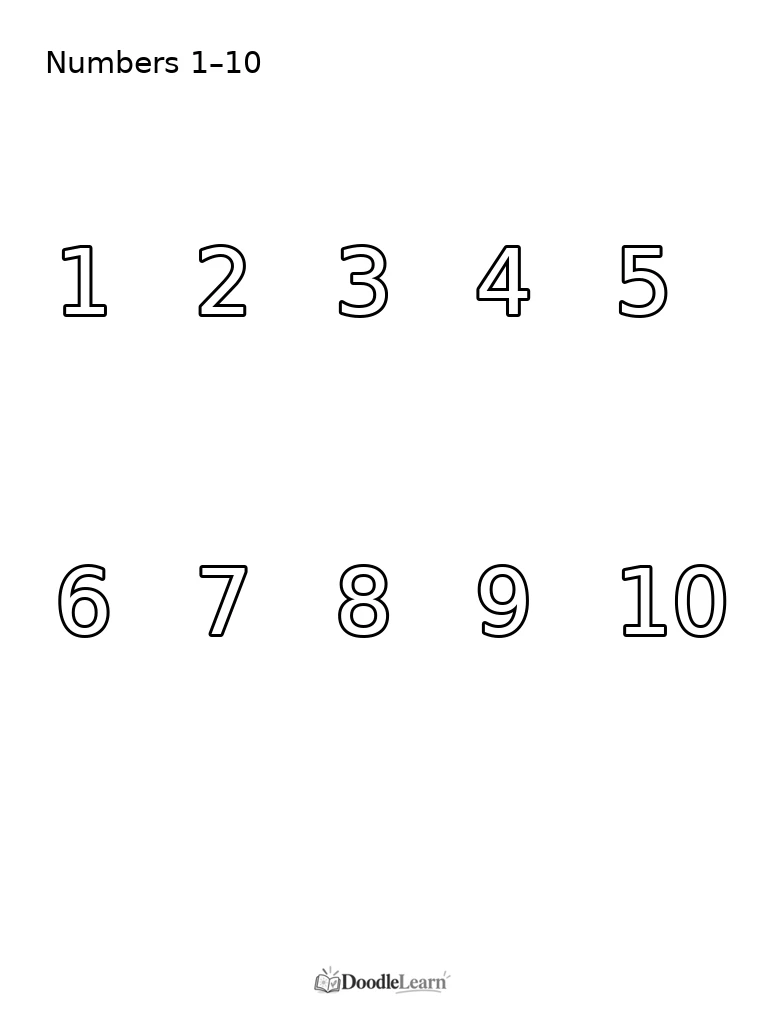
- Numeral search — Ages 3–5. Pick one numeral on the 1–10 overview. An adult says its name and the child finds it again after looking away. Ask: “What shape helped you find it?” This practices recognition, not proof of quantity understanding.
- Build a matching set — Ages 4–5. Point to a numeral from one to five and make that many large blocks or drawn circles. Count them and compare with the counting page. Ask: “Does every object have one count?” Supervise physical materials.
- Finger number talk — Ages 3–5. Show a small number on fingers, then find its numeral on the overview. Change which fingers are raised while keeping the quantity. Ask: “Can we show the same number another way?” Do not require an uncomfortable hand position.
- Flower color key — Ages 4–5. Use the simple color-by-number companion. Read the key together: 1 yellow, 2 green, 3 blue. Find a printed number before choosing its color. Ask: “Where else is that number?” Let children add patterns alongside colors.
- Count a collection — Ages 3–5. After coloring, count a few crayons used in the session and find the numeral on the overview. Ask: “How many did we use today?” Keep caps and other small pieces under adult control.
- Add one drawing — Ages 4–5. Draw two large circles on blank paper and invite one more. Count the new set and find 3 on the overview. Ask: “What changed when we added one?” This is a concrete conversation, not a formal written arithmetic drill.
- Number path play — Ages 4–5. An adult writes a short path 1–5 on blank paper. Move a large marker one space per spoken count, then color the matching numeral on the overview. Ask: “Which number comes next?” Extend toward ten only when the shorter path is comfortable.
Printable alphabet activities A–Z
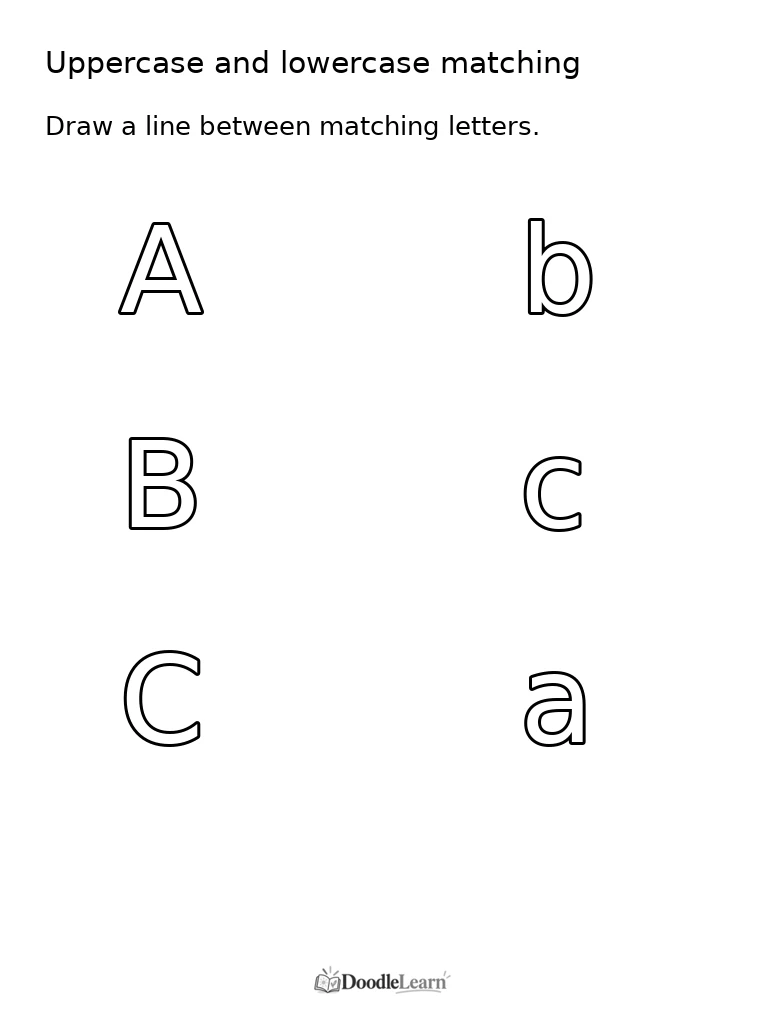
The guide companions currently include A with an apple, B with a butterfly, A/B/C uppercase–lowercase matching, and optional A/a tracing. These specific files are ready to print below. They are not twenty-six individual letter pages, and the site does not promise a separate downloadable sheet for every letter here.
For C through Z, an adult can write a broad letter and invite the child to suggest a familiar word or draw a picture. Use the live preschool and kindergarten collections below for pictures where their real content fits. A future complete alphabet set would need individually checked letter forms, appropriate English examples, and verified PDFs before being listed. No missing-letter download buttons are provided.
Printable numbers 1–10
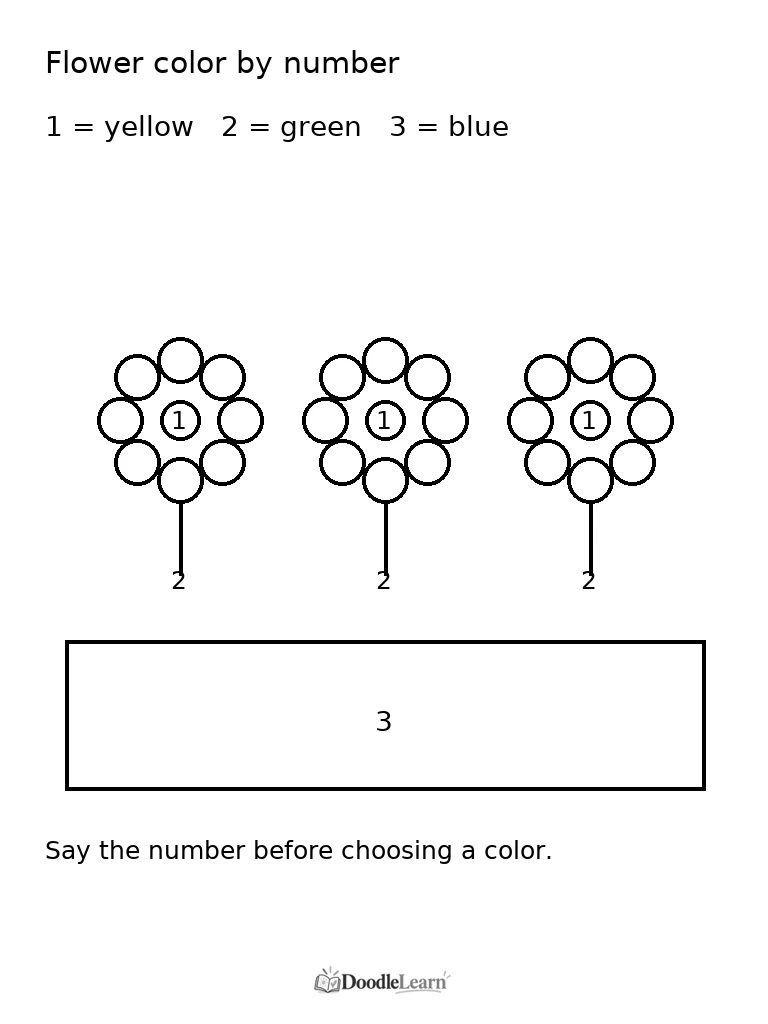
The overview contains the ten numerals in order across two rows. The counting companion offers three checked sets, and the flower page introduces a short three-number color key. Use these for different purposes: recognize a symbol, match a quantity, or follow a key. A child who enjoys one purpose may not yet be comfortable with the others.
To add tracing, an adult can write a large numeral on blank paper and demonstrate a path. The guide does not claim the overview includes dotted numeral tracing or ten separate counting worksheets. Keep the printed example and your spoken task aligned so a child is not asked to find objects that are absent.
Tips for parents and preschool teachers
Plan a brief invitation, perhaps five to ten minutes, then follow the child’s attention rather than a timer target. Put out two page choices and a small selection of tools. Repeat a familiar game on another day with a new color or object, instead of introducing every letter and number at once. Talk about effort and discoveries, not speed or perfect boundaries.
In a preschool group, an adult can model counting while children point, color, or speak in turn. Offer a larger print, a stable surface, and quieter space when helpful. In homeschooling, connect the paper with a real book, snack-time count, or play collection. If a child consistently struggles or has discomfort, discuss concerns with their educator or an appropriate professional rather than treating worksheet completion as a diagnosis.
Frequently asked questions
What age should children begin alphabet coloring activities?
Offer them when a child is interested in marks, pictures, or letters, often during the preschool years. Ages three to five are suggestions, not a required starting window; choose simple shapes and allow pointing or free drawing.
How can coloring help with letter recognition?
The printed shape gives an adult and child something to identify, compare, and revisit. Naming letters and connecting them to meaningful words can support the activity; coloring alone does not teach reading.
What are easy number coloring activities for preschoolers?
Count one, three, or five pictured apples, match the quantity to a numeral, or find a numeral on the overview. Use small sets and touch each object once.
Should preschoolers practice tracing letters?
Tracing can be offered as one optional way to explore letter shapes. Model a comfortable movement and let children choose coloring or drawing instead; do not force repeated drills.
Are coloring worksheets useful for homeschooling?
They can give a short shared activity a clear focus when paired with books, play, real objects, and conversation. Adapt the task rather than relying on worksheets as a full curriculum.
Where can I find free printable alphabet coloring pages?
The A/apple, B/butterfly, matching, and A/a tracing companions below are free in A4 and US Letter. They are a starter set, not a complete A–Z collection.
Research and further reading
Further reading from research and professional guidance. Study findings apply to their participants and tasks; professional guidance is not the same as a controlled experiment.
- NAEYC: Everyday Steps to Reading and Writing
Family guidance connects drawing, conversation, names, and meaningful literacy experiences.
- NAEYC: Dot Card and Finger Games
Practical games for exploring quantities and number relationships.
- HealthyChildren.org: Is Your Child Ready to Read?
American Academy of Pediatrics guidance emphasizes enjoyable early reading rather than forced drills.