By DoodleLearn · Evidence-informed guide
Dinosaur coloring pages can invite big questions: Why does one animal have horns? How could a long neck help? What tells us that an animal lived long ago? A picture gives children something to notice and discuss, but the best answer may require a book, museum resource, or fossil evidence. Separate what the drawing shows from what scientists know and what remains uncertain.
This guide offers flexible ideas for ages three to ten, eight dinosaur introductions, ten learning activities, and real downloads. Younger children can choose broad outlines and talk about visible features. Older children may enjoy comparing periods, checking a source, or adding a label. These are options, not expectations attached to a birthday or grade.
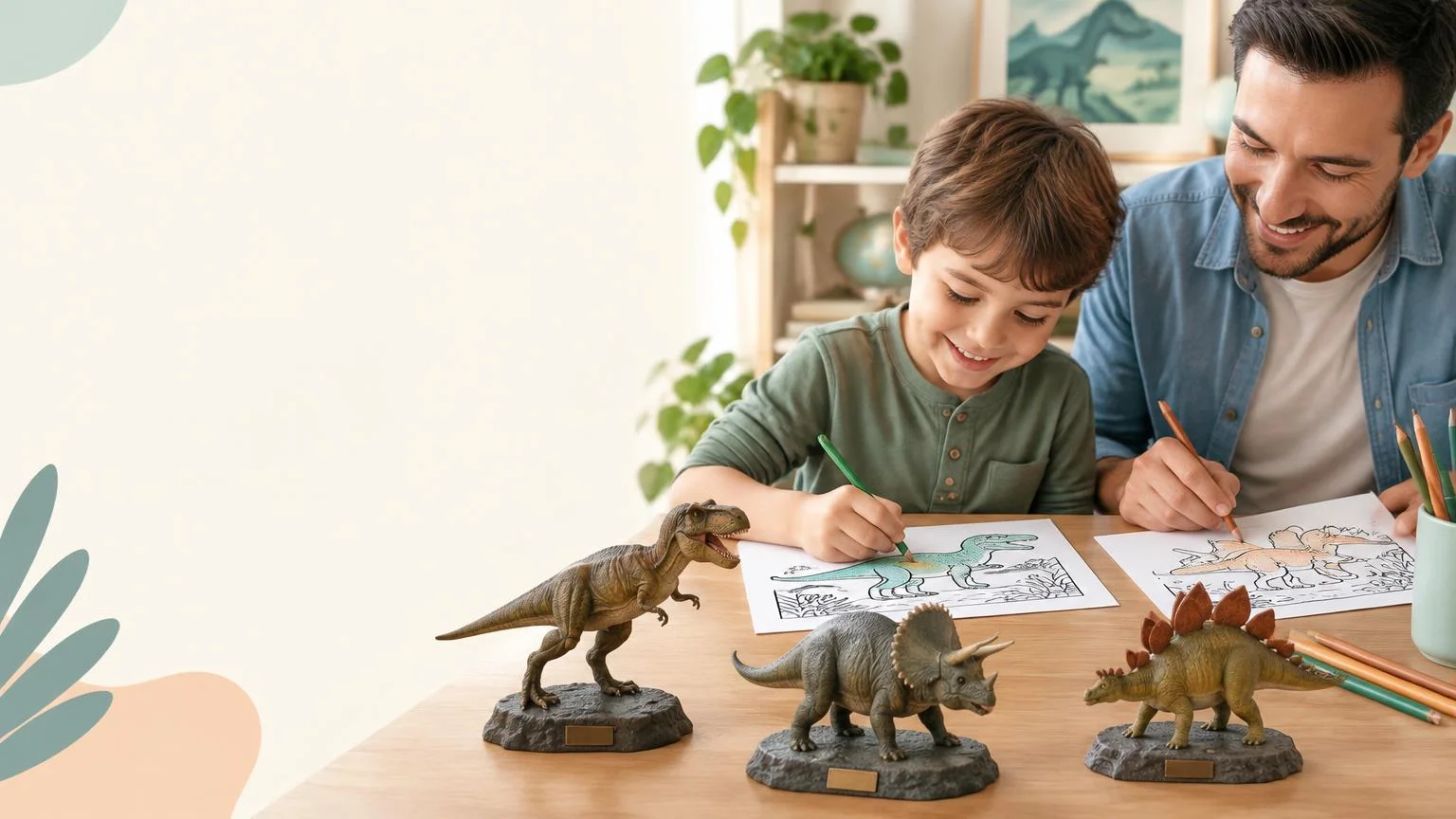
The new companions are stylized artistic reconstructions, not anatomical reference plates. Fossils support many body features, but posture, soft tissue, behavior, and color are not equally certain. Use the museum references below for factual claims. The hero shows models from different times on a present-day coloring table, not dinosaurs living together in one prehistoric habitat.
Coloring offers opportunities for practice and enjoyment. The research does not make every benefit certain, and coloring is not a substitute for instruction, therapy, or medical care.
Download a Free Coloring PageWhy kids love dinosaur coloring pages
Large bodies, unusual horns, long tails, and unfamiliar names give children plenty to explore. Some enjoy the animals themselves; others prefer imagining a landscape or telling a story. Invite their interests without assuming every child wants a roaring predator. A calm plant-eater or a fossil brush page can be equally engaging.
Coloring can support a conversation when an adult asks a specific question: “What feature do you notice?” or “What would we need to learn about its habitat?” It does not guarantee science knowledge. A vivid invented dinosaur can be a successful creative activity while still being clearly labeled imaginary, rather than added to a factual species list.
Tyrannosaurus rex
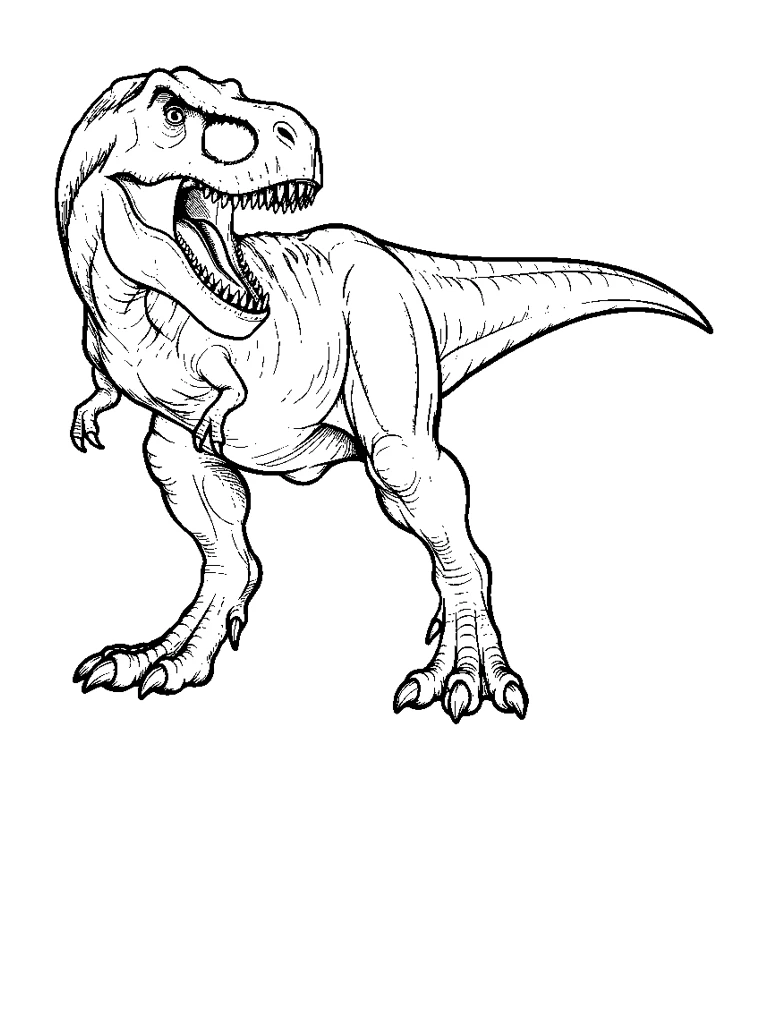
Late Cretaceous. A large meat-eating theropod with powerful jaws, a substantial skull, and small two-fingered forelimbs.
Its two-fingered arms distinguish it from many other theropods. Hunting behavior is studied from incomplete evidence; do not describe pack hunting as settled fact.
Printable connection: use the matching companion below and inspect its visible features. Compare the artistic reconstruction with the museum source, then add one factual note on separate paper. Colors are creative choices unless a reliable source discusses preserved color evidence for that particular animal. A finished coloring page cannot establish that every detail of a reconstruction is correct.
Triceratops
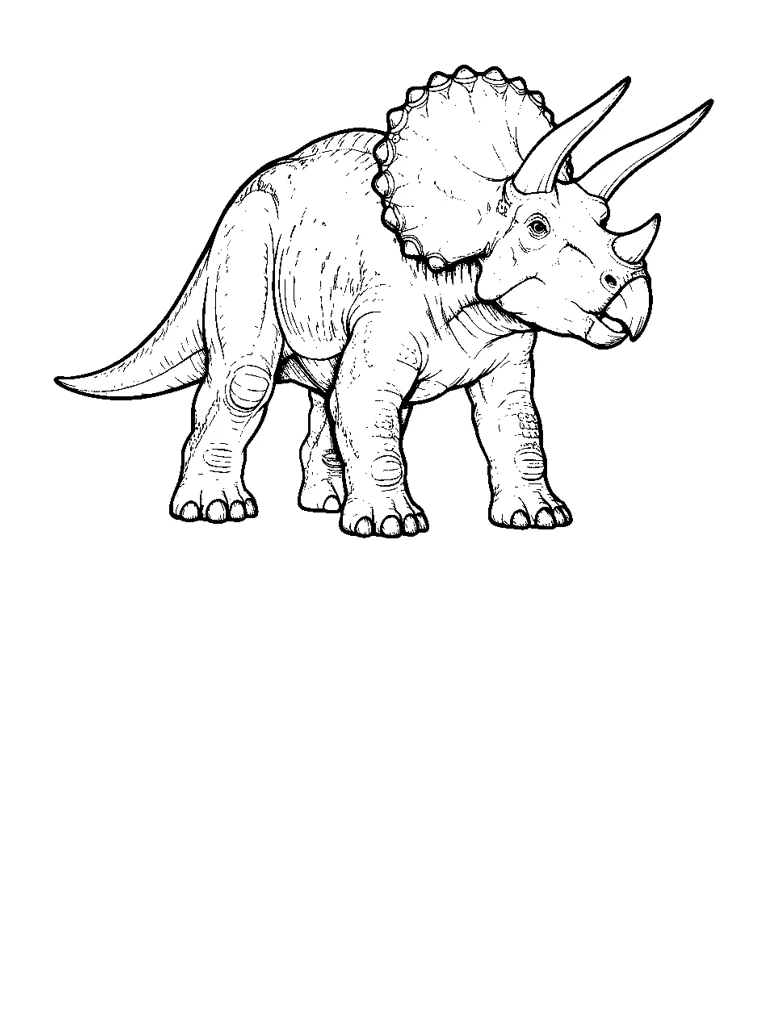
Late Cretaceous. A plant-eating dinosaur with three facial horns, a broad bony frill, and a four-legged stance.
Its teeth processed tough plant material. Horns and frills had possible defensive and display roles; exact behavior cannot be read directly from an outline.
Printable connection: use the matching companion below and inspect its visible features. Compare the artistic reconstruction with the museum source, then add one factual note on separate paper. Colors are creative choices unless a reliable source discusses preserved color evidence for that particular animal. A finished coloring page cannot establish that every detail of a reconstruction is correct.
Stegosaurus
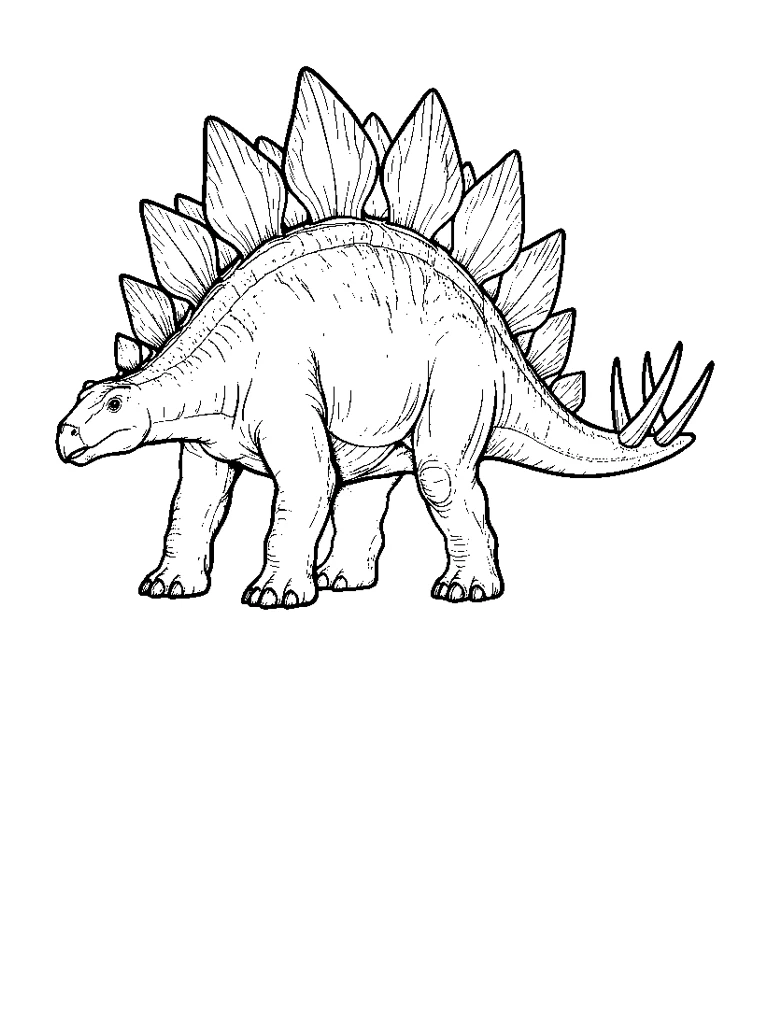
Late Jurassic. A plant-eating dinosaur with a small head, upright plates along its back, and spikes near the end of its tail.
Tail spikes likely helped with defense, while the role of the back plates remains debated. It lived long before Tyrannosaurus rex, not alongside it.
Printable connection: use the matching companion below and inspect its visible features. Compare the artistic reconstruction with the museum source, then add one factual note on separate paper. Colors are creative choices unless a reliable source discusses preserved color evidence for that particular animal. A finished coloring page cannot establish that every detail of a reconstruction is correct.
Brachiosaurus
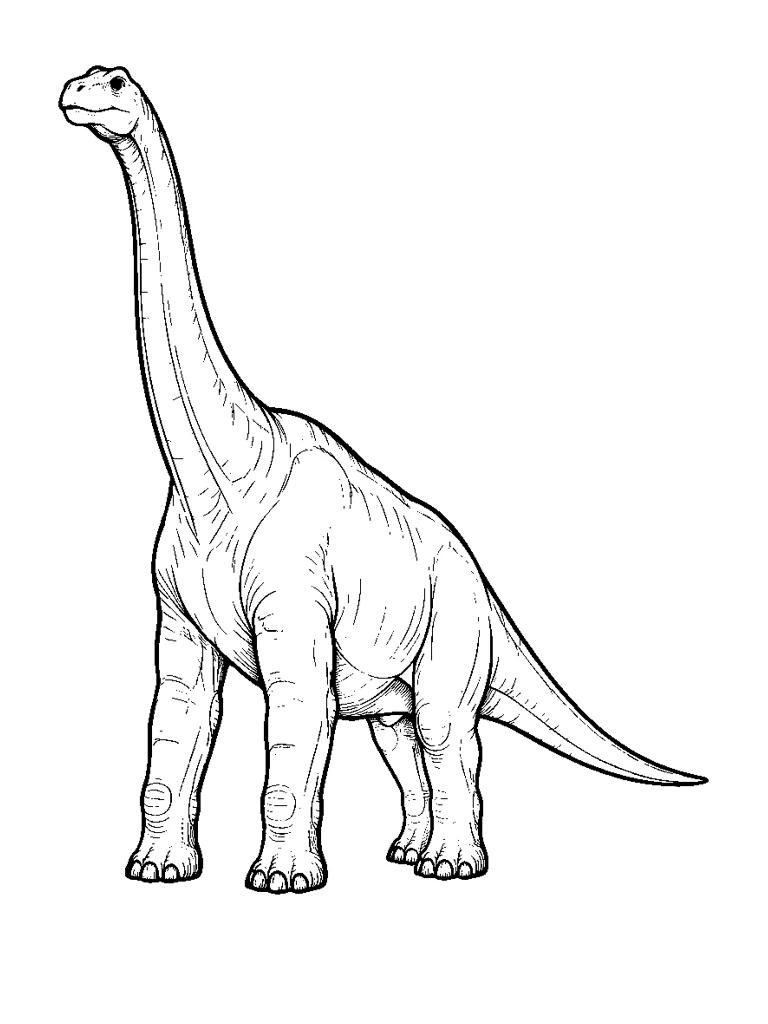
Late Jurassic. A long-necked plant-eating sauropod whose forelimbs were longer than its hindlimbs, producing a sloping back.
The name refers to its arm proportions. Size estimates depend on fossil interpretation; use an approximate comparison instead of one exact weight claim.
Printable connection: use the matching companion below and inspect its visible features. Compare the artistic reconstruction with the museum source, then add one factual note on separate paper. Colors are creative choices unless a reliable source discusses preserved color evidence for that particular animal. A finished coloring page cannot establish that every detail of a reconstruction is correct.
Velociraptor
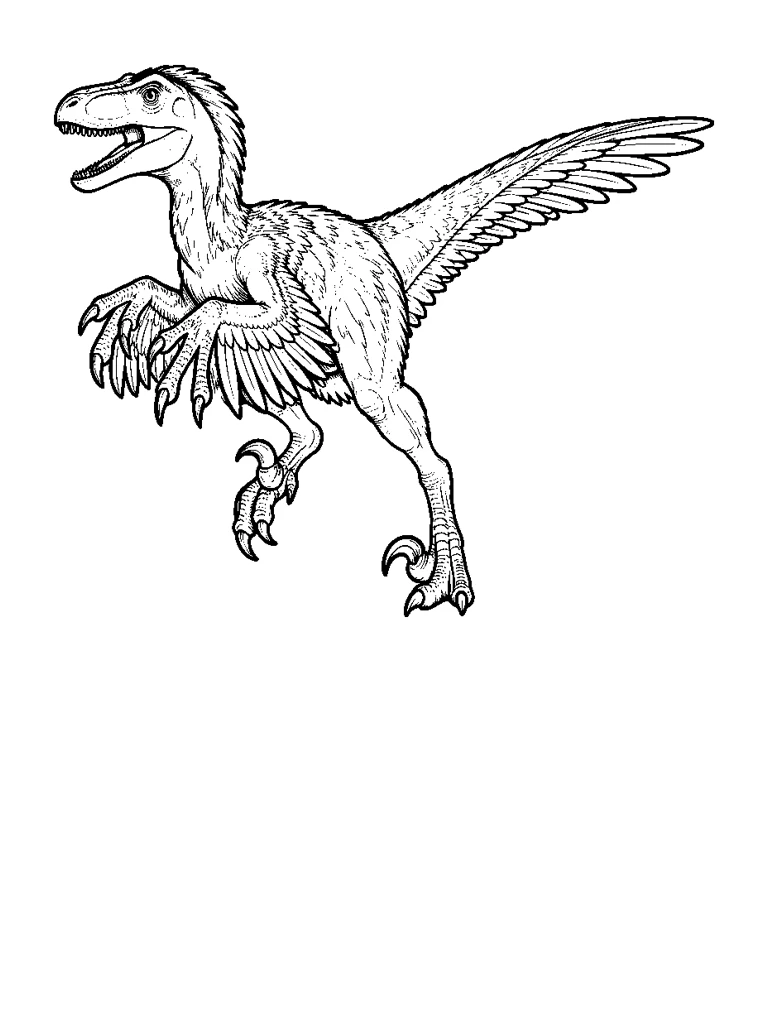
Late Cretaceous. A relatively small theropod with a long tail, feathers, and an enlarged curved claw on the second toe of each foot.
Real Velociraptor was much smaller than the human-sized movie animals often given its name. Evidence for feathers means a bare, scaly film-style reconstruction is not the best educational model.
Printable connection: use the matching companion below and inspect its visible features. Compare the artistic reconstruction with the museum source, then add one factual note on separate paper. Colors are creative choices unless a reliable source discusses preserved color evidence for that particular animal. A finished coloring page cannot establish that every detail of a reconstruction is correct.
Ankylosaurus
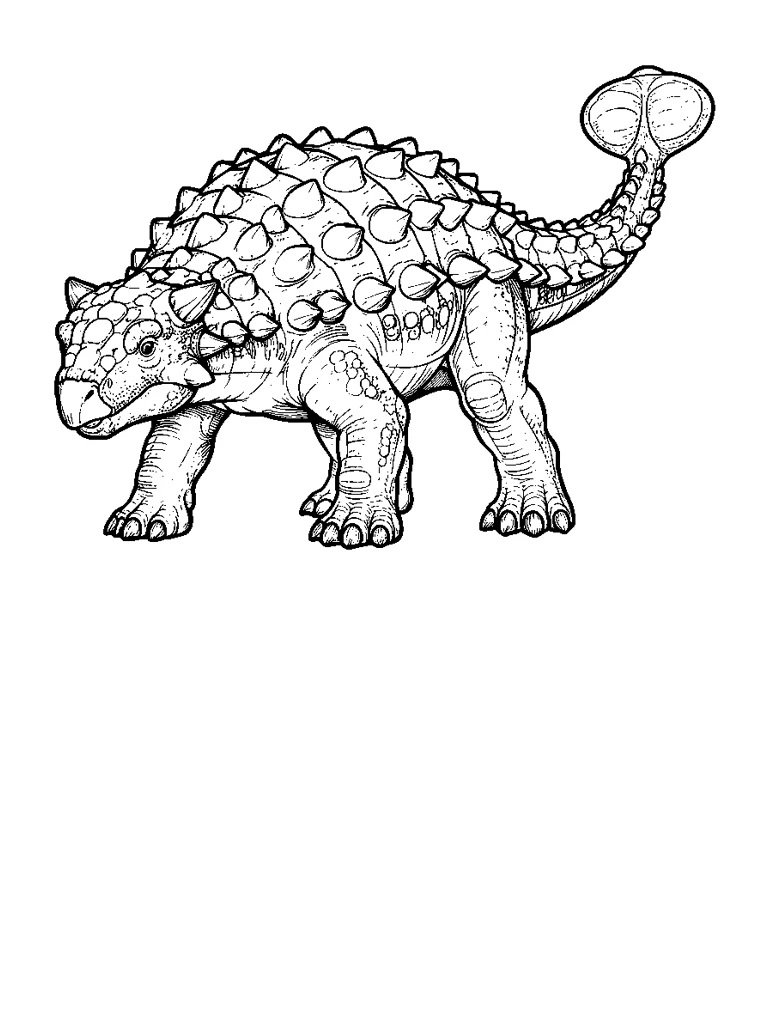
Late Cretaceous. A low, four-legged plant-eater with extensive body armor and a broad bony club at the end of its tail.
Its tail club is a fossil-supported feature. Explanations about particular defensive encounters are interpretations, not scenes directly observed by scientists.
Printable connection: use the matching companion below and inspect its visible features. Compare the artistic reconstruction with the museum source, then add one factual note on separate paper. Colors are creative choices unless a reliable source discusses preserved color evidence for that particular animal. A finished coloring page cannot establish that every detail of a reconstruction is correct.
Parasaurolophus
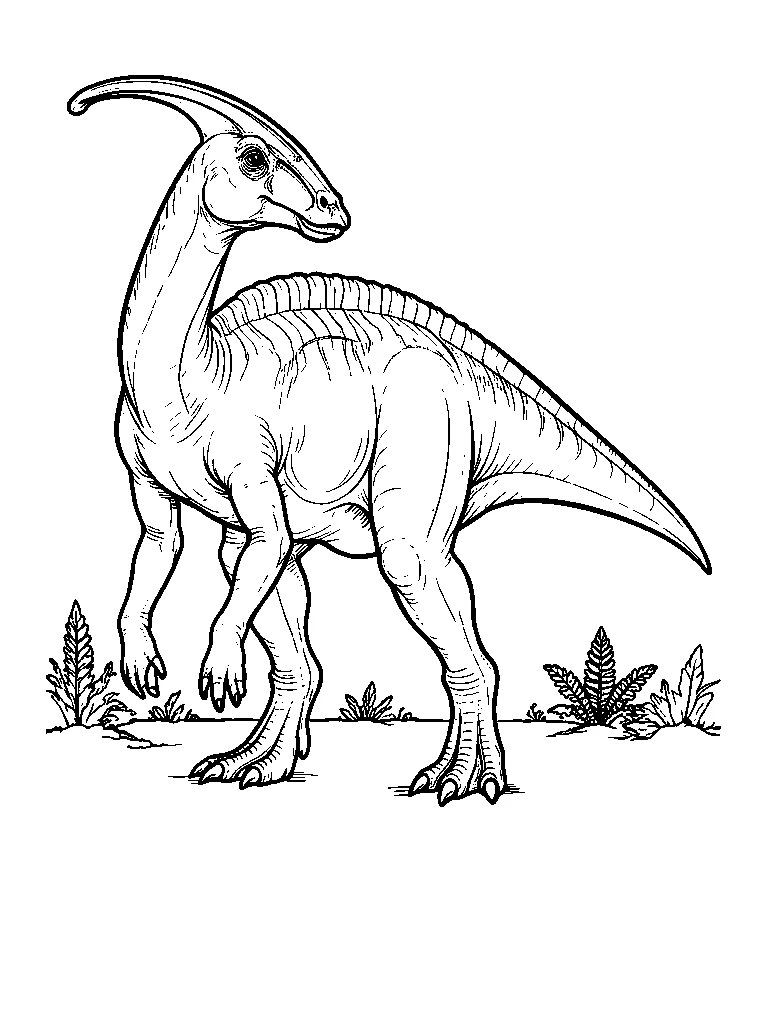
Late Cretaceous. A duck-billed plant-eating dinosaur with a distinctive long crest curving backward from the head.
The crest contained hollow passages. Possible sound and display functions are research interpretations; no recording tells us its exact call.
Printable connection: use the matching companion below and inspect its visible features. Compare the artistic reconstruction with the museum source, then add one factual note on separate paper. Colors are creative choices unless a reliable source discusses preserved color evidence for that particular animal. A finished coloring page cannot establish that every detail of a reconstruction is correct.
Spinosaurus
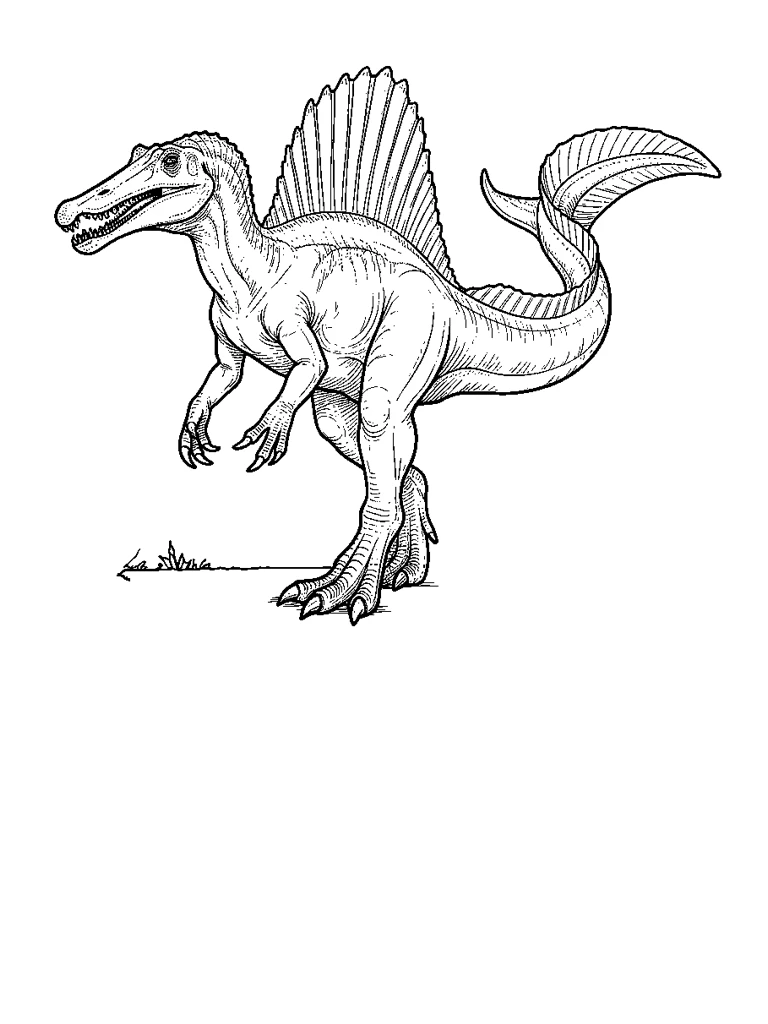
Late Cretaceous. A theropod with a long narrow snout, conical teeth, tall back spines forming a sail-like outline, and an unusual deep tail.
Evidence supports an association with water and fish-eating, but how it moved and hunted in water remains debated. Do not present one swimming behavior or sail function as certain.
Printable connection: use the matching companion below and inspect its visible features. Compare the artistic reconstruction with the museum source, then add one factual note on separate paper. Colors are creative choices unless a reliable source discusses preserved color evidence for that particular animal. A finished coloring page cannot establish that every detail of a reconstruction is correct.
Dinosaur coloring pages by age
Ages 3–4: offer large, simple outlines and a few tools, with pointing or talking as alternatives to careful filling. The new species companions include moderate detail; use the live catalog to look for a genuinely simpler page rather than calling every new dinosaur preschool-easy. An adult can also draw a broad imaginary silhouette on blank paper.
Ages 5–6: a moderate dinosaur with a few visible features can support naming horns, tail, legs, or plates. Ages 7–8: add a habitat discussion, a short label, or comparison between two animals. Ages 9–10: choose detail, research a question, or compare an artistic reconstruction with a museum description. Any child can choose another level based on comfort and interest.
Visual complexity and scientific challenge are different. A simple picture can support a thoughtful question about evidence; a detailed picture can be enjoyed without a written report. Avoid rewarding small spaces or speed as though they indicate better learning. Ask children what they want to explore next.
Dinosaur habitats and prehistoric environments
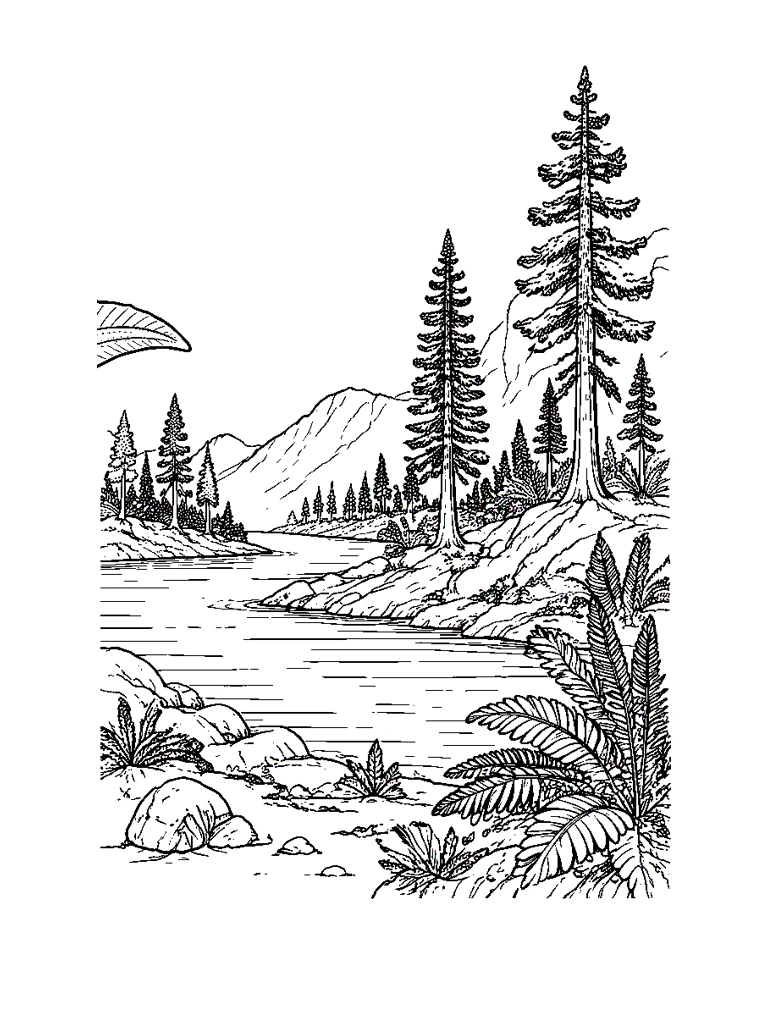
Dinosaurs lived in varied environments across a very long span of time, not one uniform jungle. Rivers, lakes, forests, coastlines, and drier places changed with geography and geological time. Ferns and conifers can be useful prehistoric plant examples, but no single plant list describes every dinosaur habitat. Later Mesozoic environments also included flowering plants.
The river companion contains conifers, ferns, rocks, and water without placing named species together. Add an animal only after checking whether its time and region fit your intended scene. Stegosaurus and Brachiosaurus are Late Jurassic examples; Tyrannosaurus and Triceratops are much later Late Cretaceous examples. Sharing a broad period label still does not prove two species occupied the same place.
A fictional prehistoric scene can deliberately mix animals if it is labeled imaginative. A factual habitat should use a narrower question and source: which region, which interval, and which evidence? Children need not memorize dates to understand that “long ago” contains many different times. A simple timeline with separate bands can make that distinction visible.
Dinosaur coloring and learning
Pair the page with a short museum passage or an adult-read book and choose two words to discuss. Compare visible features, then classify using a stated rule such as animals with horns or animals with long necks. That visual grouping is not the same as a scientific family tree; explain the rule you are using.
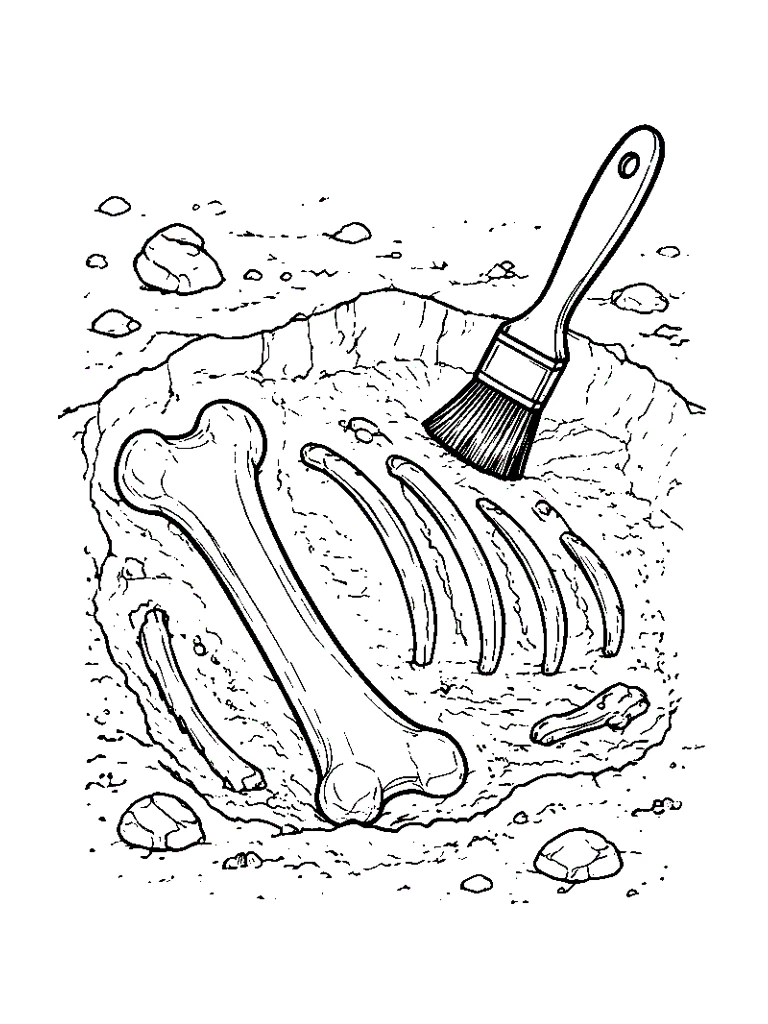
Diet can prompt useful comparisons, but a picture alone does not prove what an animal ate. Scientists interpret teeth, jaws, fossil stomach contents, and other evidence. Use a source-backed diet statement for a named animal and allow uncertainty. Likewise, the fossil-discovery companion shows stylized bones, not a complete skeleton that identifies one species.
For storytelling, invite an imaginary color, setting, or behavior and label the result fiction. For research, ask a question that a child can check in a credible source. Keep the distinction positive: imagination and evidence both have a place, but they serve different tasks. Reading and discussion matter more than filling every outline.
Ten dinosaur coloring activities
Choose one activity and a real companion or catalog page. Approximate ages are flexible. Adults supervise materials and any cutting; fossil discovery remains a paper model unless a suitable supervised activity is arranged.
- Design an imaginary dinosaur — Ages 3–10. Use blank paper beside a real companion. Combine favorite shapes and invent a name. Label it imaginary. Ask: “Which parts did you invent?” A factual species name should not be attached to an invented animal.
- Feature detective — Ages 4–8. Color Triceratops horns or Stegosaurus plates, then name what you noticed. Compare the museum description. Ask: “Which feature helps us recognize it?” Resource: matching species companion, not a color-based identification rule.
- Compare body shapes — Ages 5–10. Place Brachiosaurus and Velociraptor companions together. Compare neck, legs, tail, and stance without treating page size as life size. Ask: “Are these printed to the same scale?” They are not scaled measurements.
- Dinosaur alphabet conversation — Ages 4–7. An adult writes T for Tyrannosaurus or B for Brachiosaurus on separate paper. Say the name slowly and color the related animal. Ask: “Which first letter do you notice?” Resource: species page plus adult-written letter.
- Choose a habitat — Ages 6–10. Use the river companion and a museum source to discuss a possible environment for one animal. Label the region and period when known. Ask: “What evidence would help us choose plants?” Do not mix distant species as confirmed neighbors.
- Diet sorting — Ages 6–10. Use source-backed diet statements for Tyrannosaurus, Triceratops, and Brachiosaurus. Make adult-written labels and group the pages. Ask: “What evidence supports the diet?” The drawing alone is not an answer key.
- Fossil clue talk — Ages 5–10. Color the brush-and-bones companion and distinguish a bone from an artistic reconstruction. Ask: “What might still be missing?” Resource: Fossil discovery model and the existing Dinosaurs & Fossils pack.
- Track observation — Ages 6–10. Draw a footprint shape on blank paper and compare broad features with reliable fossil-track photographs. Ask: “Can one drawing identify a species?” No species-specific matching worksheet is promised; use a source and acknowledge uncertainty.
- One fact card — Ages 7–10. Color a dinosaur and add one checked fact on a separate card: period, feature, or diet. Include the source title. Ask: “Which part is evidence and which is interpretation?” Resource: companion and museum references.
- Past-time gallery — Ages 7–10. Arrange Jurassic examples separately from Cretaceous examples, then display colored pages with permission. Ask: “Does the same period mean the same place?” Add a note that the display is a comparison, not one coexistence scene.
Free printable dinosaur coloring pages
The gallery below lists ten new companions plus live dinosaur collection cards from the catalog. The existing Dinosaurs & Fossils pack remains a separate resource with its own pages and paper sizes. No named species link is invented when a catalog record is absent; the companions provide the explicitly titled downloads described here.
Choose A4 or US Letter to match the paper in the printer. A preview opens a PDF in a new tab. Check margins and print one test copy, especially when moving between printers. The source images are black-and-white outlines; any factual note discussed in an activity goes on separate paper unless it actually appears on the sheet.
Frequently asked questions
What are the best dinosaur coloring pages for preschoolers?
Choose broad outlines with few small spaces and a subject the child likes. Inspect the preview; the new species companions contain moderate or detailed artwork and are not all preschool-easy.
Where can I find free dinosaur coloring pages?
Use the companion previews below or visit the live Dinosaur coloring collections. The existing Dinosaurs & Fossils learning pack is linked separately.
What dinosaurs are easiest for young children to color?
The drawing matters more than the species. A broad simple dinosaur silhouette may suit a child better than an intricate version of the same animal.
Can dinosaur coloring pages be educational?
They can support reading, observation, comparison, and evidence-based conversation. Coloring alone does not establish understanding or verify a reconstruction.
What is the difference between a T-Rex and a Triceratops?
Tyrannosaurus rex was a large meat-eating theropod with powerful jaws and two-fingered forelimbs. Triceratops was a four-legged plant-eater with three facial horns and a bony frill. Both are Late Cretaceous dinosaurs.
Can I print dinosaur coloring pages at home?
Yes. The companions have US Letter and A4 PDFs. Match the file to your paper and check printer margins before printing.
Research and further reading
Further reading from research and professional guidance. Study findings apply to their participants and tasks; professional guidance is not the same as a controlled experiment.
- Natural History Museum: Dino Directory
Museum descriptions provide approximate periods and distinctive features; reconstruction and behavior claims vary in certainty.
- Natural History Museum: Velociraptor Facts
Explains the small feathered animal and its enlarged second-toe claw.
- Natural History Museum: Spinosaurus
Discusses fish-eating, aquatic associations, and unresolved questions about behavior.