By DoodleLearn · Evidence-informed guide
A space coloring page can begin with a red rocket, a blue planet, or a sky full of yellow stars. It can also open a conversation. Why does Saturn have rings? Is the Sun a planet? Where would an astronaut live? Start with the picture that catches a child’s attention, then add one small question rather than turning every coloring session into a quiz.
This guide pairs free space printables with approachable facts, flexible age suggestions, and ten activities using real companion sheets. Choose individual planets, an ordered solar system overview, Moon phases, an astronaut and rocket, a rover, a space station, or an imaginary star pattern. The existing Solar System learning pack offers another way to continue with structured activities.
These illustrations are friendly diagrams, not exact scientific models. Planet sizes and distances are not to scale, and neighboring pictures do not mean neighboring worlds are close together. Children may choose observed colors, imaginary colors, or both. A useful distinction is simply: this part describes something scientists observe; this part is my design.
Coloring offers opportunities for practice and enjoyment. The research does not make every benefit certain, and coloring is not a substitute for instruction, therapy, or medical care.
Download a Free Coloring PagePlanet Explorer
Mercury
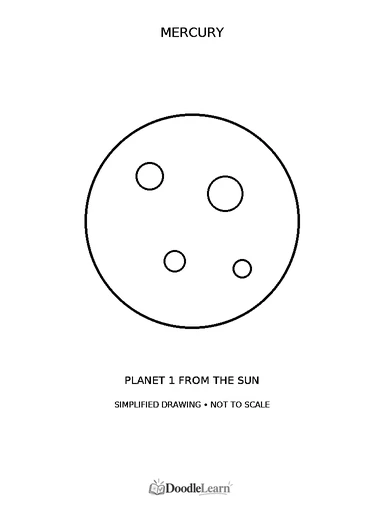
A small rocky planet closest to the Sun, with a heavily cratered surface.
Mercury takes about 88 Earth days to orbit the Sun.
Open Mercury coloring pageSimplified illustrations; planetary sizes and distances are not to scale.
Start with our solar system
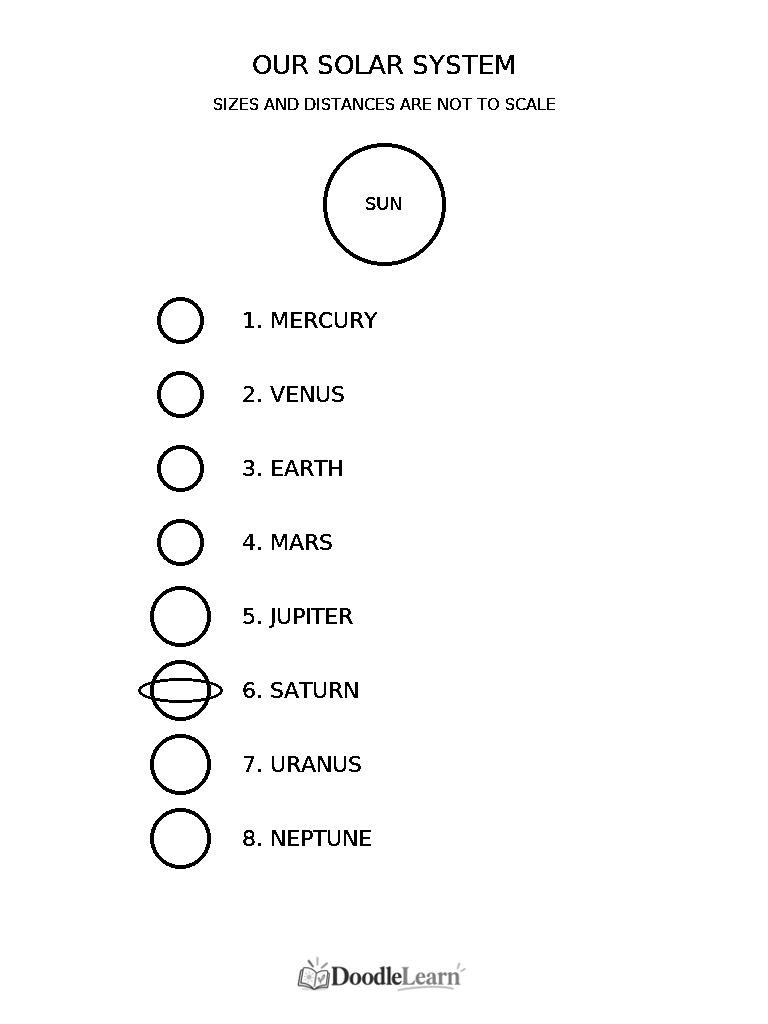
Our solar system has one star, the Sun, and eight planets. In order outward from the Sun, they are Mercury, Venus, Earth, Mars, Jupiter, Saturn, Uranus, and Neptune. It also contains moons, dwarf planets, asteroids, comets, and smaller objects. Pluto belongs in the conversation, but its current classification is dwarf planet, not a ninth planet.
Follow the overview with a finger before adding color. Explain that planets orbit the Sun rather than sitting in a straight row. A printable squeezes enormous distances onto paper, so use it for names and order, not measurements. The outer planets are separated by distances that cannot be faithfully displayed beside large coloring circles on an ordinary sheet.
Mercury: small, rocky, and closest to the Sun
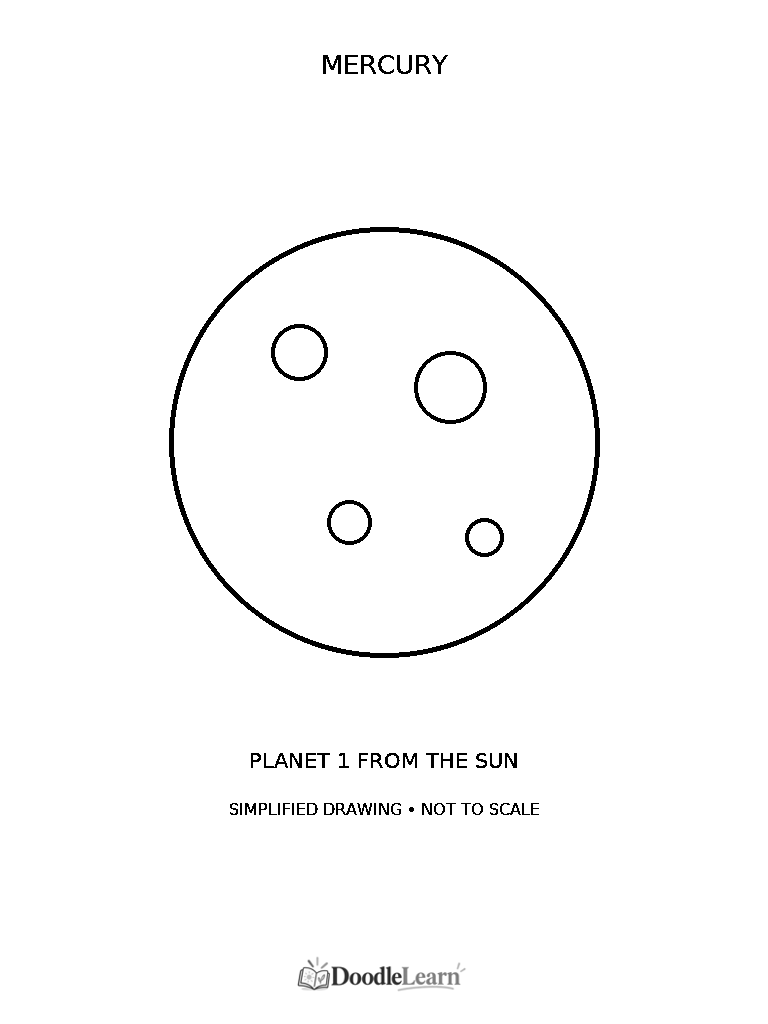
Mercury is the smallest planet and the closest to the Sun. Its rocky surface has many impact craters, making it an appealing subject for children who enjoy circles and textures. Gray or brown can suggest rock, while an invented palette creates an imaginative version. The circles on this printable represent simplified craters, not a map of specific named features.
Mercury takes about 88 Earth days to orbit the Sun. Being closest does not make it the hottest planet: Venus holds that distinction. Mercury has almost no atmosphere to retain heat, and temperatures change dramatically between day and night. For a younger child, keep the starting point simple: small, rocky, and first in order.
Venus: a world hidden beneath clouds
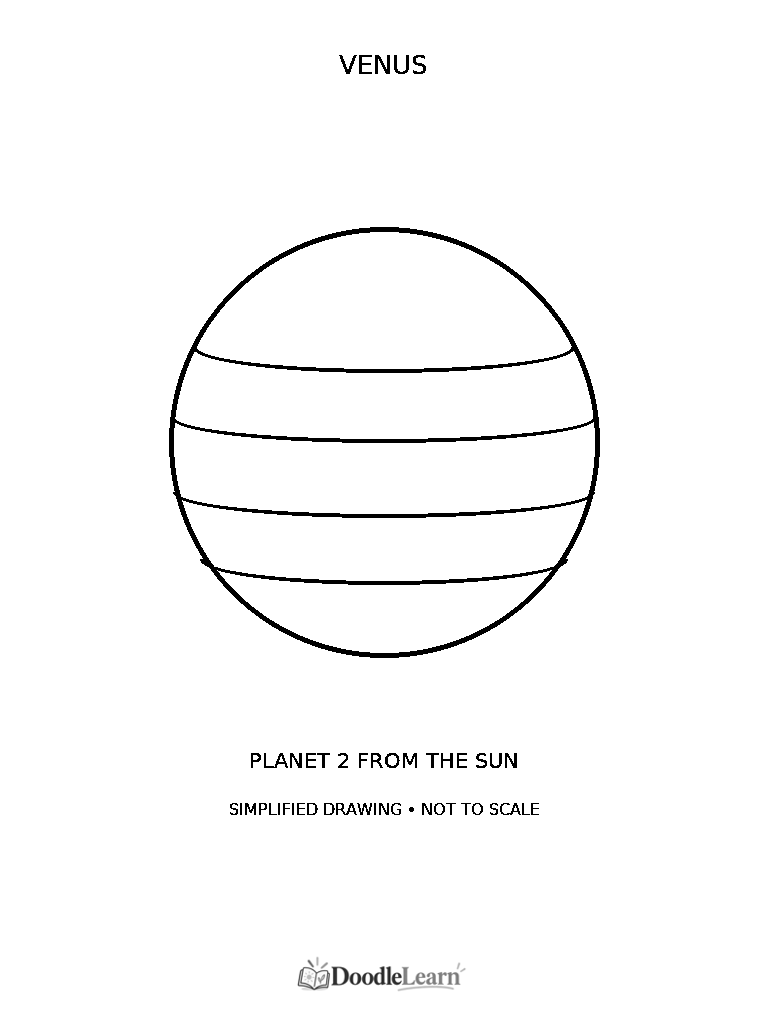
Venus is second from the Sun and similar in size to Earth. A thick atmosphere surrounds it, and clouds hide its surface from ordinary visible-light views. Its powerful greenhouse effect makes Venus the hottest planet in our solar system, even though Mercury is closer to the Sun. Cloud bands on the drawing are schematic rather than recorded weather observations.
Try pale cream or yellow for a simplified cloud-covered view. The orange landscapes sometimes shown in books represent surface imagery or artistic interpretation, not a clear view through the clouds. Ask whether you are coloring the outside clouds or imagining the ground underneath. These are different ways of picturing the same world, and neither needs a complicated vocabulary lesson.
Earth: our ocean-covered home
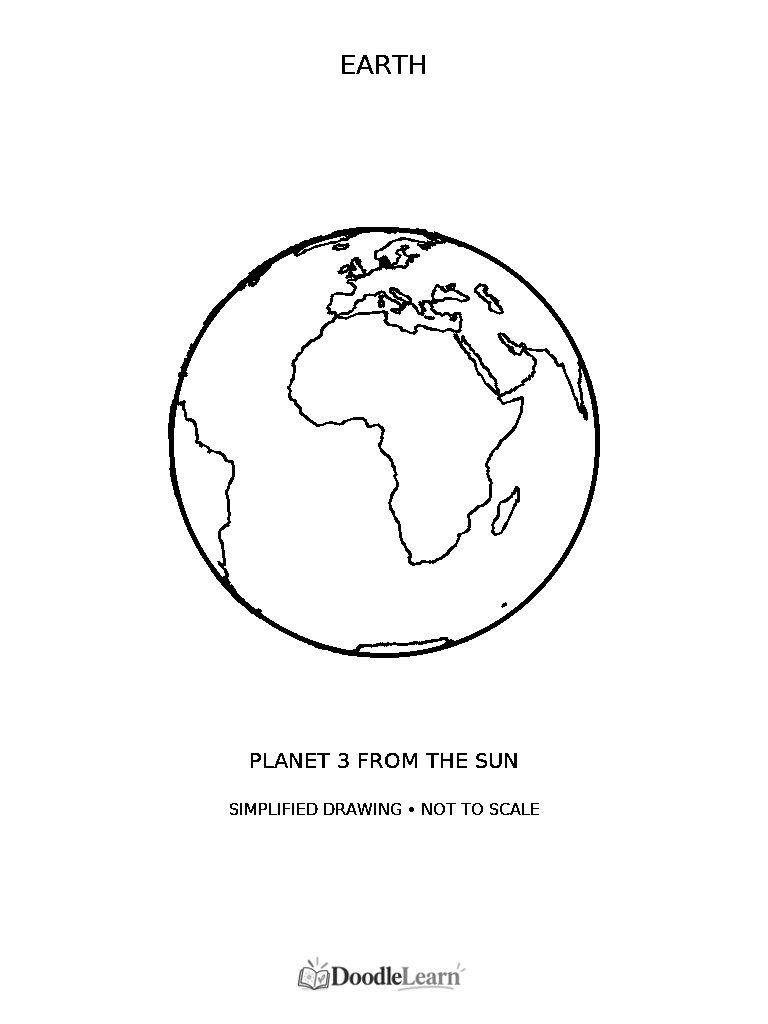
Earth is third from the Sun and the only world currently known to support life. Oceans cover most of its surface. Blue water, green or brown land, and white clouds offer a familiar starting palette. Continents contain deserts, forests, mountains, ice, and many other environments, so land is not all green.
Find a land shape on the Earth page and compare it with a globe. This drawing uses generalized Natural Earth coastlines projected onto a circular globe view; it does not show the whole world at once. A house would not be visible at this planetary scale. If a child wants to add their home, suggest a separate close-up picture beside the planet.
Mars: the rusty red planet
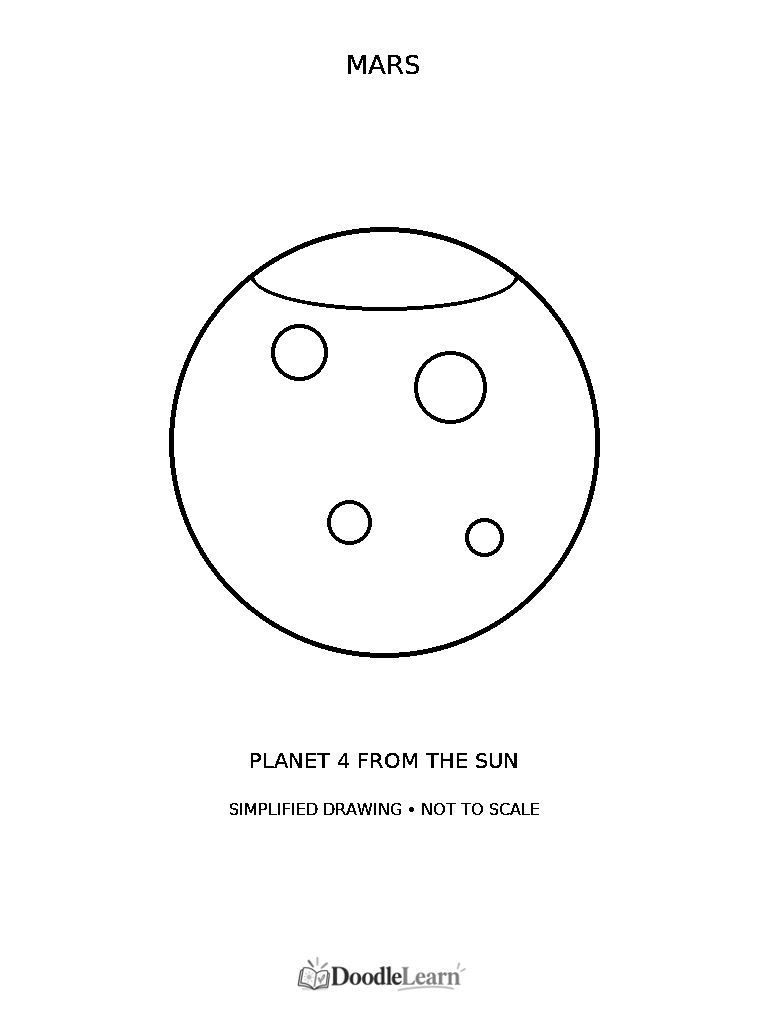
Mars is fourth from the Sun. Iron minerals in its surface material have oxidized, helping give the landscape its rusty appearance. Red, orange, tan, and brown work together; Mars is not a uniformly bright red ball. It has a thin atmosphere, polar ice, enormous volcanoes, and evidence that liquid water flowed there long ago.
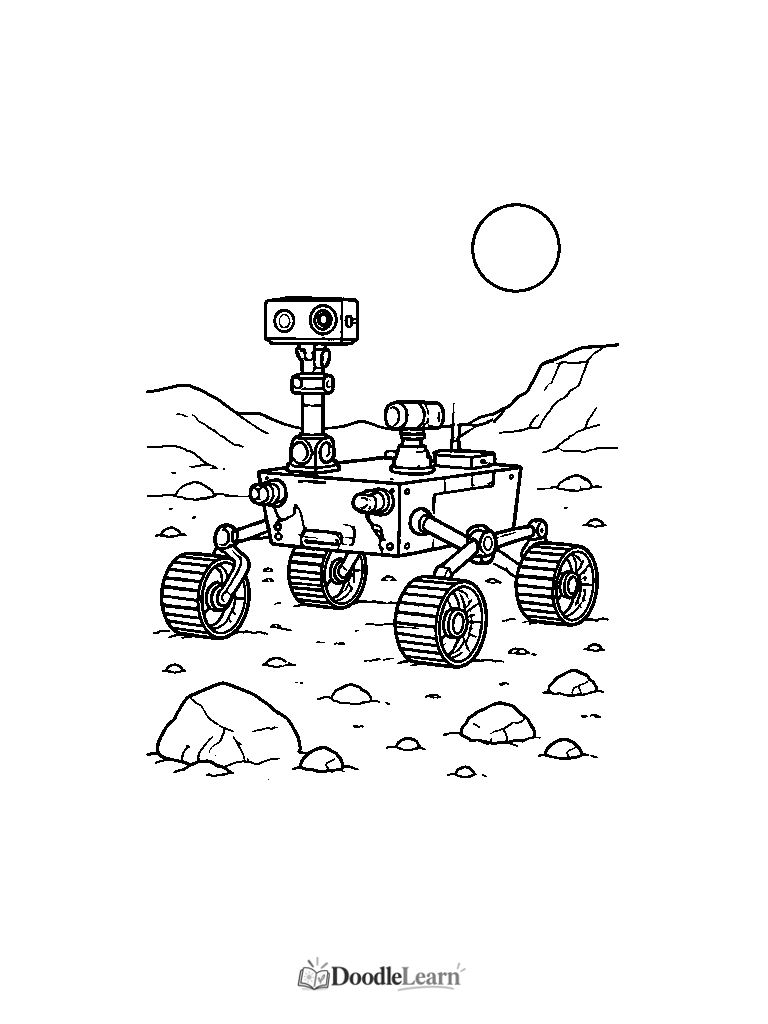
Compare the Mars page with the rover companion. One shows a simplified whole world, while the other imagines a vehicle investigating a small area. Ask what a rover could photograph or measure. Keep discoveries separate from wishes: finding ancient water evidence is not the same as finding living Martians. A child’s imaginary visitor can remain part of a clearly labeled story.
Jupiter: the largest planet
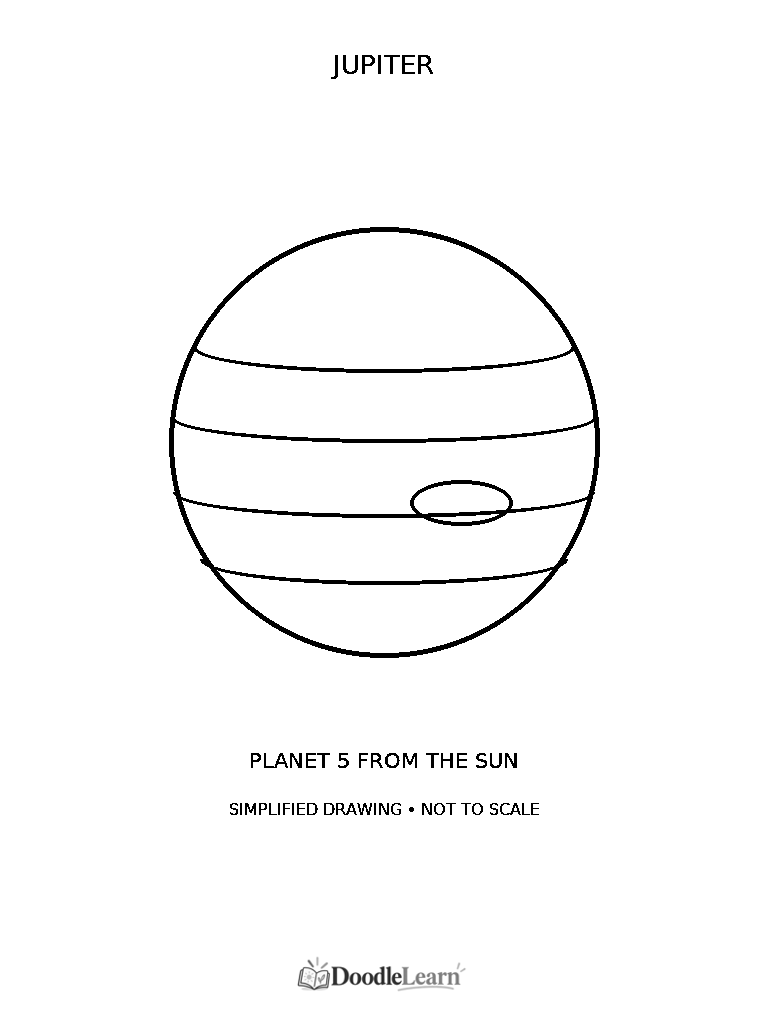
Jupiter is fifth from the Sun and the largest planet in our solar system. It is a gas giant without a solid surface like Earth’s to stand on. Its visible cloud bands inspire stripes in cream, orange, brown, and white. The Great Red Spot is a huge, long-lived storm, not a continent or a hole.
Use broad strokes for bands, then color the oval storm on the worksheet. Compare the striped appearance with Earth’s land-and-ocean pattern. Equal-sized circles on separate pages do not mean equal-sized planets: Jupiter is much larger than Earth. If that difference interests a child, look up a properly labeled scale model together instead of measuring these coloring circles.
Saturn: spectacular rings
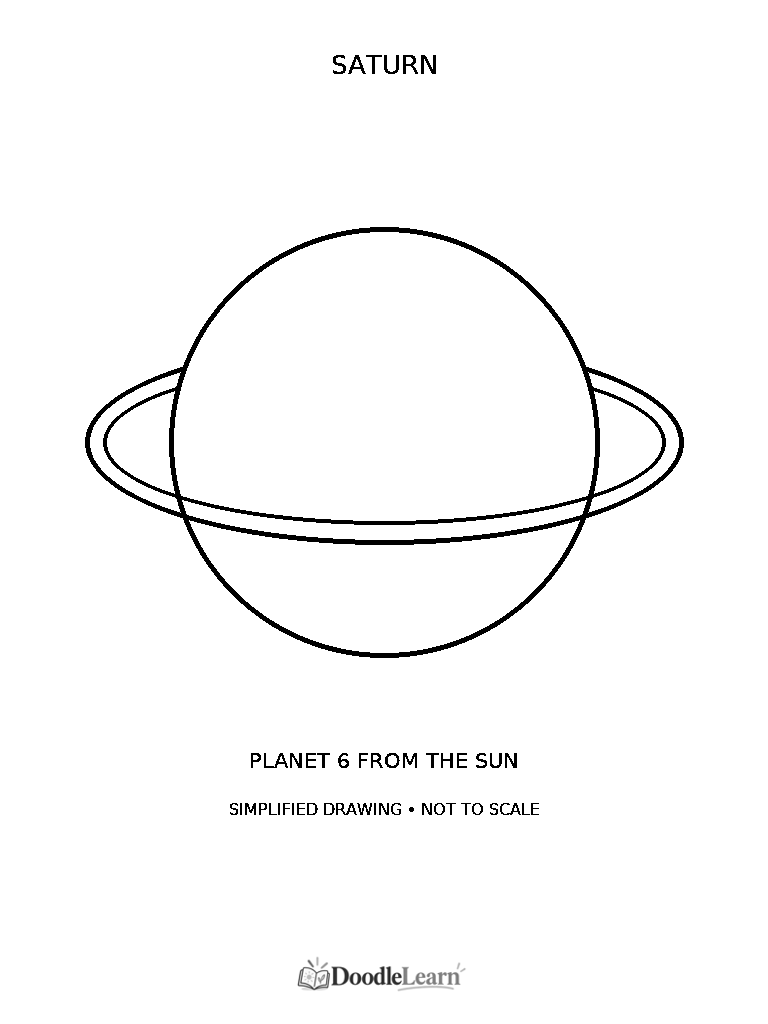
Saturn is sixth from the Sun and another gas giant. Its bright ring system makes it recognizable in a simple outline. The rings contain countless pieces of ice and rock; they are not one solid platform. Pale gold for the planet and soft grays for the rings offer an observational starting palette.
Trace the rings before coloring, noticing which portions pass in front and which disappear behind the planet. All four giant planets have rings, although Saturn’s are the most prominent. A pretend spacecraft designer can consider why traveling through a region full of particles needs planning. Keep the ring close-up on separate paper so a giant particle does not look like a real object at planetary scale.
Uranus: an ice giant with an unusual tilt
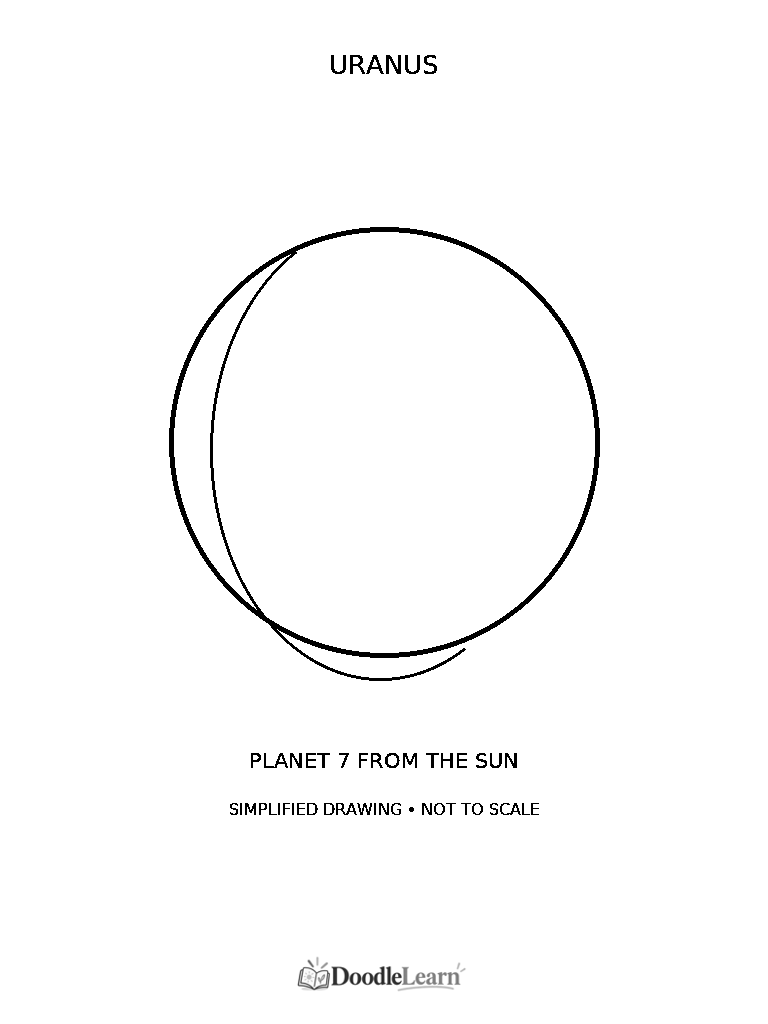
Uranus is seventh from the Sun. Scientists classify it as an ice giant, and methane in its atmosphere contributes to its blue-green appearance. Its rotation axis is tilted so far that it is often described as rotating on its side. That description concerns its orientation, not a planet resting on a floor.
Try a light blue-green palette and discuss the faint curved line as schematic, not a solid surface boundary. The term ice giant describes composition and structure; it does not mean Uranus has a simple frozen surface suitable for skating. Older children could add a separate axis sketch after comparing a verified NASA diagram, rather than guessing a tilt from the coloring outline.
Neptune: the most distant planet
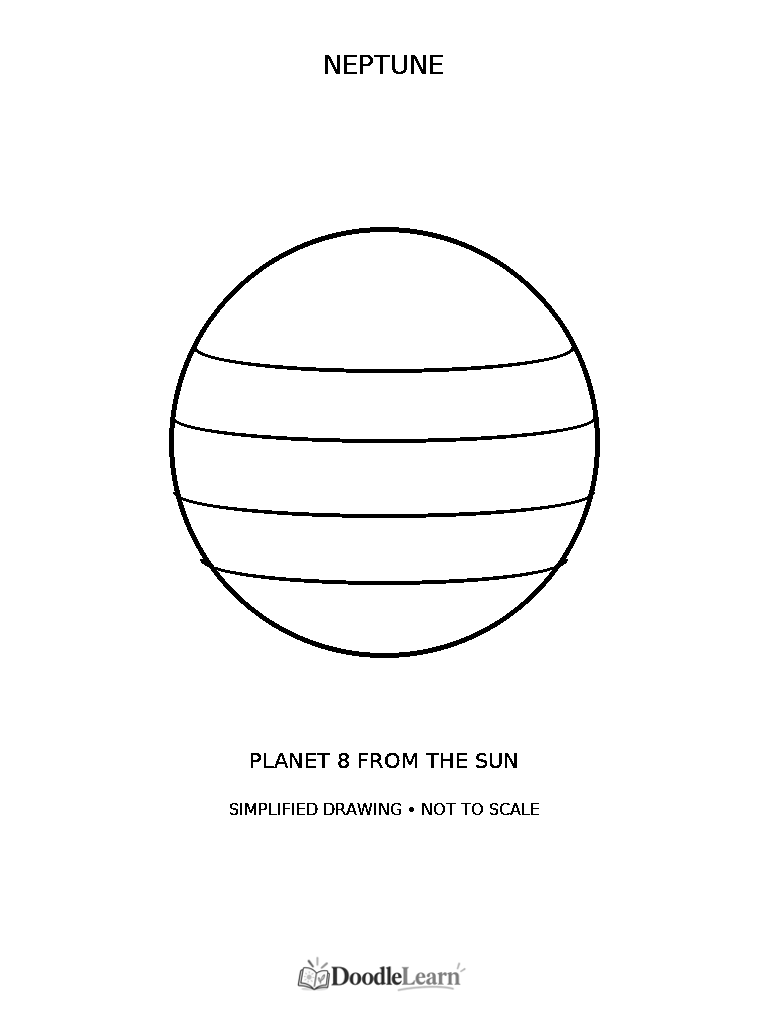
Neptune is eighth and the most distant planet from the Sun. Like Uranus, it is an ice giant with methane in its atmosphere. It has powerful winds and a cold, distant environment. Blue is a reasonable choice, although processed photographs can exaggerate differences between Neptune and Uranus. Decorative bands here do not record a particular observation.
Neptune takes about 165 Earth years to orbit the Sun. Place it at the end of the planet sequence and ask which world comes before it. Pluto remains an interesting dwarf planet beyond Neptune for most of its orbit. Its exclusion from the eight-planet count does not make it unimportant or mean it disappeared.
The Sun, the Moon, day and night
The Sun is a star that produces light and heat. The Moon is Earth’s natural satellite and shines by reflecting sunlight. Earth rotates, so a location turns toward the Sun during daytime and away during nighttime. The Sun does not travel around Earth once a day. Never look directly at the Sun or point binoculars or a telescope toward it during these activities.
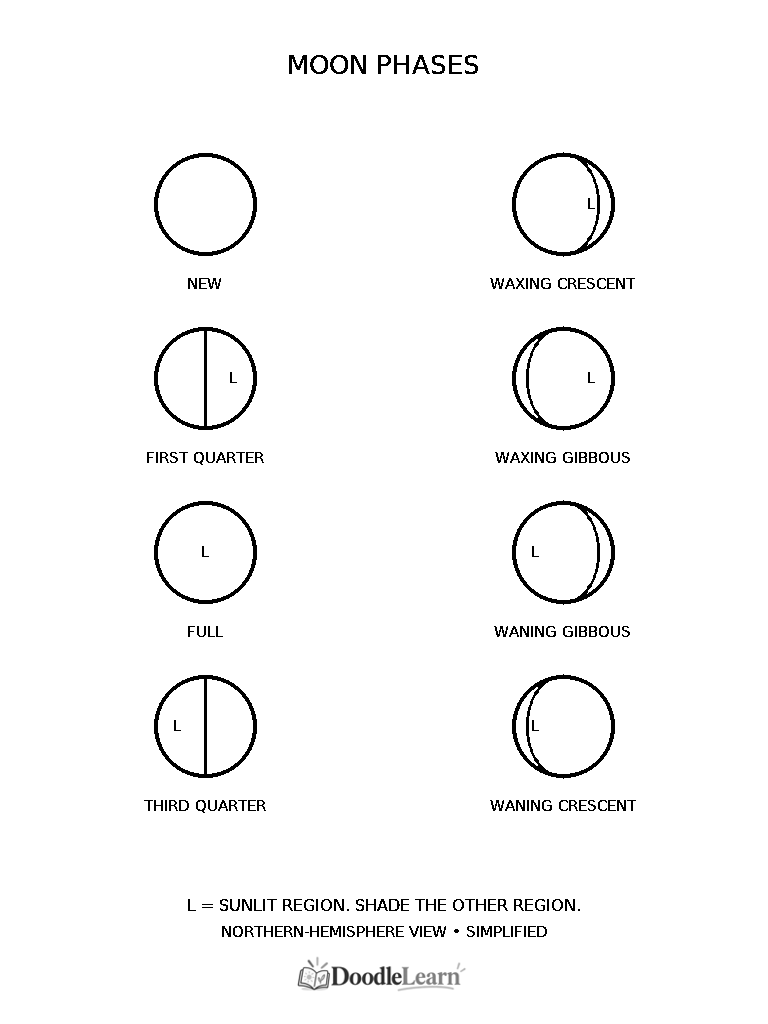
Moon phases occur because we see different amounts of the Moon’s sunlit half as it orbits Earth. The Moon does not change shape. Ordinary phases are not caused by Earth’s shadow; that shadow is involved in a lunar eclipse. The worksheet names new, waxing crescent, first quarter, waxing gibbous, full, waning gibbous, third quarter, and waning crescent.
L marks the sunlit region on this outline-only northern-hemisphere example. Shade the other region if you want a phase comparison. Apparent orientation varies with viewing location and position in the sky, including between hemispheres. A local Moon can look rotated compared with the worksheet and still be showing the same phase.
Astronauts, rockets, rovers, and space stations
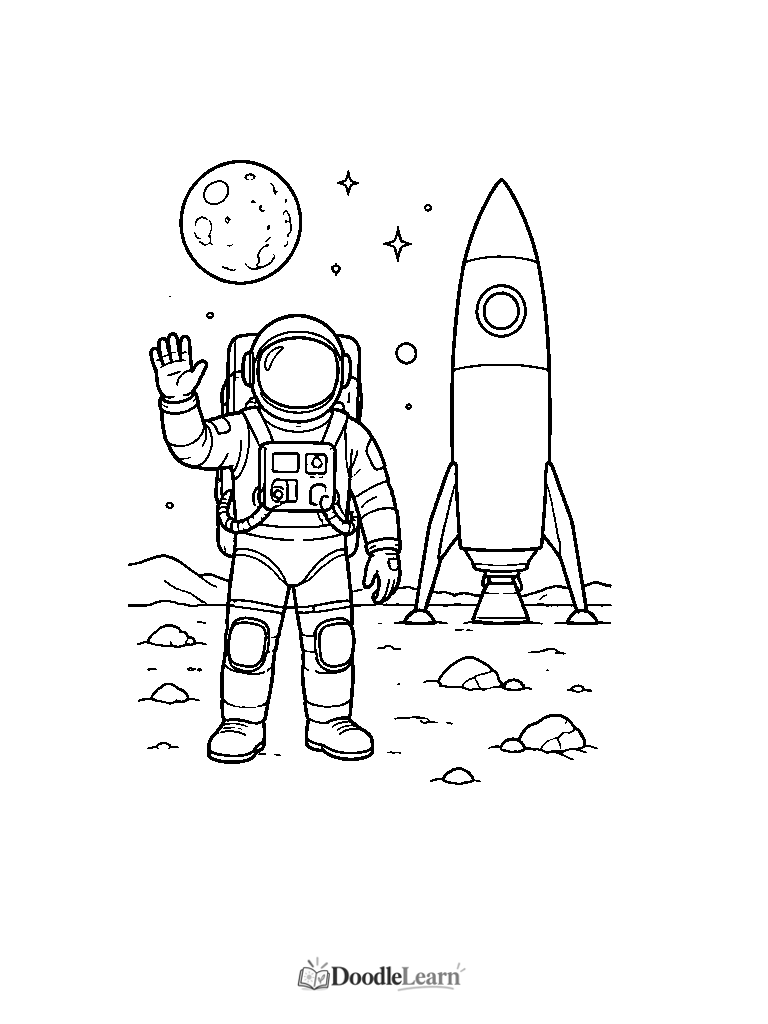
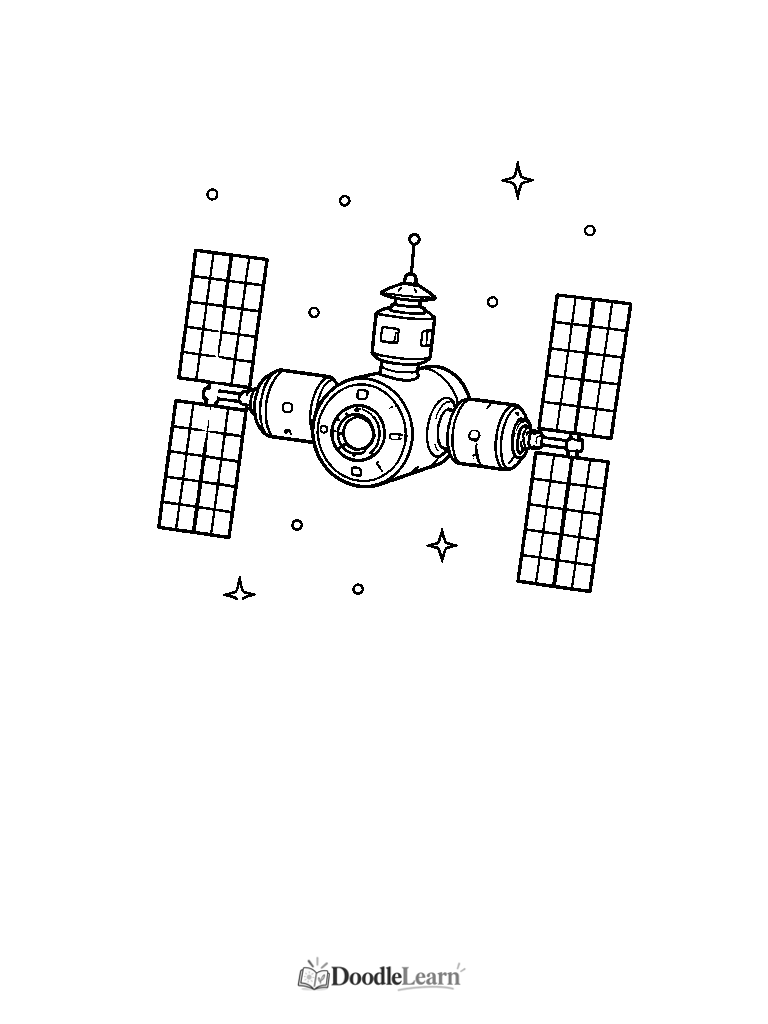
Rockets produce thrust to launch spacecraft. Astronauts need protective equipment and carefully planned systems to work in space. Spacesuits provide pressure, oxygen, and protection; they are not ordinary winter clothing. Rovers are robotic surface vehicles, while space stations are orbiting workplaces where crews live, maintain equipment, and conduct research.
Choose the astronaut-and-rocket page for a pretend launch story, the rover for a robotic investigation, or the station for life in orbit. These original scenes are not engineering blueprints. A rover does not need an astronaut sitting inside it, and a station is not a rocket landing on another planet. Discuss air, water, communication, energy, and tools, then verify unfamiliar ideas together.
Stars and constellations: patterns we imagine
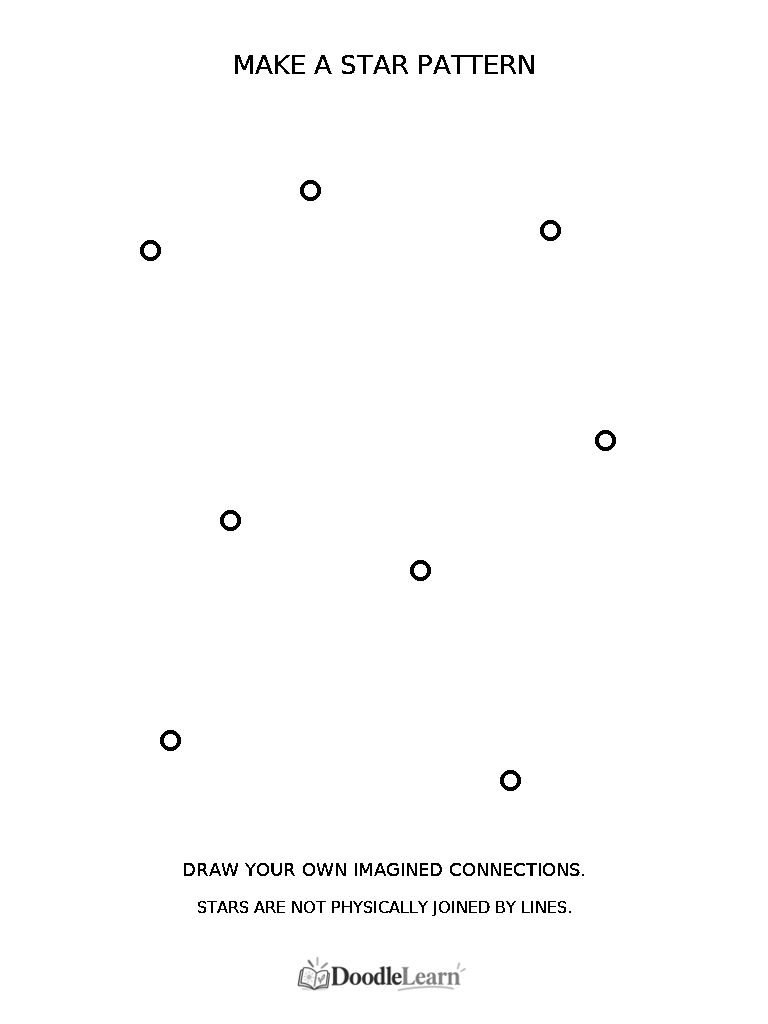
Stars are distant objects that produce their own light. The eight dots on the star-pattern sheet are an invented arrangement for creative play, not an observed constellation. Connect them to invent a shape, then explain that those lines would not physically exist in space. Stars that appear close in the sky can be very different distances from Earth.
Astronomers recognize 88 constellations as regions of the sky. Different cultures have imagined and named many patterns too. Clearly separate a child’s new creation from an officially recognized constellation. Visibility depends on location, season, time, and sky conditions; this sheet is not a promise that its dots will be overhead tonight.
Flexible choices for ages 4–5, 6–7, and 8–10
Ages 4–5: offer one bold planet, a few crayons, and one observation. Asking which picture has rings is enough. Children can point, dictate a caption, or simply color. Memorizing eight names is not a condition of enjoying space pictures. A short shared session may suit them better than an entire packet.
Ages 6–7: match names, arrange a few planets in order, or compare Earth with Mars. Read labels together and offer speaking, drawing, or writing. Ages 8–10: try a source-checking question, a mission design, or a comparison of what diagrams leave out. These ranges are flexible suggestions, not developmental tests. Interests, time, reading preferences, and comfort with detail matter.
Ten space coloring activities
Choose one idea and keep its objective small enough to explain in a sentence. Gather the named sheet, coloring supplies, and scrap paper. Adults can help with cutting; no activity requires completing every area or all ten suggestions.
- Color the eight planets. Objective: practice names and order. Use the eight planet companions, arrange finished pages from Mercury to Neptune, and check the overview rather than relying on colors.
- Design a rocket. Objective: connect a vehicle design with a purpose. Use Astronaut & Rocket, then sketch your own rocket separately and label its imaginary mission.
- Create an astronaut suit. Objective: distinguish practical protection from decoration. Use Astronaut & Rocket, choose suit colors, and discuss oxygen, pressure, and communication with an adult.
- Draw an imaginary planet. Objective: separate imagination from observed facts. Use a planet outline as inspiration, draw a new world on scrap paper, and mark it imaginary.
- Color Moon phases. Objective: compare visible sunlit regions. Use Moon Phases, leave L regions light and shade other areas; discuss why the Moon itself stays round.
- Match planets to facts. Objective: use a reference to support a choice. Use individual planet pages and the Planet Explorer; write or dictate a clue and find its matching planet.
- Create a solar system poster. Objective: communicate order without implying scale. Use Solar System Overview and attach planet pictures with a visible not-to-scale note.
- Color a space station. Objective: connect equipment to life in orbit. Use Space Station and sketch a separate interior with sleeping, exercise, and experiment spaces.
- Design a Mars rover. Objective: distinguish observation from guessing. Use Design a Mars Rover, choose a question about a rock, and draw a tool that might investigate it.
- Build a constellation picture. Objective: understand imagined connections. Use Imaginary Star Pattern, join selected dots, and invent a story without calling it an actual sky chart.
Free space printables for home and classroom
All companion pictures below open real PDFs. Choose US Letter or A4 in the gallery, preview the file, and print only the pages you want. The existing Solar System learning pack provides additional structured activities. The related space collection cards show actual catalog resources, not promised future sheets.
Ordinary printer paper suits crayons; test markers on spare paper because some ink shows through. Keep outlines within the paper margins using the printer preview. Save pages in a folder or create a temporary display with permission. Invite a favorite detail or question rather than grading neatness, speed, or realistic color choices.
Frequently asked questions
How many planets are in our solar system?
Eight: Mercury, Venus, Earth, Mars, Jupiter, Saturn, Uranus, and Neptune. Pluto is a dwarf planet, the Sun is a star, and the Moon is a natural satellite.
What are the best space coloring pages for kids?
Start with the child’s interests and preferred detail. Single planets offer open areas, astronauts invite stories, and the overview suits naming and ordering. Moon phases work well with adult discussion.
Can coloring help children learn planet names?
Naming pages together and arranging them in order offers practice. Repeated conversations may help, but completing a sheet does not guarantee recall or astronomy understanding.
What is the easiest planet to recognize?
Saturn is often recognized by its prominent rings. Earth’s land and oceans, Jupiter’s bands, and Mars’s rusty appearance offer other picture clues. All four giant planets have rings.
Where can I download free solar system coloring pages?
Use the companion gallery on this page for US Letter and A4 PDFs, or explore the linked Solar System learning pack. No account is required.
Are space coloring activities suitable for kindergarten?
Yes, with flexible expectations. Offer a bold outline and one feature to notice; let children point or speak instead of writing. Detailed explanations and memorization are optional.
Research and further reading
Further reading from research and professional guidance. Study findings apply to their participants and tasks; professional guidance is not the same as a controlled experiment.
- NASA Science: About the Planets
Planet order, classifications, and individual world facts; a science reference, not evidence of coloring outcomes.
- NASA Space Place: Moon Phases
The changing view of the Moon’s illuminated half and eight commonly named phases.
- NASA Space Place: Constellations
Star patterns, imaginary connections, and differences in visibility.