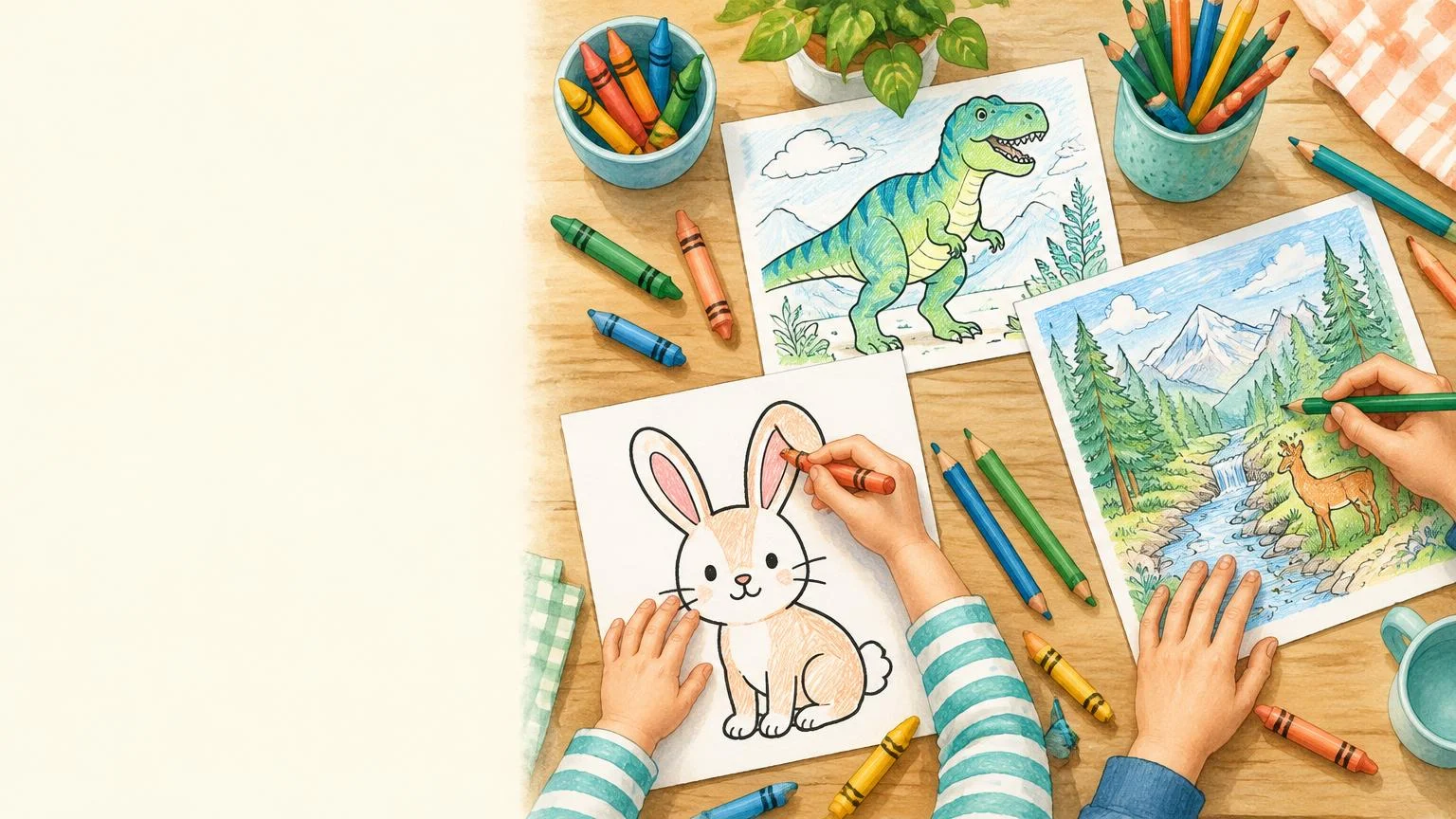
By DoodleLearn · Evidence-informed guide
A two-year-old might happily cover a rabbit with sweeping marks. A five-year-old might invent a rainbow animal, while a nine-year-old adds a habitat and a story. None of those pictures needs to look like an adult example. Choosing an approachable page makes it easier to enjoy the activity, but age is a starting suggestion rather than a rule about what a child should accomplish.
This guide organizes practical ideas into ages 2–3, 4–5, 6–7, and 8–10. These are editorial activity groups, not developmental assessments. DoodleLearn’s directory uses broader age filters; the recommendations below instead check the suggested ages of real existing collections. Within any group, offer a simpler page, a more detailed page, or blank paper according to the child’s interests and comfort.
Coloring can invite creativity, crayon control, attention, and conversation. It does not guarantee improved handwriting, concentration, or school results. The useful question is not “Does this look right for their age?” but “Can they reach the paper, choose a tool, and make the marks they want?” Keep the activity voluntary and let an unfinished picture be enough.
Coloring offers opportunities for practice and enjoyment. The research does not make every benefit certain, and coloring is not a substitute for instruction, therapy, or medical care.
Download a Free Coloring PageColoring activities for ages 2–3
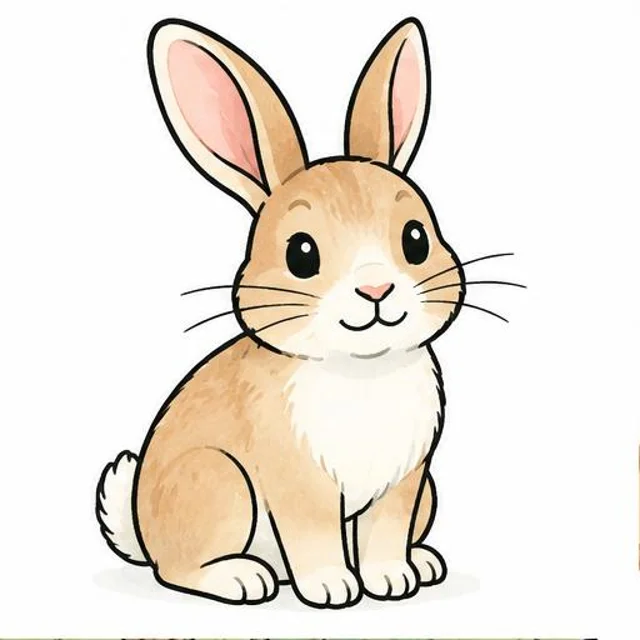
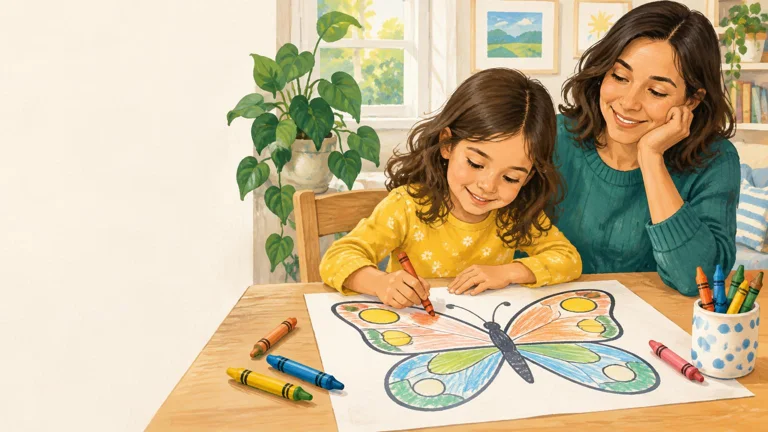
Begin with one large subject, thick outlines, and generous empty areas. Familiar animals, a flower, an apple, or a simple vehicle offer recognizable starting points. A child may color the background, make dots on the animal, or ignore the printed shape entirely. That is still a legitimate way to use the page. Have blank paper available alongside the printable.
Set out two or three washable, age-labeled tools rather than a crowded box. Chunky crayons may be comfortable for some children; follow the manufacturer’s age and safety guidance. Supervise closely, especially if a child mouths materials or breaks crayons into small pieces. Keep caps and other small parts out of reach, and avoid forcing a particular finger position.
Try a gentle color invitation: “Here is yellow. Would you like to make a sunny patch?” Or place a toy rabbit near a rabbit picture and let the child choose what to notice. Secure slippery paper and provide a stable seated or standing surface at a comfortable height. Stop when the child moves on; there is no target number of minutes or requirement to finish.
Coloring activities for ages 4–5
Simple animals, weather pictures, shapes, and seasonal scenes can support conversations about familiar things. Ask the child to choose between two pictures, then offer a small selection of colors. Some children enjoy naming colors or counting objects; others want quiet creative time. Do not turn every mark into a question they must answer.
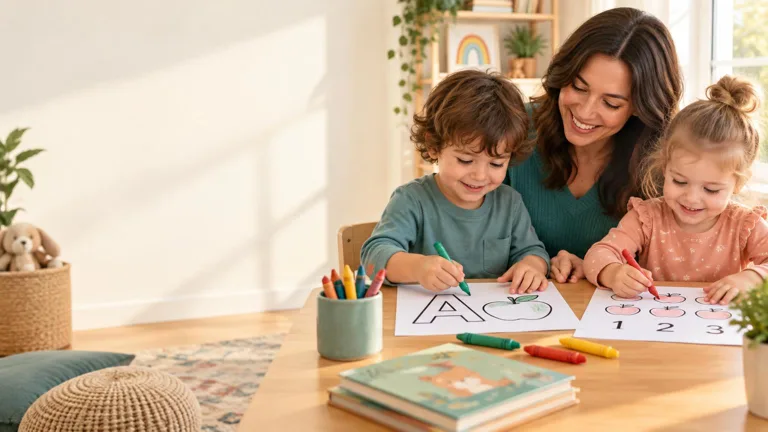
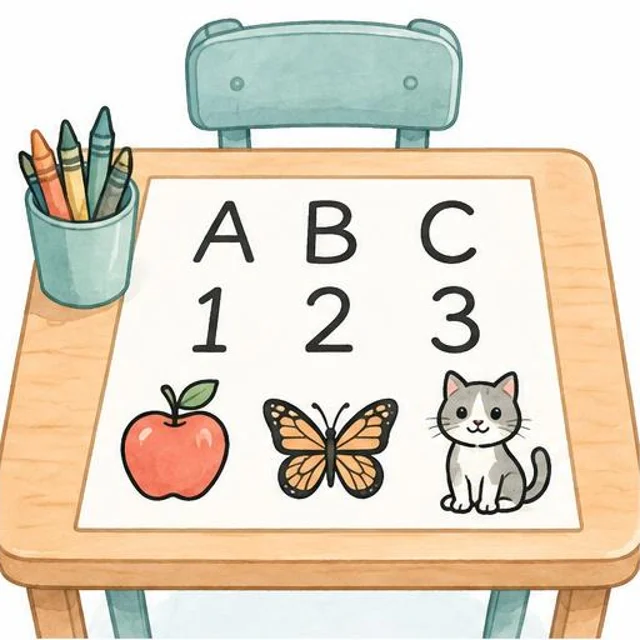
For letters and numbers, add your own learning prompt rather than assuming it is printed on a sheet. Write a large A on separate paper beside an animal picture, say the sound, and name an animal together. For quantities, count three objects that actually appear, or draw three circles in the margin. Begin with a few numbers within 1–10 rather than requiring all ten at once.
DoodleLearn does not currently provide a dedicated alphabet or numbers collection in these recommendations. The illustration above is an activity example, not a promised alphabet download. The existing preschool shapes and kindergarten pictures can be used with adult-added letters and counting prompts. Keep naming and counting optional, and avoid equating a neat result with understanding.
Coloring activities for ages 6–7
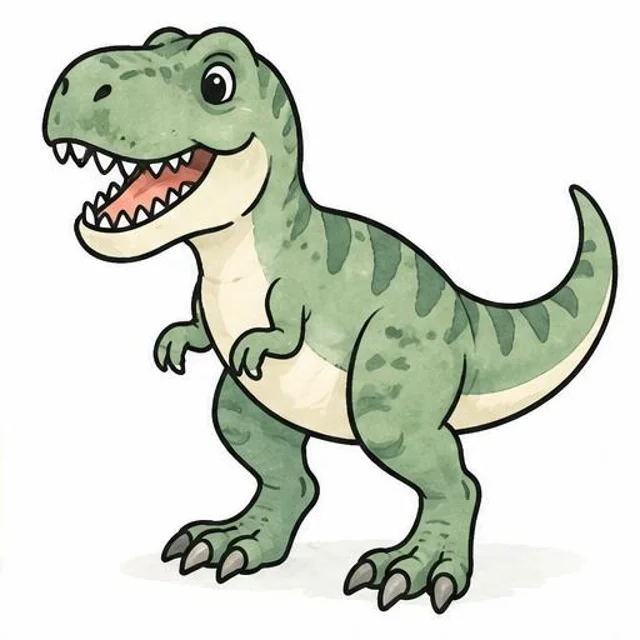
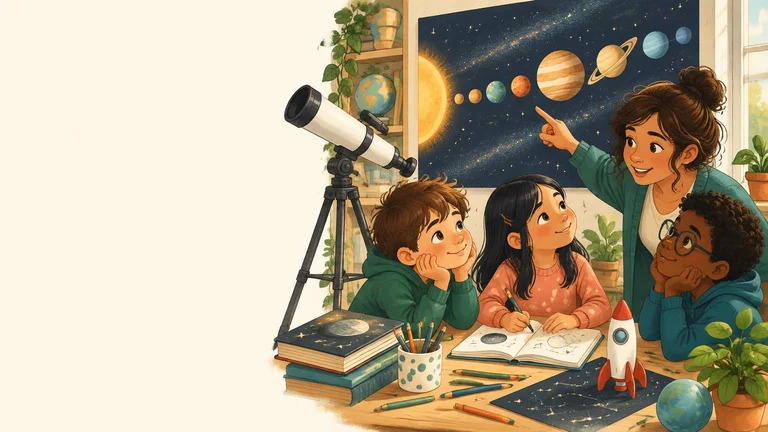
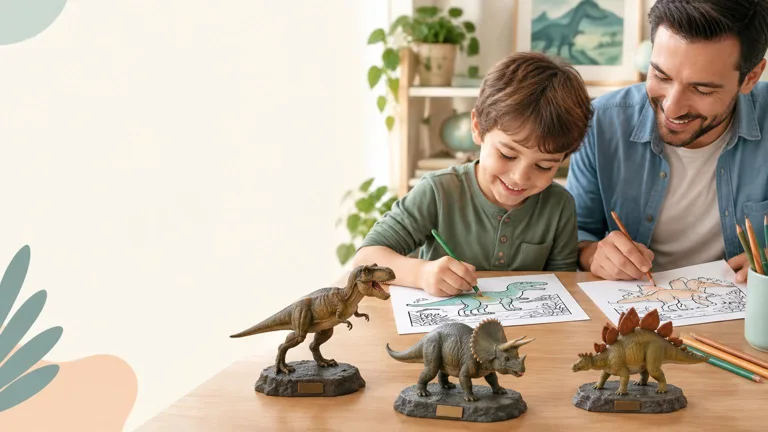
Offer moderately detailed animals, dinosaurs, space pictures, and nature scenes when the child wants them. Before printing, check how many small regions the actual sheet contains. A favorite dinosaur may be motivating even if its background is detailed; you can agree to color only the dinosaur and leave the rest untouched.
Combine the page with storytelling: where does this animal live, what happens next, and what would you add? For a science lesson, distinguish imaginary coloring from evidence. A blue dinosaur is welcome in a story; a claim about its real appearance needs a source. Ask children to tell you whether they are inventing a world or representing something they observed.
Coloring can complement a classroom topic, but a picture alone does not show subject understanding. After a habitat page, invite the child to explain one need of the animal. After a space page, use a verified planet guide rather than inferring distances from the illustration. Short discussion, observation, and child-generated questions add more than judging the finished colors.
Coloring activities for ages 8–10
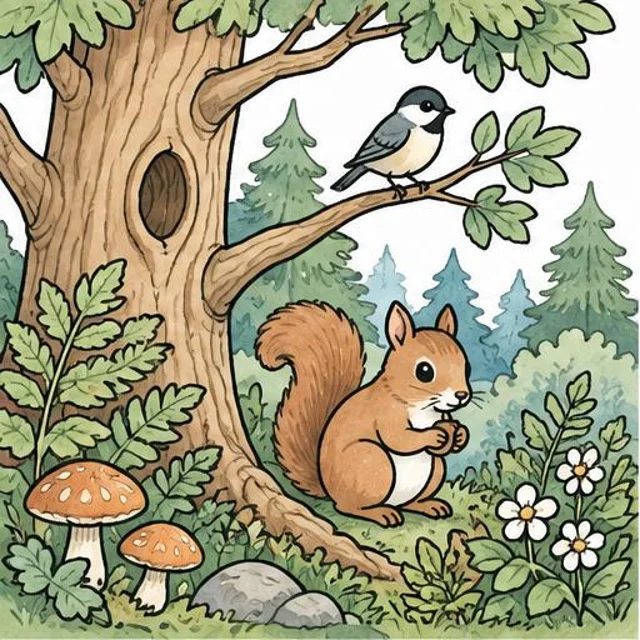
Some older children enjoy detailed landscapes, animal patterns, architecture, or diagrams. Others still prefer bold, simple pictures, especially after a busy day. Offer complexity as a choice, not a promotion they have to earn. A child can color just one section, invent a limited palette, or add texture with dots and lines.
Connect a landscape with a small research question: “Which animals could live near this tree?” Find an age-appropriate reliable source together, then add a sentence or sketch based on what you learn. Separate the source-backed detail from invented additions. For architecture, discuss windows, roofs, or materials without treating a fantasy house as an engineering plan.
Science learning packs can add vocabulary, labeling, and answer explanations when that fits the child’s goals. Their stated ages are suggestions too. Read the directions together first, and distinguish completing a diagram from explaining a process. Independent creativity includes deciding not to follow an adult’s proposed challenge.
Age comparison: a flexible starting point
The table below summarizes possible starting activities. It is not a checklist of abilities, and moving to a more detailed page is not a developmental achievement. Use it to narrow the choices, then inspect the actual picture and ask the child. Children can move between levels depending on their energy, familiarity with tools, visual access, and interest.
A group session works well when several options are available at once. Put a single large shape beside a scene and blank paper; let participants choose without calling one option “babyish.” The four recommendation groups below may overlap because a collection can contain pictures suitable for more than one age.
| Age | Suggested complexity | Example activities |
|---|---|---|
| Ages 2–3 | Very simple | Shapes, large animals, flowers |
| Ages 4–5 | Simple | Adult-added letters and numbers, seasons |
| Ages 6–7 | Moderate | Dinosaurs, habitats, nature |
| Ages 8–10 | Moderate to detailed | Science, patterns, landscapes |
How to choose the right coloring page
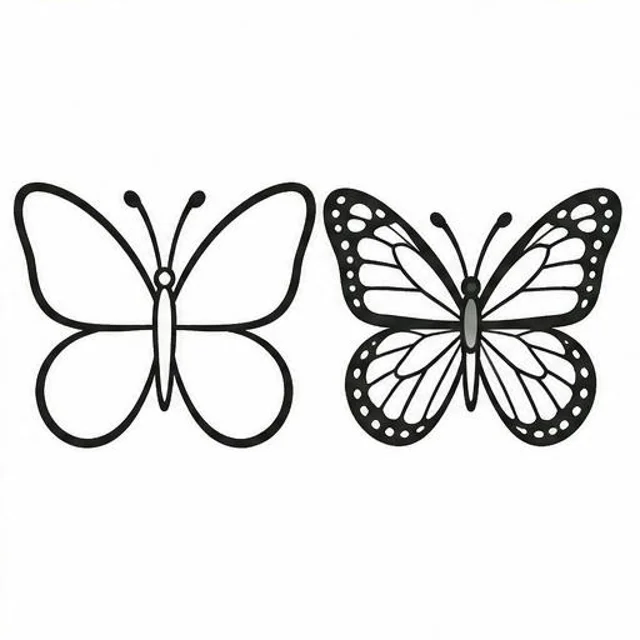
Look at the outlines first. Are they easy to distinguish? Then notice the open spaces: how many are small enough to require movements the child finds tiring? Check the background as well as the main subject. A friendly animal surrounded by dozens of tiny leaves may be more demanding than its title suggests.
Subject interest matters as much as complexity. Ask what the child likes and what they would change. Offer wider tools or larger paper, tape the sheet if helpful, and position the materials within comfortable reach. Do not assume that everyone wants the same grip, posture, or coloring goal. Adapt access without drawing attention to differences.
If an activity causes pain, repeated fatigue, or distress, stop and reconsider the setup. A printable is not a screening tool or a treatment. The CDC explains that milestone checklists help families communicate about development; they are not diagnostic assessments. Discuss persistent concerns with a qualified professional instead of prescribing extra coloring practice.
Ten creative coloring activities to try
Choose one invitation at a time. The suggestions below can be adapted to any of the age groups with adult support, simpler shapes, or fewer steps. They use real existing pictures or additions you make yourself, rather than claiming a special worksheet is available.
- Make your own color-by-number key. Select a simple shapes page, add the digits 1–3 yourself, and agree on three colors. Let the child change the key if the goal is creative play rather than number matching.
- Pair a letter with a picture. Write the first letter of a pictured animal’s name on separate paper, say its sound, and find another word beginning the same way. The letters are your addition, not part of the download.
- Observe nature before coloring. Look at a fallen leaf or a flower without picking unfamiliar plants. Compare shapes and colors, then use a nature picture or draw what you noticed.
- Invent a three-color palette. Choose any three pencils and color the page using only those shades. Compare combinations without naming one the correct choice.
- Tell a picture story. Color an animal, add something it needs, and dictate or write a sentence. Fold another piece of paper for the next scene.
- Try a seasonal challenge. Choose a seasons picture and add weather from your own surroundings. Notice that seasons and conditions differ between places.
- Build an animal habitat. Choose a real animal picture and add food, water, or shelter after checking one reliable source. Keep imaginary features clearly separate.
- Design a dinosaur. Use a dinosaur outline as a starting point for invented colors or a new background. Give the invention a name rather than presenting it as a known species.
- Color and label a plant. Use the real plant-parts worksheet in the Plants & Pollinators pack, or draw a plant and add your own labels. Check that roots, stem, leaves, and flower match the picture.
- Create a family gallery. Each person chooses a comfortable design or blank paper. Display work only with permission, and invite stories about the choices rather than comparing skill.
A comfortable setup matters more than a finished page
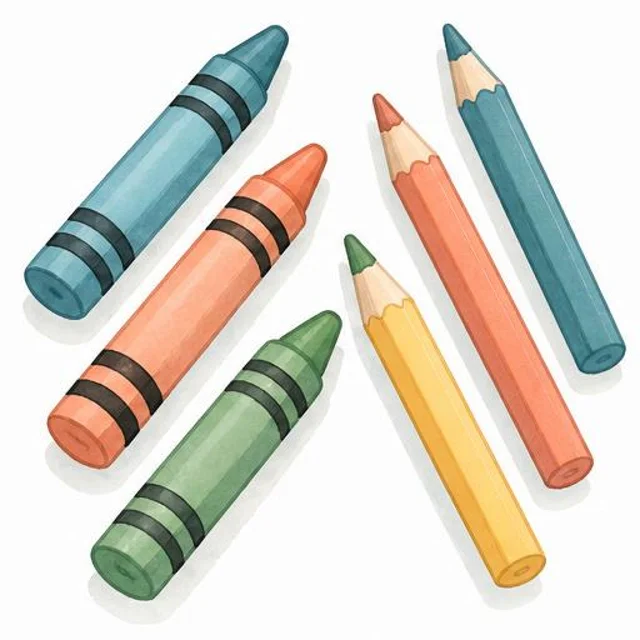
A stable surface, reachable materials, and enough light make the activity easier to access. Try a small set of tools before buying a large kit. Washable crayons, pencils, or age-appropriate markers can all work; check labels and supervise young children. Put a protective sheet underneath markers and test the paper before beginning.
Keep your invitation specific but open: “Would you like to color this picture or draw your own?” Let the child pause, switch pictures, or return later. Avoid timing a session as an attention test. The aim is an enjoyable opportunity to make choices and marks, not another task to complete for approval.
Free coloring pages by age
Below, each age group draws recommendations from existing collections with overlapping published age ranges. The range describes the collection, not a promise that every sheet suits every child. Open a collection, inspect its pictures, and choose the detail level that fits. Clicking a coloring picture on its collection page opens a print-ready PDF.
For structured science activities, the free learning packs include their own directions and age suggestions. The short existing page-selection guide remains useful for understanding DoodleLearn’s broader directory filters; this longer guide focuses on what to do with a picture once you choose it.
Frequently asked questions
What age should children start coloring?
Offer supervised, age-appropriate materials when a child shows interest in making marks. There is no required starting birthday. Scribbling and blank-paper drawing are valid alternatives to printed outlines.
What coloring pages are best for toddlers?
Start with one large subject, thick outlines, and open areas. Offer a few age-safe tools, supervise closely, and let the child make marks without a requirement to stay inside lines.
How can coloring help preschoolers practice skills?
It provides an opportunity to move tools, choose colors, talk about shapes, and count objects when the child wants to. These are practice opportunities, not guaranteed developmental gains.
Should children color inside the lines?
Only if that is a goal they enjoy. Crossing an outline is not a failure. Creative choices, storytelling, and making marks can matter more than precision.
How long should a coloring activity last?
Follow interest and comfort rather than a fixed time. Stop or take a break when the child loses interest or becomes tired. Finishing the page is optional.
What coloring activities are suitable for 8-year-olds?
Try nature observation, an invented palette, a dinosaur story, or a science diagram with discussion. Offer both simple and detailed pictures and let the child choose.
Research and further reading
Further reading from research and professional guidance. Study findings apply to their participants and tasks; professional guidance is not the same as a controlled experiment.
- NAEYC: Help Your Child Build Fine Motor Skills
Professional suggestions for varied fine-motor play, including art; not proof that coloring alone improves handwriting.
- NAEYC: How Process-Focused Art Experiences Support Preschoolers
Supports choice and exploration. Prepared coloring sheets are not equivalent to open-ended process art.
- CDC: Key Points About Milestone Checklists
Explains the role and limitations of milestone checklists; the age groupings in this guide are activity suggestions, not screening standards.