By DoodleLearn · Evidence-informed guide
A classroom coloring activity works best when it supports a specific lesson rather than simply filling time. Choose one observable learning objective: students will identify three plant parts, count a set, or use a target word to describe an image. Then select a page that gives them a useful way to notice, discuss, or practice that objective. Coloring does not teach a concept by itself.
Decide what students should do before, during, and after coloring. Pair the page with explanation, conversation, hands-on experience, or a short check for understanding. Keep directions accessible and allow different ways to respond. A finished page can start a conversation, but it is not proof of mastery. The suggestions here complement DoodleLearn's Teacher Resource Centre rather than replace your curriculum or professional judgment.
Coloring offers opportunities for practice and enjoyment. The research does not make every benefit certain, and coloring is not a substitute for instruction, therapy, or medical care.
Download Classroom PrintablesWhy coloring still has a place in the classroom
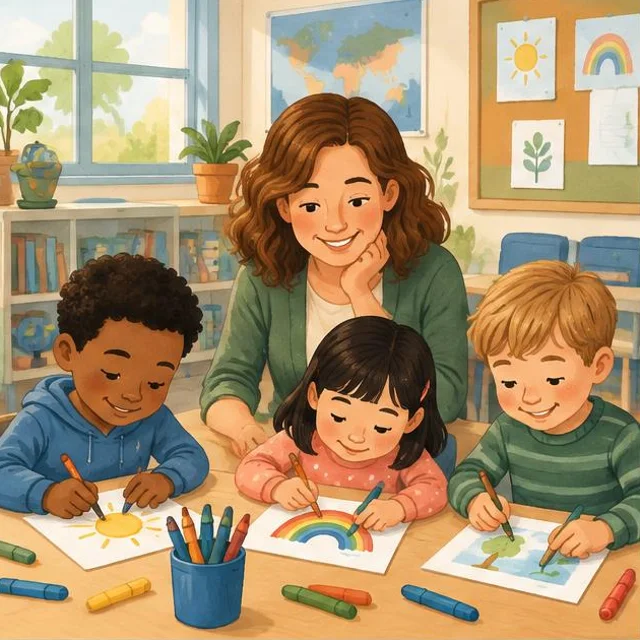
Before instruction, use a simple picture as a notice-and-wonder prompt: students point to details or name what they already know. During a lesson, pause and invite students to mark the feature under discussion. After instruction, the page can help them revisit or explain an idea. Timing should make it a bridge to learning, not an unrelated interruption.
Keep the task short and explicit. 'Color the roots, then tell a partner what roots do' connects an action with language. If completion takes much longer than the learning check, separate the two. An explained partial page may be more useful than a finished page made without discussion. Coloring should not displace essential reading, mathematics, movement, or practical investigation.
Write the objective beside the page direction. If the connection is unclear, save the picture for voluntary choice time.
Reinforcing learning through visual activities
An illustration gives students a shared reference point. Choose distinct features and open space for marks or labels. Model looking closely: describe a detail, point to its location, and explain how it relates to the lesson. Ask students to find another feature and say what they notice. The point is observation, not selecting the teacher's preferred colors.
Do not make color carry essential information alone. Add labels, patterns, shapes, or clear outlines so categories remain understandable in grayscale and for students with color-vision differences. Prepared pages simplify reality; explain what the diagram leaves out. A colored diagram is helpful only if students can interpret what it represents.
Preview the page in black and white. Can students identify the important features without relying on color?
Vocabulary and language development activities
Choose two or three target words rather than presenting a long list. Introduce each with a student-friendly meaning, a gesture or example, and a chance to say it. While students work, ask them to point and complete a frame such as 'This is the ___; it helps by ___.'. Partners can use the same words in a short description.
For students learning English, connect words with pictures, gestures, or home-language equivalents when available. Accept pointing or a short response as a start, then model a fuller sentence. Revisit vocabulary in a nonfiction text, real object, or later discussion. Repeated meaningful use matters more than copying a word once.
Keep the target words visible. Listen for one term and model its use naturally instead of correcting every sentence.
Science and nature coloring activities
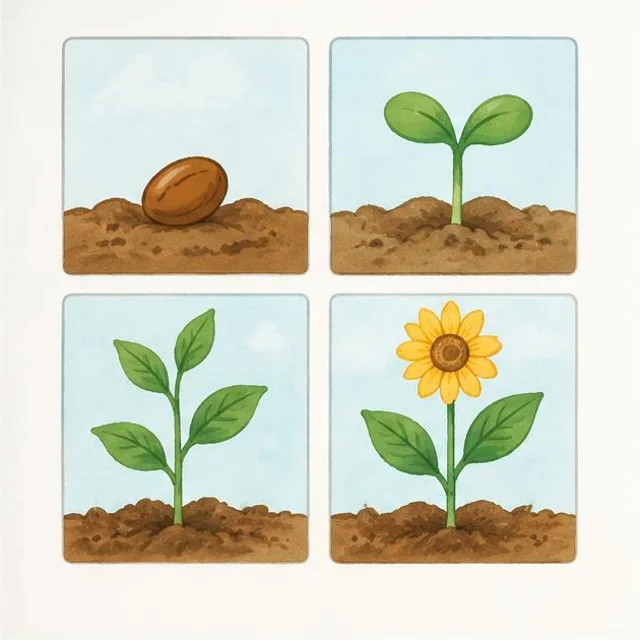
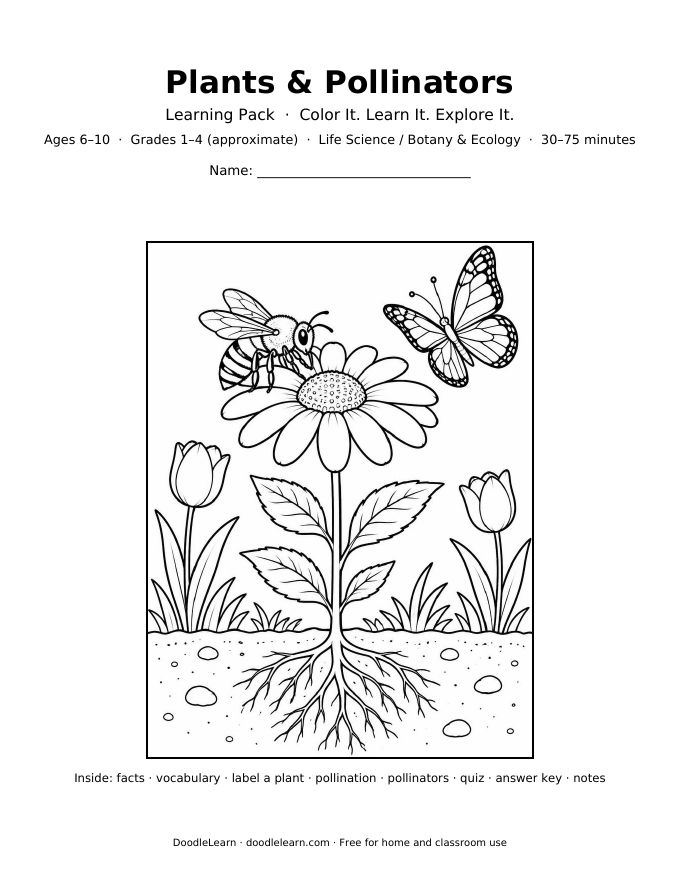
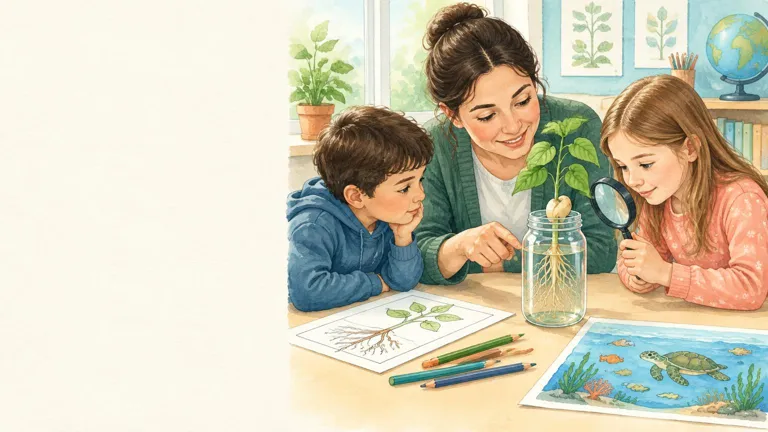
Plant, animal, weather, and habitat pictures can prepare students to observe or help them record something they have seen. Ask what changes between a seed, sprout, young plant, and flowering plant. The growth-stage illustration above is an example, not the actual downloadable worksheet; preview the Plants & Pollinators pack below to see its contents.
Pair pictures with a classroom plant, an approved outdoor observation, or a nonfiction text. Students can add a detail they observed and a label. Discuss where the drawing simplifies the living thing: plant growth depends on species and conditions, and not every organism looks like the example. Keep observation and explanation central instead of treating realistic coloring as scientific understanding.
Ask for one observation and one question. Use the question to plan a real investigation where practical.
Turn habitat pictures into evidence
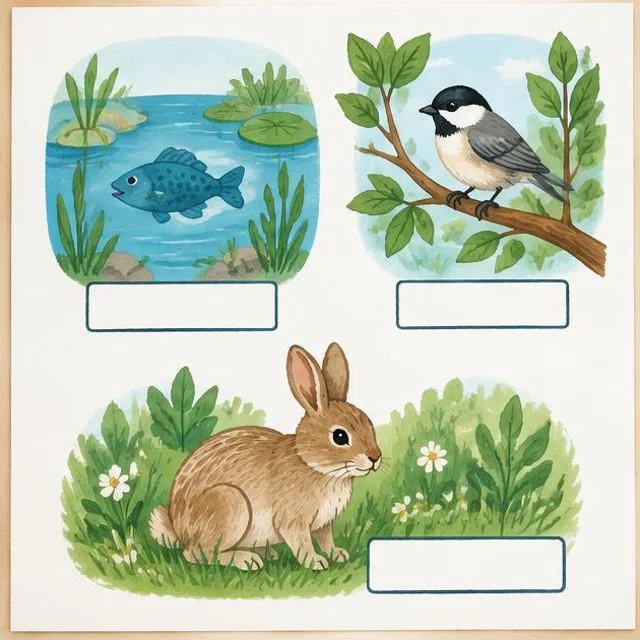
Invite students to identify food, water, shelter, and space in a habitat image. Then ask how one visible feature could help the animal. A fish in water and a bird in a tree provide starting points, but a picture alone does not explain an ecosystem. Add a reading or a discussion about the specific species.
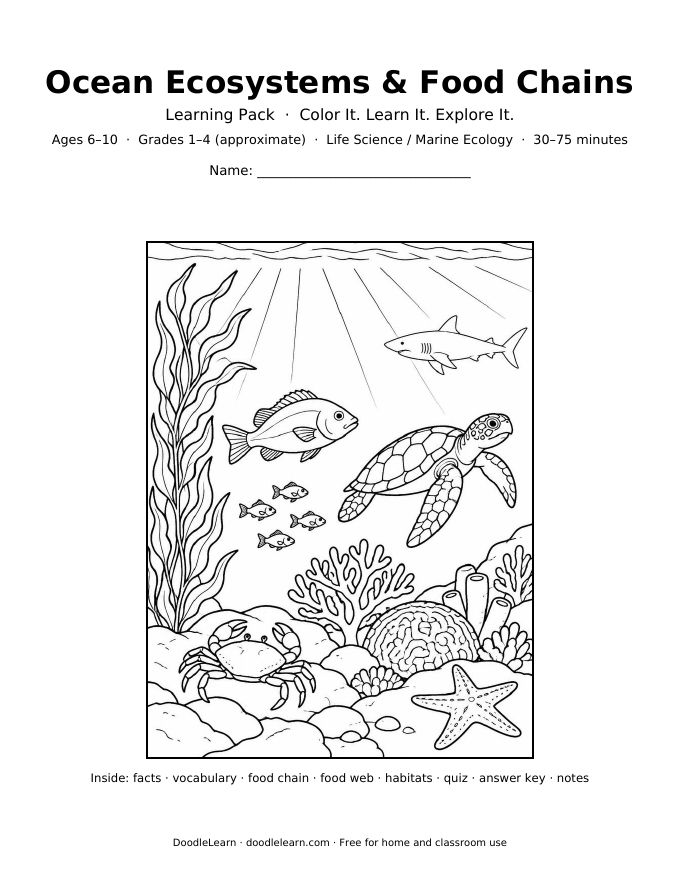
Have pairs explain a choice and identify what information is missing. Could the animal find food here? What would change if the habitat were disturbed? Distinguish a student's imaginative setting from a factual observation record. The habitat illustration is a teaching example; the actual Ocean Ecosystems & Food Chains pack has its own activities and answer key.
Require one reason supported by the picture or reading, rather than just asking students to color the animal's home.
Math and number recognition activities
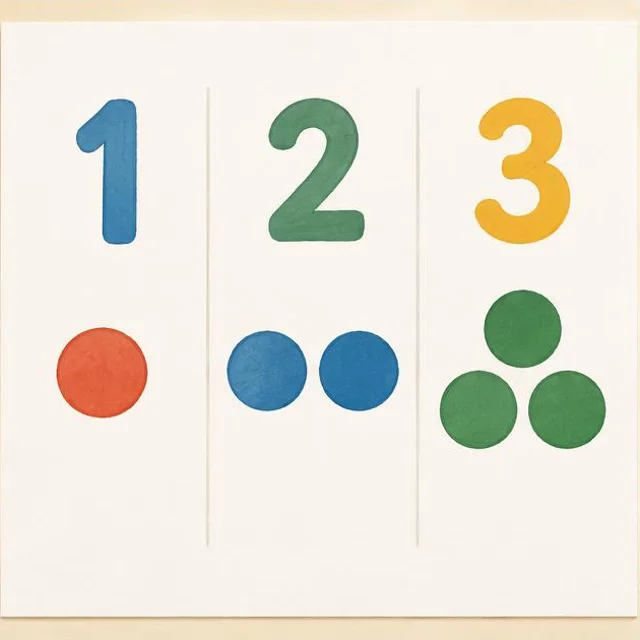
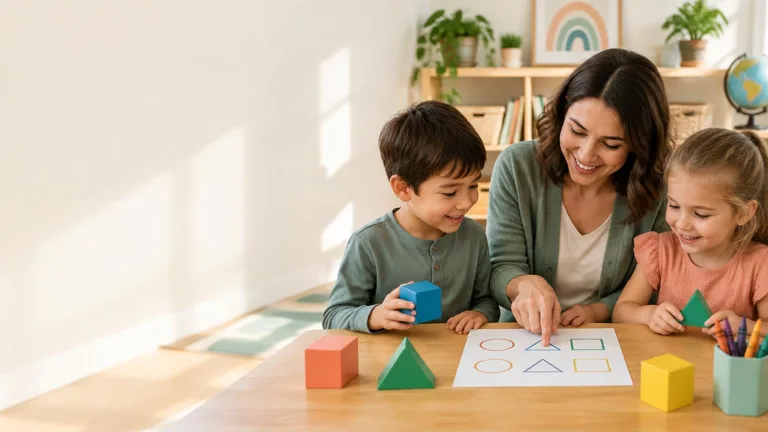
A number page is most useful when students do more than color a numeral. Match the task to counting, quantity matching, comparing groups, or describing a pattern. Students can count three objects, identify the numeral three, and explain how they checked. Clear spacing makes the task about counting rather than sorting a crowded image.
For an additional challenge, ask for another set with the same total or a repeating pattern and its rule. A 2025 study used a deliberately structured collaborative coloring task to elicit mathematical reasoning in Grade 3. That result concerns the task and discussion, not coloring sheets generally. Listen to strategies rather than inferring correct counting from colored marks.
Use 'count, match, explain'. Ask a student to touch each object once while counting before treating the page as evidence.
Fine motor practice in early grades
Coloring involves handling a tool and coordinating looking with movement. Aim for comfortable participation and purposeful marks, not perfect control. Offer large, uncluttered images and tools students can hold comfortably. Short crayons, broader tools, or an adapted grip may suit some students; no single tool suits everyone.
Allow changes in position and pace. A student can use a slanted surface, complete selected areas, or take a break. If hands tire, offer pointing, stickers, dictation, or another way to demonstrate the same learning. Coloring is practice, not a prescribed intervention for handwriting difficulties; follow individual support plans and specialist advice where needed.
Notice access: can the student reach the tools, hold one comfortably, and communicate a choice?
Creative expression and student choice
Offer meaningful choice without weakening the learning goal. Students might select between two relevant pages, choose tools, or decide which part to do first. Explain what is fixed and flexible: 'Everyone will identify the plant parts; colors are your choice.' Predictable boundaries make it easier to start without guessing the hidden right answer.
NAEYC guidance emphasizes exploration in process art. A structured lesson is different, so leave room for open-ended art elsewhere too. Invite students to share a decision without ranking realism, speed, or tidiness. For science records, distinguish observation-based details from imaginative choices. Do not assume an unusual color reveals misunderstanding.
Offer two or three concrete options, and ask before displaying a student's work.
Calm transitions and independent activities
A familiar picture can be one quiet option while supplies are distributed or a small group meets. Prepare the materials and make the stopping point clear: 'Add two details to one object while you wait' is easier to end than 'finish the sheet'. Keep it voluntary where the purpose is simply a transition.
Coloring is not calming for every student. Busy patterns, close visual work, noise, or time pressure can be uncomfortable. Offer reading, drawing, sorting cards, or a quieter spot. Use a predictable cue and time to put tools away. Avoid making unfinished coloring a penalty or a barrier to joining the next lesson.
Plan the end before the start and provide a non-coloring option that fits the same routine.
Differentiated and accessible classroom resources
Reduce items, enlarge images, simplify backgrounds, or give one direction at a time. Students needing more challenge can label, compare, write a question, or explain a pattern. Keep the essential learning goal consistent while varying how it is demonstrated. Oral responses, communication devices, objects, and dictation can all make understanding visible.
Consider contrast, font size, glare, page layout, and physical tools. Ask students what helps and coordinate with support plans. These downloadable PDFs are visual resources and are not tagged for screen-reader reading; they are not a complete accessible alternative for everyone. Supply verbal descriptions or a tactile, oral, or otherwise appropriate activity when needed.
Identify the essential response and at least one alternate way to give it before handing out the page.
Five ready-to-use classroom coloring ideas
Choose one focused prompt. Adjust writing and detail to the class, then finish with a question or demonstration that reveals understanding.
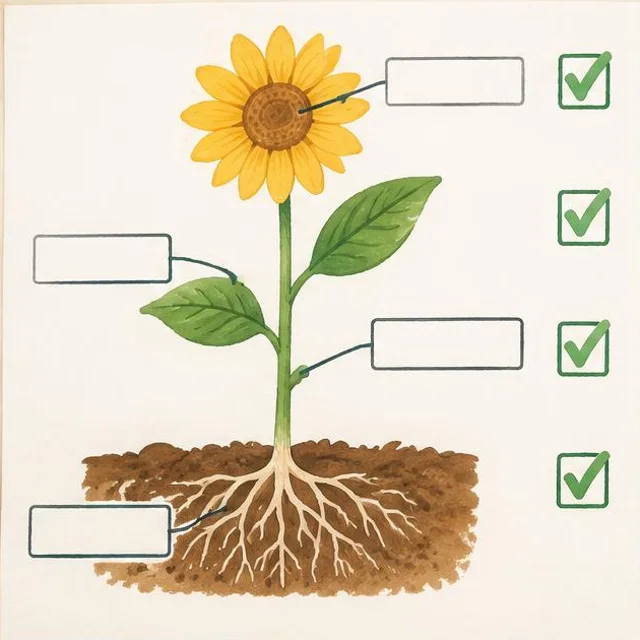
- Plant-part check: name roots, stem, and leaves, mark each, and explain one function using a real plant or the pack's diagram.
- Habitat evidence: identify one source of food, water, or shelter and explain how it helps a particular animal.
- Count and match: count a set, identify its numeral, and verify by touching each object once.
- Observation record: after looking at a plant or outdoor area, draw one noticed detail and dictate or write a caption.
- Vocabulary partner talk: choose a detail, use a target word in a sentence, and listen for the partner's word.
Prepare a follow-up question. A short explanation usually tells you more than completion alone.
Free printable learning packs and worksheets
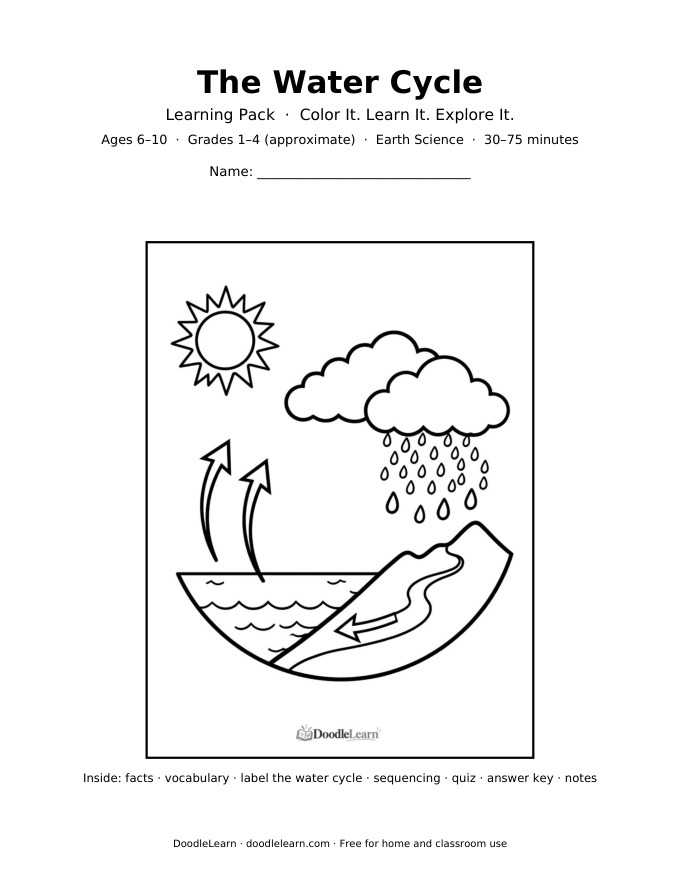
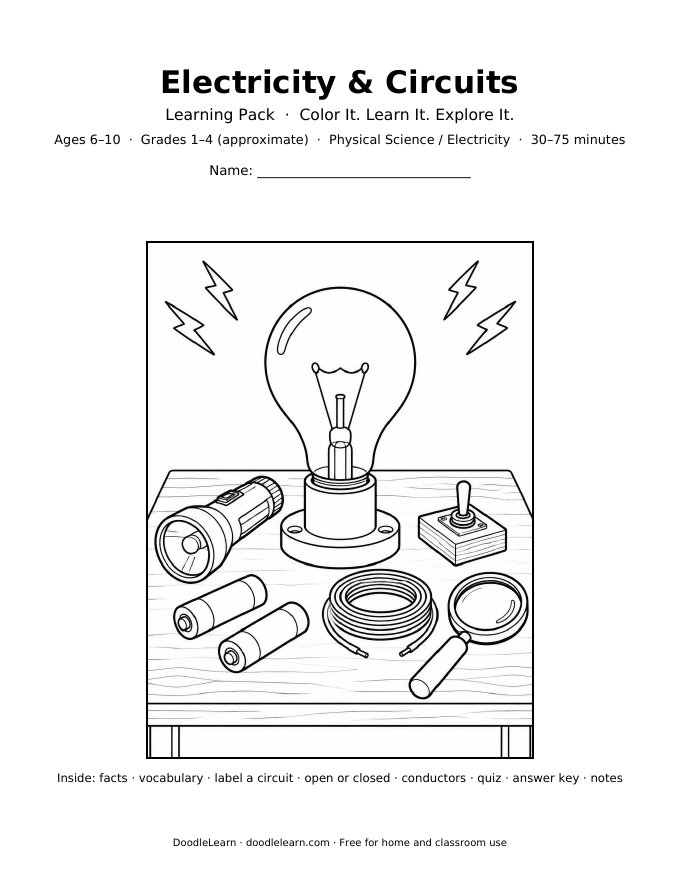
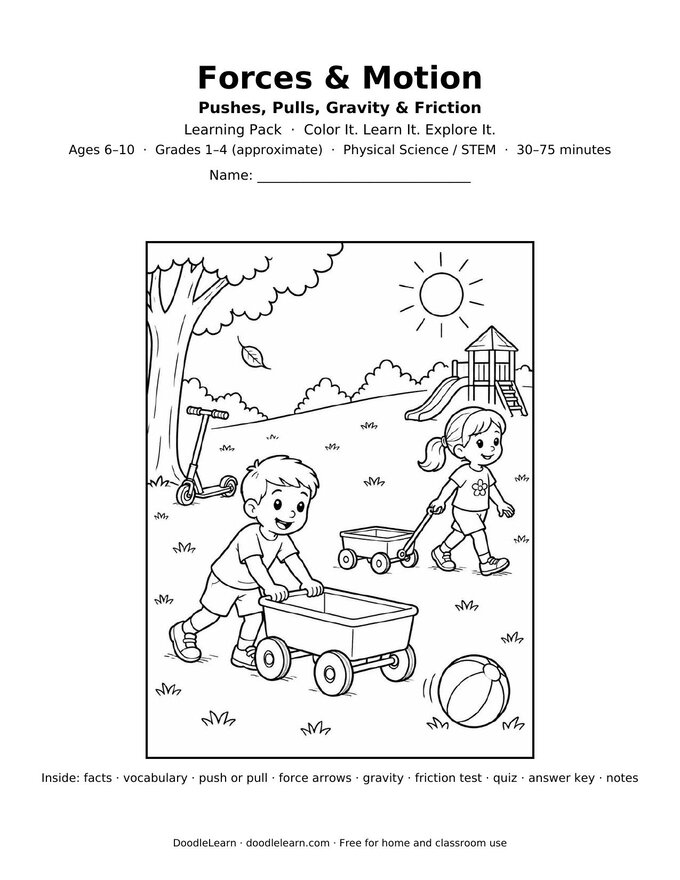
The resources below are existing DoodleLearn packs and published collections. The science packs combine learning facts, activities, quizzes, and answer keys; ordinary coloring sheets generally put teaching text on the website, not inside the drawing. Preview the whole pack before teaching, choose the pages that match your objective, and check scientific simplifications with the notes.
Use A4 or US Letter to match your printer and review the reuse terms before reposting files. No sign-up is required. The Teacher Resource Centre filters by age, estimated grade, subject, and other available information. There is no sound learning pack linked here because one is not currently listed; choose an existing topic instead of expecting an unavailable download.
Check objective, accuracy, readability, access, paper size, and reuse terms before copying for the class.
Frequently asked questions
How do I know whether the activity supported learning?
Ask a student to name a feature, count aloud, use a target word, or explain a choice. Note what they can do independently and what help was needed. The finished picture alone is not enough.
How long should classroom coloring take?
Choose a duration that fits the objective and students' needs. A targeted task may take a few minutes; observation and discussion may take longer. Allow a reasonable stopping point without requiring every area to be filled.
What if a student does not want to color?
Offer another route to the same objective, such as pointing, labeling, drawing, sorting, or dictation. Students should not need to complete decorative coloring to show what they know.
Should students use realistic colors?
For creative work, let them choose. For an observation record, explain which details should reflect evidence and which choices are open. Ask for reasoning instead of assuming a color choice reveals understanding.
Research and further reading
Further reading from research and professional guidance. Study findings apply to their participants and tasks; professional guidance is not the same as a controlled experiment.
- Maj-Tatsis & Tatsis — A Coloring Task to Elicit Mathematical Reasoning (2025)
Grade 3 collaborative combinatorial task. Evidence applies to the structured mathematical prompt, not passive coloring generally.
- NAEYC — How Process-Focused Art Experiences Support Preschoolers
Professional guidance on child choice and exploration, not a controlled trial or a substitute for subject instruction.
- NAEYC — What Will We Make? Using Process Art to Spark Preschoolers' Development
Classroom examples of open-ended process art; these differ from worksheets with fixed learning objectives.
- Huang and colleagues — Activity Performance and Visual-Motor Integration (2023)
Cross-sectional associations do not establish that coloring causes improved handwriting or visual-motor skills.